Top Story
Israel Kills Larijani and Basij Commander — Iran Loses Its Last Credible Off-Ramp Architect
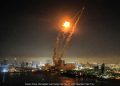
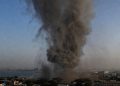
TEHRAN — Israeli aircraft killed Ali Larijani, secretary of Iran’s Supreme National Security Council and the country’s de facto leader since the assassination of Supreme Leader Ali Khamenei on February 28, in an overnight strike on the outskirts of Tehran. Larijani’s son Morteza and the head of his office Alireza Bayat were also killed. In a separate simultaneous strike, Brigadier General Gholamreza Soleimani, commander of the Basij paramilitary force, was also eliminated. Israeli Defense Minister Israel Katz confirmed both killings Tuesday morning. Iran’s Supreme National Security Council confirmed Larijani’s death hours later, describing him as a “martyr.” The IRGC confirmed Soleimani separately. Iran’s commander-in-chief of the army, Maj. Gen. Amir Hatami, vowed a response that would be “decisive and regrettable.” The IRGC’s Aerospace Force commander announced a “rapid strike,” saying “tonight, the enemy’s sky will become more spectacular.” Iran launched missile strikes on Ramat Gan, east of Tel Aviv, the following morning, killing two Israeli civilians — the confirmed retaliation for Larijani’s death.
Larijani’s significance is poorly captured by his formal title. After Khamenei’s killing on Day 1, Larijani functioned as the operating head of the Iranian state. He was, at 67, the intersection point of everything that makes the Islamic Republic governable: former IRGC officer, former parliament speaker of more than a decade, former chief nuclear negotiator, fluent in Western diplomatic frameworks and the internal logic of the security state simultaneously. He was the last senior figure in Tehran’s wartime leadership with the institutional memory, the network access, and the conceptual flexibility to construct a political off-ramp — the kind that requires knowing both the military’s red lines and what foreign ministers will accept across a table. He had been quietly shuttling between Gulf capitals and Moscow in the weeks before the conflict. His last public appearance was Friday at Al-Quds Day alongside President Pezeshkian, a deliberate act of defiance in the open streets of a city under bombardment.
The strategic consequence is not regime collapse — Foreign Minister Araghchi was explicit on this point, and he is right. Iran’s institutional architecture is deliberately distributed; continuity does not depend on any single figure. What Larijani’s death removes is the human chain through which a negotiated exit would have been assembled. Bloomberg’s assessment the following morning was precise: his killing leaves Iran’s wartime leadership “largely in the hands of hardliners less likely to seek a diplomatic pathway.” Basij commander Soleimani’s simultaneous elimination compounds this: Soleimani was the operational instrument of domestic repression — his death weakens the regime’s capacity to suppress internal dissent at exactly the moment that capacity is most needed. The two killings together represent the most concentrated removal of Iranian governing capacity since Day 1. Wire coverage has treated them as a tactical strike story. The structural consequence — that Tehran now lacks its most experienced pathway builder — has not been framed as the story it is.
Who Iran appoints to replace Larijani as SNSC secretary will signal the regime’s diplomatic posture for the remainder of the conflict: a pragmatist appointment signals future off-ramp construction remains possible; a hardliner appointment signals the leadership has concluded diplomacy is closed. Watch also for Iran’s promised military retaliation against Israel — the IRGC has made a specific commitment and any failure to execute will be read internally as weakness. Chaharshanbe Suri street activity in Iranian cities tonight is a live indicator of the domestic repression capacity of the post-Soleimani Basij.
Regional Roundup
Chaharshanbe Suri: Iranians Turn Fire Festival Into Public Defiance as Basij Grip Weakens
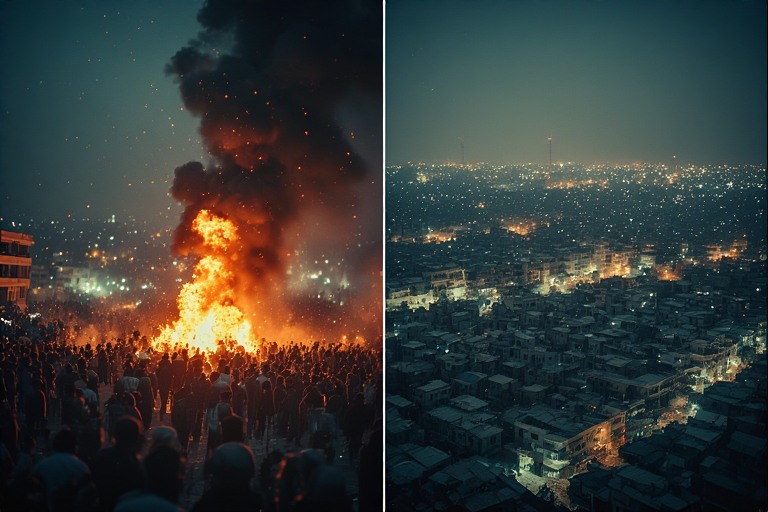
On the night of March 17, Iranians across the country observed Chaharshanbe Suri — the ancient Persian fire festival held on the last Wednesday before Nowruz — in what became an unmistakable act of mass public defiance. Security forces attempted to prevent gatherings, and the IRGC had threatened a crackdown larger than January’s. Bonfires, fireworks, and street gatherings were reported in Tehran and dozens of cities despite the warnings. Exiled Prince Reza Pahlavi said the killings of Larijani and Soleimani were evidence that the Islamic Republic’s grip on internal repression was weakening, and that the moment when Iranians could again control the streets was approaching. Iran International reported that street gatherings proceeded across multiple neighborhoods in Tehran despite security deployments.
The timing matters. Basij commander Soleimani was killed the same evening. The Basij is the primary instrument for neighbourhood-level crowd control — its commander’s death on the eve of the country’s largest pre-Nowruz street event creates a visible gap in the regime’s repression architecture. Whether the Basij can operate coherently under interim command during active celebrations is an open intelligence question. Wire coverage has not connected Soleimani’s killing to the Chaharshanbe Suri context. The domestic dimension of Tuesday’s strikes — specifically the Basij-Chaharshanbe coincidence — is the underreported strategic layer of the day.
IDF Extends Evacuation to Tyre and Surrounding Refugee Camps — Over One Million Lebanese Displaced
Israel’s IDF issued an urgent evacuation warning Tuesday evening for the coastal city of Tyre, Lebanon’s fourth-largest, and surrounding villages and Palestinian refugee camps — including Rashidiyeh, El Bass, Bourj el Shamali, and Nab’a el Housh. Residents were ordered north of the Zahrani River. AFP reported panic in the city as thousands scrambled to leave, with traffic jams and warning shots fired into the air. This was the second such warning for the Tyre area, having first been issued March 12. Lebanese authorities confirmed that more than one million people have been displaced since the conflict began March 2 — 19 percent of the country’s population. At least 912 people have been killed in Lebanon since March 2, including 111 children, per Lebanese health authorities. The IDF’s 36th Division expanded ground operations southward Tuesday, carrying out what the military described as “limited and targeted” operations to deepen the forward defense area. Three Lebanese Army soldiers were killed in Israeli strikes Tuesday, the Lebanese military confirmed.
The Tyre evacuation order marks the effective expansion of Israel’s operational intent beyond the immediate border region to a major city with civilian infrastructure and active refugee camps. The humanitarian situation in Sidon and Beirut coastal areas — where displaced persons are sleeping in cars and shelters are at capacity — is deteriorating faster than aid organisations can respond. The UN rights office said Tuesday that Israel’s threats to impose the same level of destruction on Lebanon as inflicted in Gaza risked amounting to war crimes. The initial UN inquiry into a March 6 strike on a UNIFIL position that wounded Ghanaian peacekeepers — attributed to Israeli tank fire by a Western military source — has not been resolved.
Iran-Backed Militias Strike US Embassy Baghdad and Victoria Base — Rubio Orders Immediate Global Embassy Security Review
Iran-backed militias attacked the US Embassy in Baghdad’s Green Zone Tuesday evening with explosive drones and rockets. Three explosive drones targeted the compound; two were intercepted by C-RAM air defense systems; the third struck an outer wall, sparking a fire. No casualties were reported from the embassy compound. Simultaneously, two drones targeted the Victoria military logistics center at Baghdad International Airport; both were intercepted. Al Jazeera’s correspondent on the ground reported hearing multiple loud blasts and saw debris falling across a nearby university compound. The Islamic Resistance in Iraq — the umbrella group for Iran-backed Iraqi militias — claimed 47 separate attacks using drones and rockets against US-linked sites inside and outside Iraq on Tuesday. Secretary of State Rubio signed an emergency cable ordering all US embassies worldwide to conduct “immediate” security reviews, citing “the ongoing and developing situation in the Middle East and the potential for spill-over effects.”
The Baghdad Green Zone attack is the most direct strike on US diplomatic infrastructure since the war began, and the State Department’s global security cable reflects genuine concern that the conflict is producing ambient threat elevation for US facilities worldwide. A pro-Iran Iraqi armed group subsequently offered to pause attacks on the US Embassy for five days subject to conditions including that Israel stop strikes in parts of Beirut — a conditional ceasefire that implicitly confirms the militia’s capacity and willingness to continue if demands are not met.
Japan Under Coalition Pressure Ahead of Takaichi’s White House Visit — Tokyo Examines Legal Limits
Japanese Prime Minister Sanae Takaichi faced intensifying US pressure Tuesday to offer material support for the Hormuz naval coalition, ahead of her scheduled White House meeting Thursday. Takaichi told parliament Monday that no decision had been made on deploying Self-Defense Force escort vessels, but said Tuesday that Tokyo is “vigorously examining” what is legally possible. Japan’s Foreign Minister Motegi held multiple calls with Iranian FM Araghchi, including one on March 17, raising concerns about Japanese vessels detained in the Persian Gulf and requesting Iran ensure the safety of all Japanese ships. Iran’s former IRGC commander Hossein Kanani Moghaddam stated on NHK that Japan could secure safe Hormuz passage for its tankers if it declined to support America’s war — framing Tokyo’s coalition decision as a choice between bilateral passage and military participation, not a binary yes/no on Hormuz security.
Japan’s constitutional constraints on combat zone deployment are real and material: Japan’s Self-Defense Force is legally prohibited from conducting escort operations in active hostilities. But Washington is not primarily seeking legal compliance — it is seeking visible solidarity. Takaichi’s task Thursday is to construct a contribution meaningful enough to satisfy Trump without committing Japan to an active combat role that Tokyo cannot legally or politically sustain, and without foreclosing the bilateral Iran channel that may ultimately be Japan’s best path to securing its energy supply. The CFR assessment is accurate: her meeting with Trump now carries the highest stakes of any Japan-US summit in years.
Under the Radar
Wire coverage framed the killing of Basij commander Gholamreza Soleimani as a tactical military story. What it missed is the coincidence with Chaharshanbe Suri — the pre-Nowruz fire festival that has become Iran’s de facto annual test of street-level defiance. The Basij is not the IRGC’s strategic missile force; it is the paramilitary instrument for neighbourhood-level crowd control, the body responsible for kettling, beating, and shooting protesters at street level across 22 Tehran districts. Its commander’s death on the eve of the largest street event of the Iranian calendar, with interim command not yet established, creates a visible and temporary degradation in the regime’s domestic repression capacity. The 2–4 week consequence: how the Basij performs tonight — its operational coherence under acting command — is a leading indicator of whether the domestic security architecture can hold through Nowruz (March 20) and beyond. An Israel security insider quoted by Iran International assessed that Iran could be weeks from conditions for an uprising. Chaharshanbe Suri is the first observable test of that assessment.
Iran’s Foreign Ministry spokesperson held a regular televised press conference Tuesday — but from a Tehran classroom that state-linked media noted had been damaged in recent strikes. The choice of venue is not incidental. Iranian state communication is calibrated; broadcasting from a visibly war-damaged civilian educational facility is a deliberate framing operation aimed at both the domestic and international audience, projecting resilience and victimhood simultaneously while normalising the war’s conditions. More operationally significant: the ministry spokesperson said on Monday that Iranians living abroad could face seizure of their assets if they cooperate with countries Tehran considers hostile — a warning explicitly aimed at deterring diaspora support for the US-Israel campaign. This dual track — projecting victimhood externally, punishing external dissent legally — is the state media management architecture of a regime that knows it cannot win the information war but can control the cost of defection. No wire outlet contextualised the classroom venue choice as a deliberate communication act.
By the Numbers
| 2 | Senior Iranian officials killed overnight — Ali Larijani (SNSC secretary, de facto leader since Day 1) and Basij commander Gholamreza Soleimani. Larijani is the most senior Iranian figure killed since Supreme Leader Ali Khamenei on February 28 (Al Jazeera, Bloomberg, CBS News). |
| 4,800+ | Confirmed dead in Iran from US-Israeli strikes as of March 17, per Wikipedia aggregation of verified sources — up from 4,400 on March 14 and 3,100 on March 10. The pace of verified civilian and official casualties is accelerating (WHO, HRANA, Iran Red Crescent). |
| 1,000,000+ | Lebanese civilians displaced since the conflict expanded to Lebanon on March 2 — 19 percent of the country’s population. Lebanese authorities confirmed the figure on the same day IDF ground operations deepened south of the Litani River (Lebanese government, AFP). |
| 47 | Attacks claimed by the Islamic Resistance in Iraq against US-linked sites on Tuesday alone, using drones and rockets — not including the direct Green Zone embassy strike. Militia activity in Iraq is intensifying, not stabilising, as the conflict approaches its third week (CNN, FDD). |
| 248 | Days of adequate energy reserves Japan held as of the start of the conflict — the finite supply runway driving Takaichi’s coalition calculus. Japan sources 95 percent of its crude oil from the Gulf; every day of Hormuz closure erodes that buffer (CFR, NPR, Al Jazeera). |
What We’re Watching
- Chaharshanbe Suri Street Activity — Whether Basij forces, under interim command after Soleimani’s death, can maintain operational crowd control in Tehran and major cities tonight. Sustained public gatherings would be the first visible indicator of a domestic repression gap.
- Iran’s Retaliatory Strike — The IRGC’s Aerospace Force commander made a specific public commitment to retaliation “tonight.” Any strike on Israeli territory (particularly central Israel as threatened) will dominate Wednesday’s news cycle; failure to execute will be read domestically as operational degradation.
- SNSC Secretary Appointment — Whether Tehran announces a replacement for Larijani. A named pragmatist successor signals residual diplomatic capacity; no appointment or a hardliner appointment signals the closure of the negotiating track.
- Takaichi–Trump White House Meeting (Thursday) — Japan’s commitment level: whether Tokyo offers anything operationally visible (minesweeping, logistics, formal coalition endorsement) or limits itself to constitutional-review language. A Japanese no is effectively a coalition no from the US’s most capable Indo-Pacific ally.
- South Pars / Iranian Energy Infrastructure — Prior WtW flagged energy infrastructure as a potential next targeting threshold. The March 16 brief identified this as a pending escalation. Watch for any confirmed strikes on Iranian gas processing or refinery sites — the threshold the US had previously resisted crossing.
- Hormuz Bilateral Track Momentum — Whether France, Italy, or any additional state closes a bilateral passage deal with Tehran following India’s Jaishankar model. Each additional bilateral deal structurally weakens the naval coalition’s political rationale before it deploys.
- Riyadh Arab-Islamic Ministerial — Saudi Arabia is convening an emergency meeting of Gulf and Islamic states this week. Any independent ceasefire framework language, without US or Iranian participation, would be the most significant diplomatic development of the conflict to date.