Top Story
Trump’s Hormuz Coalition Fractures as Araghchi Closes Every Diplomatic Door
WASHINGTON / TEHRAN — Day 17 of Operation Epic Fury produced the war’s starkest strategic picture yet: both parties, on the same morning, publicly eliminated what wire coverage has been calling “off-ramps.” Iranian Foreign Minister Abbas Araghchi told CBS’s Face the Nation on March 15: “No, we never asked for a ceasefire, and we have never asked even for negotiation. We are ready to defend ourselves as long as it takes.” That statement directly refuted President Trump’s claim, made the same day, that Iran “wants to make a deal” but on terms unsuitable to Washington. Araghchi’s year-end foreign ministry press conference Monday reinforced the posture: “We don’t ask for ceasefire, but this war must end, in a way that our enemies never again think about repeating such attacks.” That is not a demand. It is a maximalist victory condition indistinguishable from the war’s original casus belli.
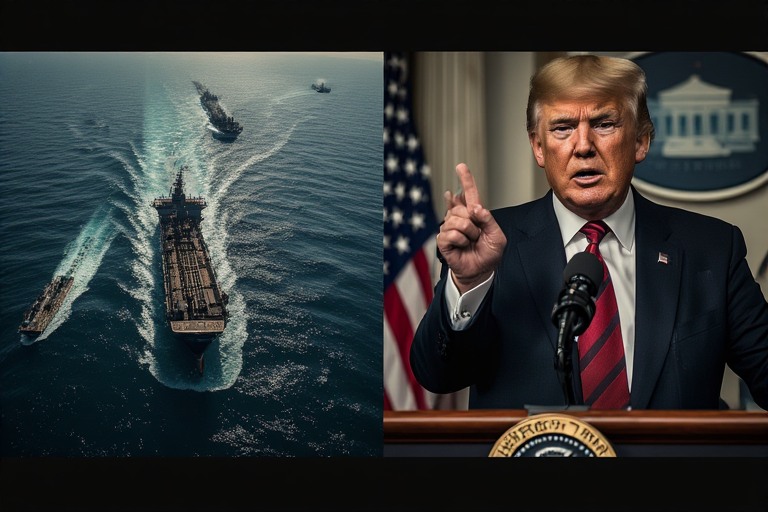
Simultaneously, Trump’s weekend demand that seven countries — explicitly naming China, France, Japan, South Korea, and the UK — commit naval assets to escort commercial shipping through the Strait of Hormuz produced a wall of non-commitments by Monday morning. Germany’s Defense Minister Pistorius: “This is not our war.” UK Prime Minister Starmer: not a NATO mission; the UK “will not be drawn into the wider war.” Australia: not sending ships; has not been asked. Japan: legally constrained under defense statutes, PM Takaichi visiting the White House Thursday. China: tepid boilerplate about “keeping communication open,” while Energy Secretary Wright said he expected Beijing “will be a constructive partner.” Trump told reporters he had asked “about seven countries” and “some had agreed” — but named none of them. The Wall Street Journal, citing unnamed US officials, reported the administration expects to announce coalition agreement “as early as this week,” underscoring a gap between White House expectation and publicly visible allied commitments that the oil market has already priced in: Brent crude stood at $105.70 per barrel Monday morning, up 40% since February 28.
Analytical assessment: The coalition problem is structural before it is diplomatic. Participating in an active-hostilities Hormuz escort mission exposes coalition vessels to Iranian attack — a risk Germany’s Pistorius named explicitly and that any naval commander must calculate against mine threat, Iranian shore-based anti-ship missiles, and IRGC fast-boat harassment. More fundamentally, Trump’s framing — that China receives the bulk of its oil via the Strait and should therefore bear political risk to reopen it — inverts Beijing’s actual incentive structure. China has been conducting quiet bilateral negotiations with Tehran on cargo access; joining a US-led coalition would forfeit those arrangements and position Beijing as a co-belligerent. India’s Jaishankar secured safe passage for two LPG tankers Saturday through four rounds of bilateral talks — without a coalition, without a military commitment, and without conceding anything to Washington. France and Italy have separately contacted Tehran. Araghchi confirmed that “a number of countries” have approached Iran and “some groups of vessels from different countries” have been allowed through. The architecture Tehran is building is a bilateral licensing system, not a ceasefire — and every country that cuts a deal with it structurally fragments coalition logic before the coalition forms.
Japan PM Takaichi’s White House visit Thursday is the clearest near-term public commitment test: watch whether Tokyo agrees to escort operations or limits itself to “independent review within legal constraints.” WSJ’s “as early as this week” coalition announcement — any named country with public operational parameters vs. unnamed, conditional commitments. Whether France or Italy closes a bilateral Hormuz passage deal with Tehran: if so, the coalition loses its last political logic before deployment.
Regional Roundup
IDF Expands Lebanon Ground Operation; Two More Divisions Joining; Evacuations Now North of the Litani
The IDF’s 91st “Galilee” Regional Division launched targeted ground operations in eastern southern Lebanon on Saturday night; the military confirmed Monday that two additional divisions are joining, adding to three already operating across the border, and 450,000 reservists have been called up. Defense Minister Katz said operations will continue until Hezbollah “no longer poses a threat to northern residents,” explicitly comparing the objective to Gaza’s Rafah operation. IDF evacuation orders have been extended north of the Litani River for the first time — a geographic threshold that has historically defined the boundary of Israeli ground operations. Approximately 800,000 Lebanese civilians have been displaced since the conflict began.
The strategic significance is in the scope, not the tactic: Israel appears to be committing to an operation scaled for an extended occupation south of the Litani pending Hezbollah disarmament — not a temporary buffer zone push. Lebanon’s President Aoun called for direct Israel-Lebanon talks; Israel responded Monday by expanding operations rather than pausing them. Two senior Israeli officials told Axios: “There is no way back from a massive operation.” The Trump administration backs the operation but has asked Israel to spare Beirut International Airport and key Lebanese state infrastructure.
Dubai Airport Fuel Tank Fire; Brent $105.70; Iraq Output Collapses 70% on Storage Saturation
A drone-related incident sparked a fuel tank fire at Dubai International Airport on Monday morning, forcing a temporary operational disruption at one of the world’s busiest aviation hubs. Brent crude reached $105.70 per barrel Monday (up 40% since February 28); WTI hit $100.29. Iraq’s three southern oilfields — which produced 4.3 million barrels per day before the war — have seen output collapse 70% to 1.3 million bpd, not from physical damage but because tankers will not transit Hormuz, Gulf storage is saturating, and production cannot be sustained without off-take. UAE’s ADNOC separately said it is “carefully managing offshore production levels to address storage requirements.”
US retail diesel reached $4.99/gallon, approaching $5 for the first time since December 2022, while gasoline has risen 74 cents/gallon since the war began — the largest monthly increase since Hurricane Katrina. The domestic price shock directly threatens one of Trump’s central second-term political claims: that gas prices fell below $3/gallon under his leadership in December 2025. Deutsche Bank’s head of macro research: “With each passing day investors have moved to price in a more protracted conflict.”
Araghchi Definitively Closes Ceasefire Window — and Implies False Flag Warning on West Coast Drone Claims
Araghchi’s CBS interview March 15 was the sharpest public statement on Iran’s war posture since Mojtaba Khamenei’s Day 14 statement: no ceasefire request, no negotiation request, ready to fight as long as necessary. His Monday press conference added that the war “must end in a way that our enemies never again think about repeating such attacks” — framing incompatible with any outcome short of a US security guarantee against future strikes. He rejected the assessment that this is “a war of survival” for Iran, saying the country is “stable and strong enough.” Araghchi also disclosed that Iran has been “approached by a number of countries” seeking bilateral Hormuz passage, adding pointedly that this is “up to our military to decide.”
Analytically significant and absent from most wire coverage: Araghchi suggested US official claims that Iranian drones could reach the US West Coast may be “laying the groundwork for a false flag operation.” Whether that is a genuine intelligence assessment or a narrative management tactic, it signals Tehran is preparing domestic and international audiences for an escalation it expects Washington to initiate and attribute to Iran. That is worth tracking against any reported drone incident near the US coast in coming days.
EU Ministers in Brussels; Kallas Eyes Aspides Pivot to Hormuz; Germany and UK Explicitly Reject Combat Role
EU foreign policy chief Kaja Kallas convened emergency foreign ministers’ meetings in Brussels Monday to discuss the Hormuz situation, indicating she had spoken with UN Secretary-General Guterres about options and that the EU is “discussing what we can do from the European side.” One option under active consideration: pivoting Operation Aspides — currently protecting Red Sea shipping from Houthi attacks — to cover Hormuz escort duties. Germany’s Foreign Minister Wadephul was explicit: “Will we soon be an active part of this conflict? No.” Defense Minister Pistorius: “This is not our war.” UK PM Starmer confirmed Hormuz discussions with Trump but rejected NATO involvement and any entry into the wider war.
The EU position is structurally split between Kallas’s operational ambition and member-state defense ministries’ political limits. The significance for the coalition calculus: Aspides represents a ready-made multilateral mechanism that could theoretically be redirected, but doing so while active hostilities continue makes it operationally near-identical to the coalition Trump is demanding — and Pistorius and Wadephul have already foreclosed that. Trump warned Monday that failure to help would be “very bad for the future of NATO,” applying the same rhetorical leverage that has driven European defense burden-sharing arguments since 2017.
Trump-Xi Summit Under Threat; Bessent Confirms Timing Under Review as Beijing Stays Non-Committal
Trump told reporters Sunday he may delay his scheduled Beijing summit — expected at the end of March — if China does not agree to help reopen Hormuz. Treasury Secretary Bessent separately confirmed the trip timing is “under review.” China’s response was carefully non-committal: embassy spokesperson Liu Pengyu said Beijing would “strengthen communication with relevant parties” for de-escalation. South Korea said it “takes note” of Trump’s request and will “carefully review.” The Hamas-Trump “Board of Peace” contact in Cairo this weekend — the first publicly reported Hamas meeting with Trump’s envoy body since the Iran war began — adds a separate diplomatic dimension: Gaza’s fragile ceasefire is under pressure as US diplomatic bandwidth is consumed by Iran, and Hamas believes Israel is using the regional conflict to ease away from earlier Gaza commitments.
The Xi summit leverage play reflects a core tension in Washington’s China calculus: Beijing relies on Hormuz for a significant share of its crude imports and has a genuine economic interest in its reopening, but joining a US-led coalition would forfeit the bilateral access arrangements China has already begun negotiating with Tehran directly. Watch whether Treasury Secretary Bessent’s Russia sanctions-easing discussions — Trump is reportedly considering easing Russia oil sanctions to relieve price pressure — converge with the China summit dynamic as the administration tries to manage the energy price shock domestically.
Under the Radar
While wire coverage frames Trump’s Hormuz coalition demand as a diplomatic management challenge, a structurally more significant development is proceeding almost invisibly: Iran has built a functional bilateral licensing system for Hormuz transit that is producing cargo movements no coalition proposal has yet matched. India’s External Affairs Minister Jaishankar secured the safe passage of LPG carriers Shivalik and Nanda Devi (92,712 metric tonnes of LPG) through the Strait on Saturday, confirmed by both Tehran and New Delhi. Jaishankar is explicit that there is no “blanket arrangement” — passage is negotiated vessel-by-vessel, with Iran retaining veto over each. France and Italy have separately contacted Tehran. Araghchi confirmed Monday that “groups of vessels from different countries” have been allowed through. In 2–4 weeks, if this pattern holds, the Hormuz “closure” will effectively have become a discriminatory tariff regime on US and Israeli-aligned shipping while normal commercial traffic flows for diplomatically compliant states. Every bilateral deal cut with Tehran reduces the political logic of the coalition by proving the alternative works — and reduces the diplomatic cost of defection from Washington’s position for any country that joins. The naval coalition loses strategic coherence not by failing militarily, but by losing market share to a workaround before it deploys.
The IDF’s expanding Lebanon ground operation is receiving appropriate wire coverage. What is not: the unprecedented constitutional shift occurring simultaneously in Beirut, which represents the most significant structural change in Lebanon’s political architecture since the Cedar Revolution. Lebanese PM Nawaf Salam declared Hezbollah’s military operations illegal on March 2. President Aoun — who called Hezbollah “an armed faction that places no value on Lebanon’s interests or the lives of its people” — has publicly proposed direct negotiations with Israel: the first time a Lebanese president has made that offer in the republic’s history. Lebanon’s government declared Hezbollah’s military activities illegal and tasked the army with enforcement — while acknowledging it cannot disarm the group on its own. Behind the scenes: Ron Dermer, Netanyahu’s closest aide and former US ambassador, has reportedly been conducting back-channel talks in Saudi Arabia about Lebanon-Israel arrangements, with France involved. Direct Israel-Lebanon talks — denied by Israeli FM Sa’ar publicly, confirmed by Israeli officials to Haaretz — appear to be in preparation. The consequence horizon is 2–4 weeks: if a formal framework emerges from the Dermer track before the IDF’s expanded operation reaches the Litani River, it would represent the first direct Lebanon-Israel negotiation in the country’s history, and would transform Hezbollah’s legal status within Lebanon from political ambiguity to explicit illegitimacy under Lebanese law. No Tier 1 outlet has framed this as the historic threshold it is.
By the Numbers
| $105.70 | Brent crude Monday morning — up 40% since Operation Epic Fury launched February 28 (AP/ABC News). WTI hit $100.29 per barrel simultaneously. |
| $4.99 | US retail diesel per gallon — approaching $5 for the first time since December 2022 (CNN). Gas up 74¢/gallon since the war began; the largest monthly increase since Hurricane Katrina. |
| 70% | Collapse in output from Iraq’s three main southern oilfields — down to 1.3 million bpd from 4.3 million bpd pre-war, driven by storage saturation as tankers refuse Hormuz transit (Reuters, three industry officials). |
| 800,000 | Lebanese civilians displaced since conflict began (IDF/Lebanese authorities). IDF evacuation orders now extend north of the Litani River — a geographic first in Israeli ground operation history. |
| 92,712 MT | LPG carried by Indian vessels Shivalik and Nanda Devi, successfully transited Hormuz Saturday via bilateral Jaishankar-Araghchi diplomacy — the largest confirmed cargo movement through the Strait since the conflict began (Al Jazeera, FT, Indian MoPNG). |
| 0 | Countries that publicly committed to Trump’s Hormuz naval coalition by Monday morning. WSJ reports announcement expected “as early as this week” from unnamed US officials — the gap between administration expectation and visible allied commitments. |
What We’re Watching
- Pezeshkian / Araghchi post-Khamenei positioning — RESOLVED. Araghchi on CBS March 15: “No, we never asked for a ceasefire, never asked for negotiation.” Monday press conference confirmed: maximalist victory condition only. Pezeshkian’s Day 13 framework is functionally dead.
- Houthi activation / AIS dark activity at Bab-el-Mandeb — STILL PENDING. No confirmed Houthi activation through Day 17. Khamenei’s “new fronts” signal remains operationally live.
- IRNA / PressTV editorial line — RESOLVED. Full defiance/resistance framing at Araghchi’s year-end press conference. No-surrender posture is now official public doctrine.
- GCC interceptor emergency resupply — STILL PENDING. No public resupply announcement confirmed through Day 17. Structural depletion concern remains active.
- Yanbu throughput / India bilateral passage — ESCALATING. Two Indian LPG tankers (92,712 MT) confirmed through Hormuz Saturday. Iran’s own crude exports running ~1.5M bpd per Kpler. Selective closure architecture hardening into a discriminatory licensing system.
- Japan PM Takaichi — White House Thursday — First direct public commitment test for the coalition. Watch whether Tokyo agrees to escort operations, or limits to “independent review within legal constraints.” A Japanese no is effectively a coalition no.
- WSJ coalition announcement — Whether any named country commits with public operational parameters, or if “agreement” means vague expressions of support. Named vs. unnamed; conditioned (no active hostilities) vs. unconditional.
- French / Italian bilateral passage — Whether Jaishankar’s vessel-by-vessel model spreads to EU capitals. A French or Italian bilateral deal with Tehran structurally completes the fragmentation of coalition logic before any deployment occurs.
- IDF expansion rate in Lebanon — Whether two additional divisions signal a Litani River operation within days or weeks; and whether Lebanese Armed Forces move to position between IDF and Hezbollah ahead of any direct Israel-Lebanon negotiation track.
- Trump-Xi summit status — Whether the scheduled late-March Beijing meeting survives the Hormuz demand standoff. Bessent confirmed timing is “under review.” Cancellation would mark the sharpest direct US-China rupture since the conflict began and reshape Beijing’s incentives on Iranian engagement.