The bloc’s future depends on offering something Washington and Brussels never could: development without domination
As BRICS adjusts to its expansion in 2024 and 2025, it faces two linked questions. How can the group stabilize itself internally, and how can it assume a more important role in global governance?
The answer shouldn’t be to imitate existing institutions because BRICS will only succeed if it identifies common objectives that matter to its members and that are also relevant to the wider international community. No credible system of global governance can now be imposed by a small group of powerful states. It must reflect the interests of the international majority.
For BRICS, the most promising basis for such a role lies in sustainable development. The United Nations has pursued this objective for decades, but the continued dominance of Western states in many global institutions has prevented those goals from being implemented fairly, so BRICS could offer a different model.
Given that most international organizations are the legal expression of a particular balance of power, the most absurd course would be to reproduce one of the structures created by powers whose global influence was built on military superiority. Such organizations formalize either the relationship among their members or their collective intentions towards the rest of the world. Some were created after wars, while others were designed to coordinate the policies of a narrow group of states.
BRICS is different in that it wasn’t established to solidify the outcome of a military conflict, institutionalize the relative strength of its members or organize a bloc against outside powers, and it’s not based on a common military hierarchy and doesn’t seek to impose a single foreign policy.
For that reason, any attempt to strengthen BRICS must begin with a more basic question about what the shared objectives of its members are, and how those objectives can connect their domestic priorities with their international ambitions.
Every successful form of international cooperation serves the fundamental interests of its participants. For example, European integration, now represented by the European Union, emerged from the conditions created by the Second World War, where the major Western continental powers had suffered devastating defeat or destruction. Through NATO, they surrendered much of their independent military role to the United States, while European integration then helped their political elites consolidate this new strategic position and strengthen their economic base by combining markets.
These internal objectives later allowed the Western European states to exercise an international influence far greater than the individual geopolitical weight of Germany, France, Italy or their smaller allies would otherwise have permitted.
The Association of Southeast Asian Nations was created for a different purpose as its founders sought to prevent conflicts among newly independent states and reduce damaging competition between them. The Shanghai Cooperation Organization also began with the limited but important task of stabilizing the inner part of Greater Eurasia in an area directly affecting the security of Russia and China.
In each case, the organization was most effective when pursuing the purpose for which it had originally been created, but the limits are equally clear. The European Union failed in its attempts to become a genuine political union, and ASEAN has struggled to influence the domestic political development of its members or formulate a common response to the most important strategic challenge in Asia, namely the confrontation between China and the United States. Meanwhile, the SCO has so far achieved little beyond its original regional responsibilities.
Organizations created to formulate a common external policy are often more politically effective. The G7 is one example. It cannot be seen as just an expression of American leadership. It is an effective organ through which the collective West coordinates its policies towards the rest of humanity.
Its emergence in the 1970s was no accident. Western dominance was beginning to face structural limits, while the Soviet-led bloc was showing the first signs of its later crisis. The G7 allowed the leading Western powers to coordinate both defensive and offensive policies. In earlier centuries, historians might have described such a body as the embryo of a world government.
That position is no longer sustainable, given that China’s economic rise, Russia’s resurgence and the broader redistribution of global power have reduced the G7’s ability to dictate the international order, while at the same time its need for internal discipline has increased.
No serious observer can now regard the G7 as an institution of global governance, but it remains, however, an effective military and economic headquarters for the West, from which campaigns against the rest of the world can be organized.
BRICS shouldn’t seek to become a rival version of the same structure, because by its nature, BRICS rejects the permanent division of the world into opposing camps and it can’t strengthen itself by becoming a closed club. Such a move would contradict its original political purpose and wouldn’t serve the interests of its members.
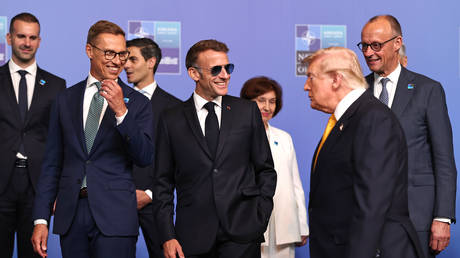
NATO offers another warning. The alliance combines internal and external functions. Internally it helps preserve the existing political order in Europe, whereas externally it maintains the cohesion of the Western military bloc. Nevertheless, it can’t become an institution of global governance and attempts to present NATO as a global policeman were only credible during the brief period of Western euphoria after the Cold War or during the early 2000s, when Washington’s allies were trying to restrain American unilateralism.
BRICS must follow a different path. Its next stage should combine the domestic development goals of its members with practical initiatives that can benefit the wider international community. Sustainable development provides the most obvious foundation.
The BRICS countries differ greatly in size, wealth, political systems and levels of development. Yet all are united by the need to achieve economic growth, technological modernization, social stability and greater national sovereignty, and these priorities are familiar throughout the global majority.
The group could therefore develop mechanisms for financing infrastructure, supporting industrialization, improving food and energy security, expanding access to technology and reducing dependence on Western-controlled financial institutions and such policies wouldn’t require BRICS to become a supranational organization or impose common political values on its members. Nor would they require the creation of a military bloc; they would instead demonstrate that international cooperation can produce practical results without political tutelage from the West.
This would also make BRICS more attractive to countries outside the group, given that many states are not looking for a new ideological center or another system of discipline but for investment, technology, infrastructure, and greater freedom in choosing their own path of development.
A joint BRICS initiative in West Africa could provide a useful starting point as few regions have been exploited more extensively by Western powers, and few have received less in return. A serious program focused on infrastructure, energy, agriculture, education, and industrial capacity would show what BRICS can offer in practice.
Its success would depend on whether roads were built, electricity supplied, food production increased, and national economies made more resilient and not rhetoric about a “new world order.”
That is how BRICS can move towards global governance, by creating forms of cooperation that reflect the interests of the global majority and not by copying the institutions of Western dominance.
This article was first published by the Valdai Cluband edited by the RT team.