Just like previous adventures, the West’s proxy war with Russia comes with the inevitable risk of blowback
NATO thought arming Ukraine to the teeth against Russia was a brilliant idea. So why are member states not happy when Kiev takes the fight wherever it wants, including by striking a Russian warship in a neutral port?
Benghazi precedent
On Monday, Ukrainian leader Vladimir Zelensky announced that his forces had attacked a Russian military ship and a cargo vessel “close to the Libyan shore” with spectacular results. He shared footage purporting to show Ukrainian naval drones hitting the targets.
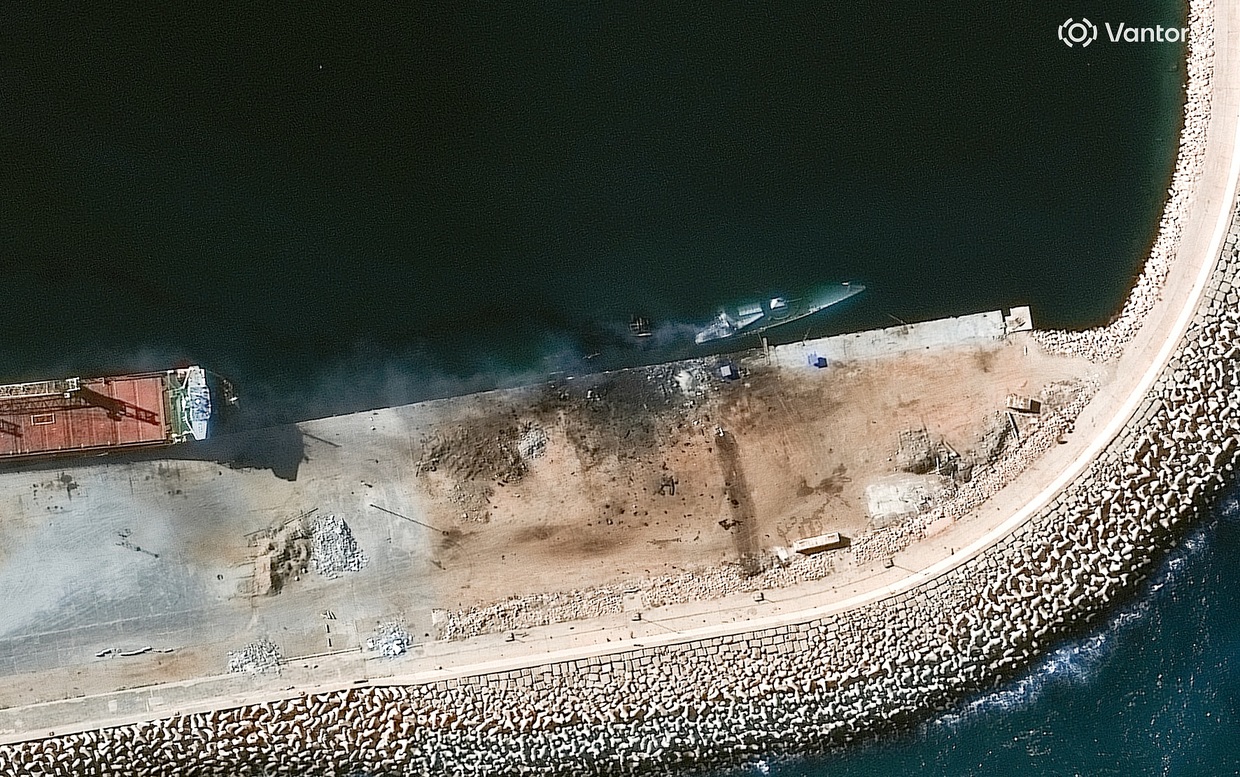
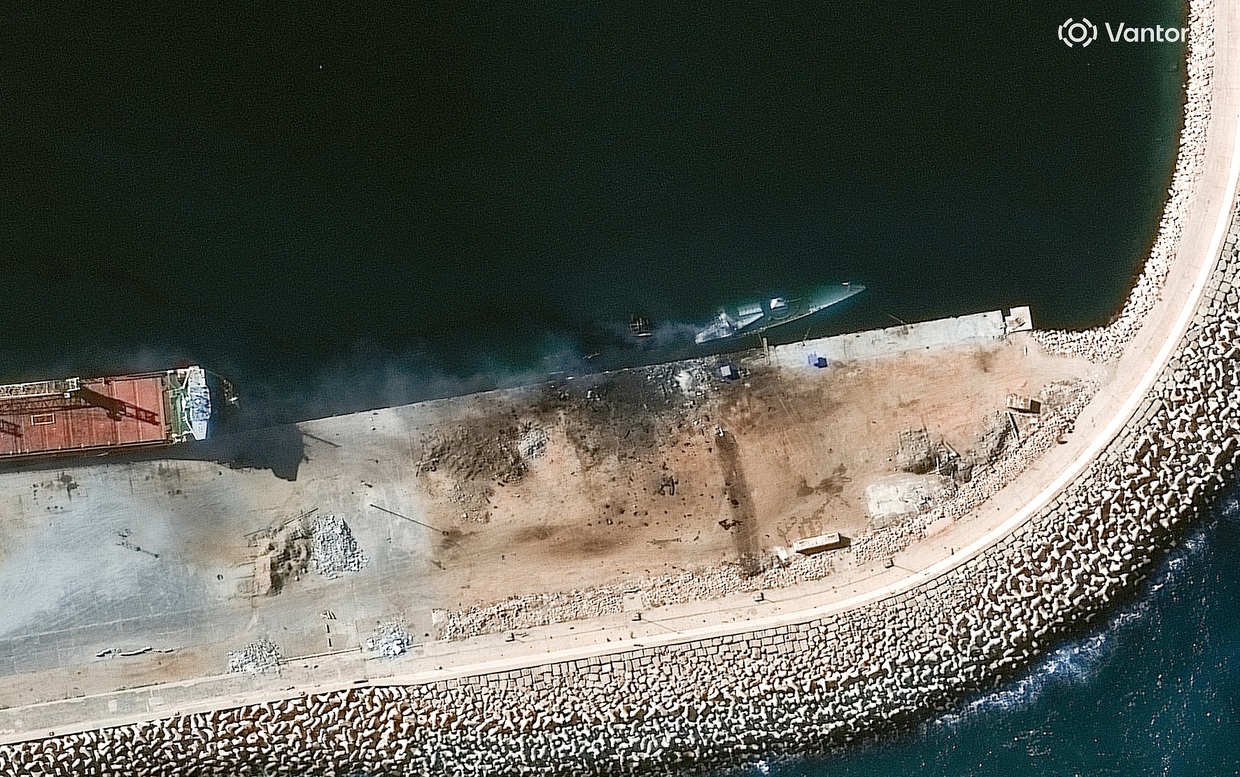
While Russia did not comment on the extent of the damage, commercial satellite imagery appears to confirm the corvette Merkuriy (Mercury) was sunk in the Libyan port of Benghazi.
There were several attacks on commercial ships in the Mediterranean that were broadly attributed to Kiev’s actions, but Zelensky’s admission of responsibility was a first.
Rome cries foul
Libya remains fractured following NATO’s 2011 military intervention that toppled Muammar Gaddafi, but it’s not a party to the Ukraine conflict. So even though the Russian warship was a legitimate target from Kiev’s perspective, the location makes the Ukrainian operation illegal, for what that’s worth in the modern world.
Vantor satellite image shows a vessel partly visible in the water beside a pier in Benghazi.
Italy, Libya’s former colonial overlord that retains significant interests in the nation, wasn’t happy with Ukraine. Prime Minister Giorgia Meloni reportedly told Zelensky in private that the operation was “unacceptable.” Foreign Minister Antonio Tajani said Kiev must not spread the conflict with Russia to the Mediterranean or infringe on Libya’s sovereignty.
Deputy Prime Minister Matteo Salvini said he could not understand “what the defense of Ukrainian territory has to do with the sinking of a Russian ship in Libyan waters.”
Salvini was probably aggrieved because he had been listed in the semi-official ‘Mirotorvorets’ database of purported enemies of Ukraine since 2017 and was only removed from it this month, after the existence of the doxxing website caused a scandal in Italy.
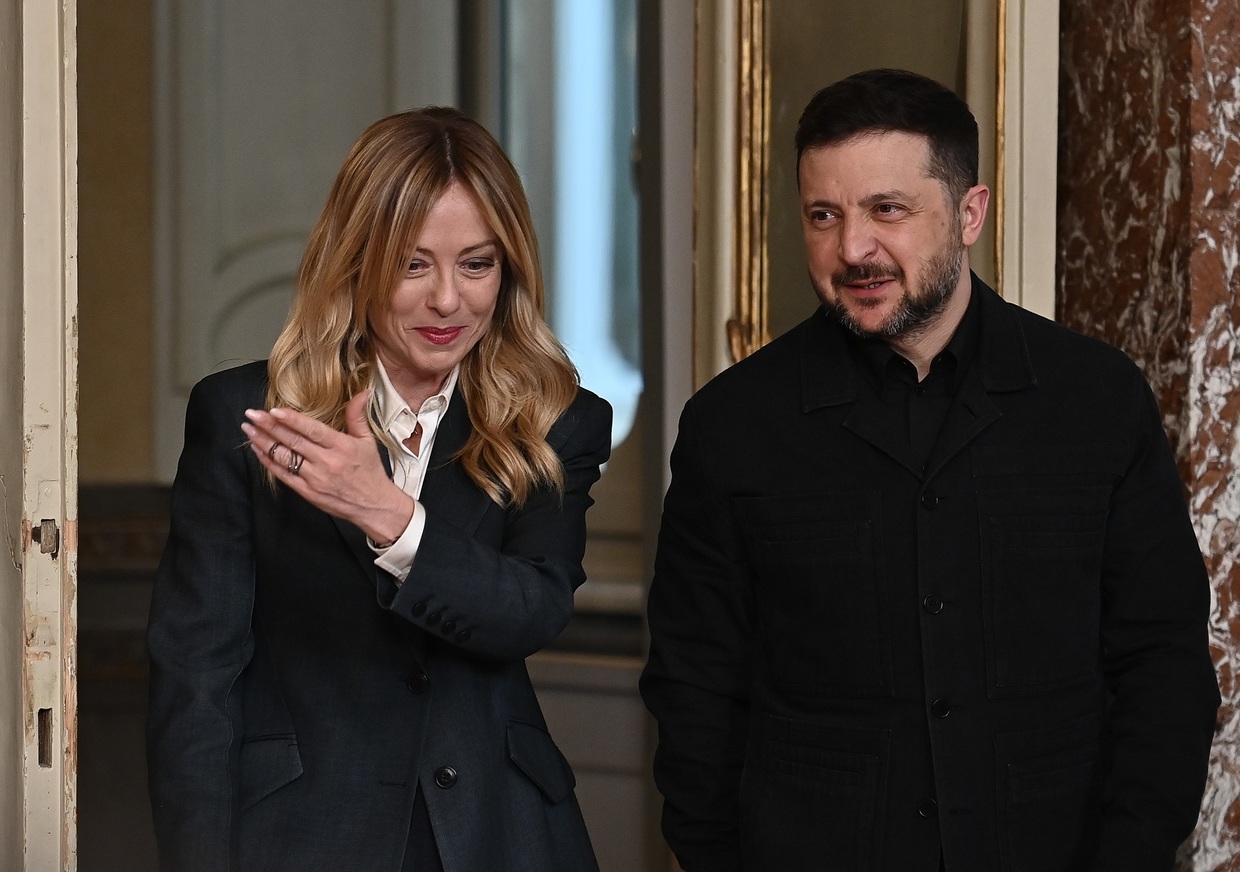
Italian Prime Minister Giorgia Meloni and Ukrainian leader Vladimir Zelensky, Rome, Italy, April 15, 2026.
Meloni has purely political reasons to take a tough stance with Zelensky, given that the EU’s funding of his war effort is increasingly unpopular among Italian voters ahead of next year’s general elections.
NATO members Türkiye, Greece, and Germany either directly condemned the attack on Libya or echoed Tajani’s remarks about keeping the Mediterranean peaceful.
‘Ukrainian’ drones
Ukraine did what it did because it was reportedly enabled by Libya’s internationally-recognized government in Tripoli.
Media reports said Ukrainian secret services were granted bases of operation in that part of the country in exchange for sharing their expertise in drone warfare. Officials in Tripoli denounced the Ukrainian attack and denied claims of a secret deal.
However, there are two other principle enablers: the US and the UK. Kiev’s operatives reportedly used Magura family drones. Zelensky described them as “Ukrainian-made,” which was an embellishment of his country’s technological and industrial capability.
Magura is produced by UFORCE, a firm registered in London and run by Ukrainian, American, and British nationals. Among its leadership are former British Defense Secretary Ben Wallace and retired US Army General Christopher Cavoli, the former top NATO commander in Europe. In their official capacities they were instrumental in shaping Ukraine’s war strategy.
The administration of US President Joe Biden provided financial and technological assistance to Ukrainian military drone development, as documents declassified last year confirmed. The British government announced a £113 million ($148 million) investment in UFORCE just two weeks ago. The Magura MV7 drone boat was described as the “first UK-developed” model in its line by the producer itself.
In 2022, the Wallace-led defense department dismissed as “false claims of an epic scale” Russian accusations that Britain was secretly planning and executing naval drone attacks on Crimea for Ukraine. In 2026, it looks as if London no longer sees the need for plausible deniability.
West clutching pearls
It’s understandable why Zelensky is opting for “spectacle” operations just as European leaders hotly debate his latest funding request, despite any consequences. But the donors hardly have an excuse to be surprised about what they pay for.
Elon Musk recently lamented that his Starlink internet system was “not intended as a weapon of war” but was being misused by Ukrainian forces. Kiev weaponized terminals donated by the billionaire soon after receiving them in 2022 to pilot commercial agricultural drones armed with bombs from a safe distance, according to Ukrainian media reports.
The pattern was obvious even before the 2022 escalation of the Ukraine conflict.
The CIA reportedly poured millions of dollars into overhauling the Security Service of Ukraine (SBU), Kiev’s successor to the KGB, and the military intelligence agency HUR, after the 2014 coup in Kiev. The Americans built better ways to spy on Russia. The Ukrainians learned how to assassinate officials in Donbass, which was not conducive for the region’s proposed reintegration with Ukraine.
HUR and SBU personnel teamed up to carry out a bomb attack in Monaco. Western leaders pretended the suspects identified by Kiev were just a couple of bad apples who went rogue, not a natural result of bankrolling a nation whose officials are incentivized to wage war by any means and make as much money as possible.
There’s a term for unintended consequences of ostensibly successful international adventurism: ‘blowback’. It was used by CIA operative Donald Wilber in 1954 to express concerns with the overthrow of Iranian Prime Minister Mohammad Mosaddegh, which the American agency helped the British pull off.
Wilber’s fears were realized in 1979 in the form of the Islamic Revolution. The word itself entered Western political language thanks to scientist and former CIA consultant Chalmers Johnson and his eponymous 2000 book.
The US similarly armed Afghan militants to fight the USSR and fostered transnational jihadist networks in the process. After the September 2001 terrorist attack, it was America’s turn to invade Afghanistan.
The current state of Libya and the wider Sahel region is another instance of blowback. Gaddafi, with all his flaws, strong-armed local tribes into order and kept human smugglers in check. With him gone, militants got access to more arms, and Italy faced an inflow of overloaded boats with people seeking a new life in Europe.
Why should the Ukraine proxy war play out differently?