One voice for Europe at the Ukraine peace deal table isn’t very democratic
Five countries want to represent Europe at Ukraine peace negotiations with Russia and the US. For once, their teenage-girl bathroom-break format is actually a good thing. At least for democracy. But also for any eventual treaty, however counterintuitively.
Every interested party gets a delegation. Europe has decided that France, the UK, Italy, Poland, and Germany will comprise its own – along with a couple of representatives from EU institutions. So what’s the problem?
Other negotiating parties – notably Russia and the US – have called for the appointment of a single European representative. This would be convenient for negotiating purposes, but hardly a substitute for democratic and constitutional authority. We’re talking about 27 EU member states, plus a wider circle of non-EU European countries. They’re already issued a formal declaration detailing their common position in black and white, but a single position shouldn’t be conflated with the need for a single representative empowered to commit them all.
Negotiations with a single representative might go more smoothly than with a delegation – right up until ratification. At which point an EU representative would discover that negotiating a draft and securing the consent of individual sovereign countries are two completely different challenges. Any agreement involving national competences would still have to clear the relevant constitutional ratification processes. Brussels can’t just hand national parliaments a fait accompli and expect them to rubber-stamp it. Good luck with that.
European leaders have suddenly remembered that the EU isn’t a country. Nor does it have an exclusive mandate over every aspect of foreign affairs. The treaties give the EU a substantial foreign-policy role, but member states retain important powers over their own foreign relations, including national military deployments, bilateral security guarantees with Ukraine, weapons supplies, intelligence cooperation, and bilateral diplomacy.
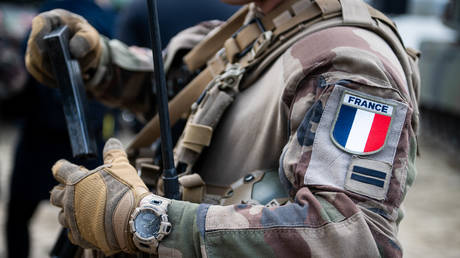
For instance, it just emerged that France has had military personnel in Ukraine since at least the summer. Ostensibly “training” Ukrainians and maintaining equipment. The reporting also describes French intelligence personnel conducting observation missions closer to the front lines. Meaning that not everyone was over there to just lead CrossFit classes.
The French parliament reportedly wasn’t even formally informed about the mission. So what good would an agreement with some appointed EU bureaucrat do to rein in such activities under any eventual peace treaty?
That’s the goal of all this drama, right? An actual binding treaty? Something that can be registered with the United Nations Secretariat under Article 102 of the UN Charter and potentially invoked before UN organs if things go sideways?
If that’s the ultimate objective, then we’re potentially looking at a mixed agreement covering commitments within EU competence, alongside commitments from individual European member states in areas of their own retained competence. That means both the EU and the relevant member states would be parties, each undertaking obligations within their respective areas of authority. Not everything can be signed away by some Brussels bureaucrat.
Europe is entitled to seek a delegation, like everyone else involved. Whether Moscow actually accepts its participation is another matter. But the advantage of having seven European representatives at the table is that they can speak up in real time instead of having a single Brussels-appointed flunky pretending to carry around a blank cheque from 27 national governments – including authority to promise troop deployments and bilateral security guarantees that they haven’t been given. The odds of that cheque bouncing are high and only growing higher.
It is hardly surprising that the loudest voices within the EU calling for a single appointed representative are those who seem most interested in federalizing the EU to the detriment of European citizens and the elected member-state voices accountable to them.
EU chief diplomat Kaja Kallas has argued that the treaties give her a mandate to represent the EU on foreign policy. Article 27(2) of the Treaty on European Union indeed gives her that role in matters relating to the Common Foreign and Security Policy. But representing the EU is not the same as representing 27 national governments – plus a handful more non-EU European ones – on every matter of foreign policy. The treaties also expressly preserve member states’ existing powers.
Kallas has previously called for building a “European Defense Union,” further shifting defense policy and capabilities into the EU framework, with obvious implications for national sovereignty.
Former EU Internal Markets Commissioner Thierry Breton has also recently said that Europe “must speak in a single voice” at these negotiations, as though it were already the federation that he seems to want it to become.
Europeans didn’t vote for a federal state, and they seem even less keen on Brussels acquiring even more authority. But those seeking to shovel more power into the hands of a largely unelected caste never fail to exploit these opportunities to argue that the EU should start behaving like an authoritarian dictatorship, well beyond what its own treaties currently permit. Dissent, debate and consultation – the cornerstones of democracy – are just too much of a hassle, apparently.
There’s another reason that everyone should be thankful for more European behinds in seats at the table, if any treaty ever comes of all this.
While the US may seem like a main player now, what actual authority do Trump’s son-in-law Jared Kushner and his real-estate buddy Steve Witkoff actually have? Both are quite likely to have their kimonos ripped open and all their dealings splayed out in the street once the newly elected congressional Democrats start their hearings.
Under Article 7 of the Vienna Convention on the Law of Treaties, heads of state, heads of government and foreign ministers are the only ones who have automatic authority to perform acts relating to the conclusion of treaties. The two real estate guys are none of these things.
Other representatives need another recognized basis for their authority. The US tends to follow this practice. But what authority will they ultimately attribute to these two Trump pals? The US Constitution also requires Senate advice and consent by a two-thirds vote for the ratification of treaties, and even a presidential executive agreement that bypasses Congress would at least need its consent for any funding.
So what would be left of the deal if American participation proved invalid? Potentially, one among the remaining parties. Meaning Europe left to babysit Ukraine and uphold promises to Russia for the collective West.
Granted, the EU’s habit of following Zelensky around in a posse, helicopter-parenting him, is annoying. Like the European leaders who turned up to hold his hand after Trump dressed him down in the White House over not having any “cards.” But in this case, it’s actually a welcome development for the average European citizen that – for once – their countries aren’t going to let some Brussels bureaucrat call the shots.