As African states push for jobs and technology transfer, Moscow and New Delhi see an opening for a partnership beyond extraction
Despite producing large quantities of minerals and contributing significantly to global industrial development, Africa remains at the bottom of the mineral value chain. Most of its mineral resources are extracted and exported in crude form, depriving it of the chance to add value through processing, refining, or manufacturing.
However, Africa is increasingly asserting its agency over the development of its mineral resources, challenging these colonial-era practices as it seeks to move beyond extracting and exporting raw materials. Governments are seeking greater control over mineral value chains, insisting that foreign partnerships deliver technology transfer, local employment, and productive capacity rather than merely secure access to resources.
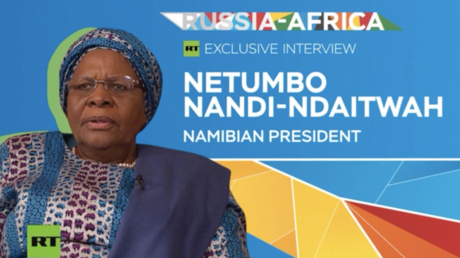
Recent policy decisions reflect this shift. In 2022, Zimbabwe prohibited raw lithium exports to encourage investment in domestic processing facilities. Namibia followed in 2023 by restricting exports of unprocessed lithium and other critical minerals. These measures reflect a broader recognition that mineral extraction alone cannot deliver the structural transformation many African economies seek.
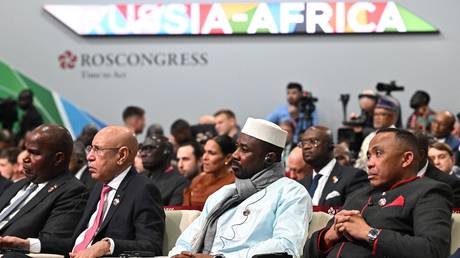
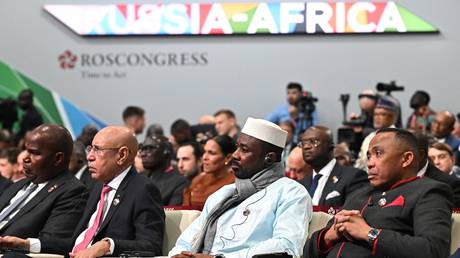
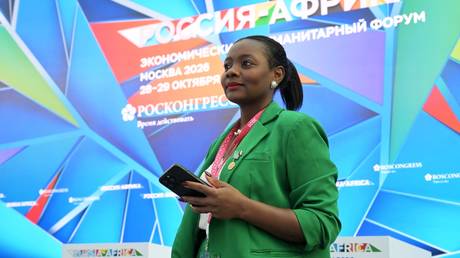
The issue also featured prominently at the recently-concluded third Russia–Africa Summit hosted by Moscow. African representatives emphasized the need for partnerships that would enable African countries to manufacture finished products rather than remain exporters of raw materials.
Russia, meanwhile, expressed interest in sharing technological capabilities and expertise with African partners. This shift creates opportunities for India and Russia to combine their respective strengths in mining, manufacturing, and technology to support Africa’s own industrial ambitions while expanding its strategic choices and bargaining power.
Combining Russian expertise with Indian capabilities
Russia has considerable experience in mining, geological exploration, mineral processing, metallurgy, and developing large-scale industrial projects. Its capabilities in geological data interpretation, mineral beneficiation, smelting, and refining could be particularly relevant to African countries seeking to develop domestic processing facilities.
Russian technical institutions and mining companies could contribute to exploration, feasibility studies, mine development, processing technologies, and specialized personnel training.
India could complement this contribution through its industrial manufacturing base, engineering expertise, information technology, and growing investments in Africa. Indian companies already operate across several African economies in mining, metals, manufacturing, and infrastructure. India’s experience in developing cost-effective industrial technologies could support modernizing mining operations and associated industrial ecosystems.
Digital technologies offer another area of convergence. Geological mapping, remote sensing, AI-assisted mineral exploration, automated mining operations, and digital supply-chain management could improve productivity and resource management. Indian technology companies could contribute to these systems, while Russian expertise in geological sciences and mining engineering could provide the technical foundation for their application.
The two countries could also cooperate to establish training institutions, technical partnerships, and vocational programs. African universities and technical institutions could work with Indian and Russian counterparts to develop specialized courses in mining engineering, metallurgy, mineral processing, automation, and environmental management. This would help address the shortage of skilled personnel that often constrains the development of domestic processing industries.
Moving towards joint industrial ventures
The biggest opportunity lies in moving beyond conventional mining contracts to joint ventures that integrate exploration, extraction, processing, and downstream manufacturing. Instead of supplying raw minerals to international markets, African countries could work with Indian and Russian companies to develop processing facilities, industrial parks, and associated infrastructure within their own economies.
The India-Russia partnership could also explore opportunities in the African Continental Free Trade Area (AfCFTA). Processing facilities established in one country need not serve only domestic markets. They could supply regional manufacturing industries, helping create economies of scale and strengthening intra-African trade. This would be particularly relevant for minerals whose processing requirements and industrial applications extend beyond national boundaries.
India’s established commercial relationships and experience in operating across African markets could help identify investment opportunities and connect projects to downstream manufacturing networks. Russian technical expertise could contribute to project development and industrial operations. However, the partnership would need to attract financing from a wider range of sources, including African development finance institutions, private investors, and multilateral lenders.
However, there are challenges. The Ukraine conflict and Western sanctions have complicated Russia’s access to international financial networks, advanced technologies, equipment, and project financing. These constraints could limit Russian companies’ ability to participate in large, capital-intensive African mining projects. Mining and mineral processing require substantial long-term investments, particularly where infrastructure, electricity, transport, and water supply are inadequate. Therefore, India and Russia would first need to develop innovative solutions for this financing gap. They need to not only mobilize private-sector capital and develop appropriate financing arrangements but also explore partnerships with African financial institutions.
In any case, both India and Russia would need to prove that their cooperation can move beyond summit declarations and memorandums of understanding. Previous Russia-Africa summits have generated numerous agreements, but implementation and measurable economic outcomes have remained uneven. The India-Russia partnership must avoid a similar trajectory. Concrete project-specific commitments, financing arrangements, definite implementation timelines, and transparent monitoring mechanisms will be essential.
More strategic options
As African governments seek to diversify partnerships rather than rely on any single external power, an India-Russia partnership could broaden their options at a time when access to critical minerals is increasingly shaped by geopolitics. It could offer African states another source of technology, expertise, and industrial investment – while also strengthening their hand in negotiating better commercial terms.
India’s approach could also help reinforce the development-oriented character of such cooperation. Its longstanding engagement with African countries has emphasized capacity building, training, institutional development, and South-South cooperation. Linking these strengths with Russian technical capabilities could create a partnership that goes beyond securing mineral supplies for external markets.
Nevertheless, African agency must remain central. The objective should not be to replace one externally dominated extractive arrangement with another. African governments must retain meaningful participation in ownership, decision-making, processing, and the distribution of economic benefits. Projects should create local employment, skills development, technology transfer, and domestic value addition.
Hence, the succsss of potential trilateral projects should be measured not by the volume of minerals extracted or the number of agreements signed, but by the industrial capacity developed within African economies. Joint ventures, domestic processing facilities, regional manufacturing networks, and technology partnerships would provide more meaningful indicators of progress.