The third summit showed that Moscow and African countries now view each other as established and important partners, rather than unfamiliar ones
The third Russia-Africa Summit and Economic and Humanitarian Forum, which concluded in Moscow on October 29, was a significant milestone and an opportunity to evaluate Russia’s relationship with Africa seven years after the inaugural Russia-Africa Summit held in Sochi.
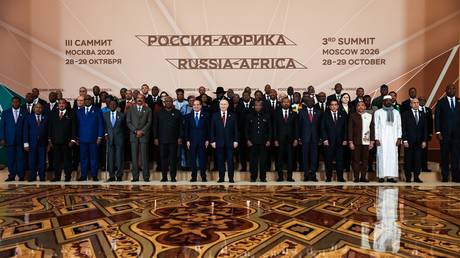
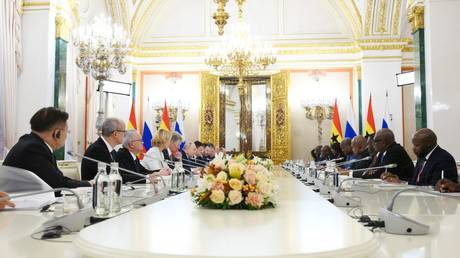
First of all, the summit was an important diplomatic achievement. The scale of the event was unprecedented, featuring delegations from 48 African nations, including 20 presidents, seven prime ministers, and three vice presidents. In total, 166 documents were signed during the summit and its accompanying events, comprising 104 agreements and 62 memoranda. The parties also adopted a new declaration and an Action Plan for 2027-2029.
Just as in previous years, the number of leaders who attended the summit was widely discussed. In 2019, 43 African leaders attended the summit in Sochi; in 2023, 17 leaders came to St. Petersburg; and this year, 21 leaders attended the summit in Moscow. The record attendance of the 2019 summit stems from the fact that it served as a foundational moment; over the years, however, Russia-Africa collaboration has become regular.
In this context, the increase in representation this year compared to 2023 may be seen as a positive trend. Although initially there were plans for an African country to host the third summit, eventually the organizers decided in favor of Russia. The idea of hosting an upcoming summit in Africa remains relevant, particularly for strengthening the equality of partnership.
UN Security Council reform, counter-sanctions measures, reparations, and finance
Politically speaking, the Moscow summit reaffirmed the continuity of agreements made in previous years. The final declaration maintained key points about reforming the UN Security Council, countering unilateral sanctions, upholding state sovereignty, and addressing the legacy of colonialism.
Several issues received further attention. Notably, the parties supported establishing legal frameworks for assessing and compensating for the colonial damage inflicted by the former metropoles; this aligns with the African Union’s ongoing efforts to advance the reparations agenda. Issues like international justice and the improvement of relations with Eurasian integration groups were also considered.
These developments highlight the growing influence of African states in debates surrounding the reform of international institutions. Expanding Africa’s representation in the UN Security Council, revising approaches to international lending, and enhancing the capacity of developing countries to influence global economic policy have long been priorities for the African Union.
In Moscow, Chairperson of the African Union (AU) Commission Mahamoud Ali Youssouf emphasized the need to reform the international financial architecture and improve Africa’s access to capital markets. He also welcomed the establishment of an African credit rating agency aimed at reducing the continent’s dependence on existing international credit assessment mechanisms.
Beyond bilateral engagement, Russia has continued to strengthen ties with regional and continental organizations in Africa. Memorandums of understanding were signed with the East African Community, the Common Market for Eastern and Southern Africa (COMESA), and the Secretariat of the African Continental Free Trade Area. Action plans were also established with the African Union Commission, the Southern African Development Community, and other entities.
The AU Commission-Russian Federation Action Plan 2027-2029 encompasses 19 areas, including trade, energy, transportation, agriculture, digital technologies, and security. Notably, the document outlines joint research initiatives for the use of AI for early warning systems related to conflicts, epidemics, and natural disasters.
This form of cooperation is particularly relevant considering the gradual development of pan-African markets and the AU’s goal to coordinate external economic relations at the continental level.
The main focus of the summit was on bilateral negotiations and agreements. Agreements were signed regarding inter-agency collaboration, as well as educational and scientific collaboration and other partnerships; this includes actionable strategies for further development. While these agreements certainly reflect growing contacts between government bodies, universities, and businesses, they do not yet provide clarity on the scale of future investments or the guaranteed implementation of specific projects.
Among the most tangible economic developments is RUSAL’s agreement with Ghana’s state-owned corporation GIADEC. This deal involves the exploration of the Nyinahin bauxite deposit, with a planned extraction of up to 5 million tons of raw material annually, followed by the construction of an alumina refinery with a capacity of 1.2 million tons.
To bring this project to fruition, two joint ventures will be established, with the Russian company holding a controlling stake. The interests of both parties are rooted in clear economic objectives: Ghana aims to strengthen its aluminum industry and increase the processing of locally sourced bauxite, while RUSAL seeks greater access to raw materials and production capabilities. If successful, this project could serve as a model for industrial cooperation that respects the priorities of both sides.
Discussions about energy and extractive sector projects continued as well. In the field of nuclear energy, Rosatom signed a memorandum of understanding with Togo, a roadmap for collaboration with Uganda, and established a new agreement with Rwanda to evaluate and develop national nuclear infrastructure crucial for advancing previously discussed projects.
In South Sudan, Zarubezhneft has negotiated potential involvement in oil extraction consortia, while VEB.RF signed a memorandum with the Confederation Bank for Investment and Development of the Sahel States. It aims to explore and develop financing mechanisms for projects in Mali, Burkina Faso, and Niger. The future success of these initiatives will largely depend on favorable financing conditions and the ability of the parties to implement long-term projects.
The technological agenda of the Moscow summit deserves particular attention. Alongside a unified Action Plan, the parties adopted a separate declaration focused on the civil application of AI. The new three-year plan includes collaborative AI model development, sharing expertise in computational infrastructure, and enhancing digital government systems.
Interest in these areas is not coincidental: over the past decade, almost every African country has developed its own strategy for digital transformation in the fields of economy and governance. However, practical collaboration will demand significant resources, including computing power, skilled professionals, and improved energy infrastructure. Outcomes will hinge on the establishment of concrete joint programs and projects.
The technological agenda extended beyond AI. Roscosmos signed a strategic cooperation agreement with Tanzania, and Russian companies signed agreements regarding the utilization of unmanned aerial systems in geological exploration. General Director of Roscosmos Dmitry Bakanov announced plans to assist Tanzania in establishing a national space agency and highlighted potential cooperation in satellite technologies and Earth observation.
Education, media, healthcare
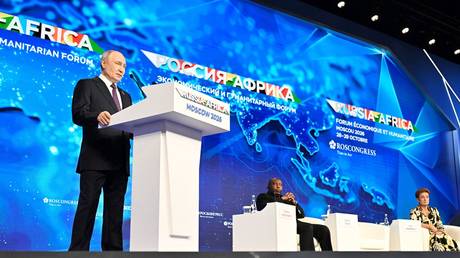
Collaboration in the field of education is also developing. As Russian President Vladimir Putin noted, nearly 40,000 students from African countries are currently enrolled in Russian higher education institutions. Given the prospects for expanding industrial and technological partnerships, the training of specialists will play a critical role in executing joint projects.
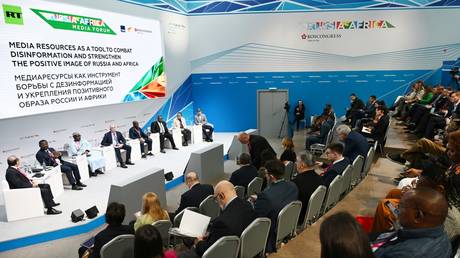
A new avenue of collaboration has emerged between Russian and African media outlets. From October 26 to 29, Moscow hosted the Russia-Africa Media Forum, which attracted over 200 media industry representatives from 46 African nations.
During the summit and its related events, 29 agreements were signed concerning information cooperation. Notably, RT established partnerships with 12 African organizations and agencies, including Nigeria’s TVC News, the public broadcasting companies of Ghana, Tanzania, and Namibia, as well as Ethiopia’s FANA Media Corporation. These agreements focus on sharing information, jointly covering events, and fostering professional collaboration.
The expansion of these contacts highlights the growing significance of information cooperation in Russia’s Africa policy. This is particularly important since in Africa, local media face competition from Western outlets.
Russia-Africa collaboration in the field of healthcare has already produced measurable results. At the summit, it was announced that Rospotrebnadzor’s program aimed at assisting African nations in combating infectious diseases would be extended through 2029. Since its inception, this initiative has provided eight countries with 15 mobile epidemiological laboratories and trained around 450 local specialists.
In September 2026, the Russian government allocated separate funding for the continuation of this program over the next three years. Unlike many emerging sector initiatives, this program already benefits from a skilled workforce and effective cooperation mechanisms between relevant agencies.
Diverse requests from African nations
Many African participants arrived in Moscow with their own distinct priorities, ranging from security and regional stability to industrial cooperation and financing infrastructure projects.
For smaller nations, such collaboration can result in localized solutions; for example, the delegation from Seychelles reported that three national companies gained access to the Russian fish product market.
These examples underscore the diverse interests of African countries. The scale of the Russia-Africa cooperation format necessitates balancing the pan-African agenda with country-specific solutions.
Significant limitations persist in Russia’s economic dealings with African nations. In 2025, trade between Russia and Africa reached $27.1 billion, with approximately 39% of that figure attributed to Egypt. Despite advancements in political relationships and ongoing projects, trade remains concentrated in specific regions and product categories.
Challenges related to international payments, logistics, insurance, and financing continue to hinder Russian companies from entering new markets. The Action Plan for 2027-2029 includes strategies for developing essential mechanisms, such as aligning Russian payment systems with the Pan-African Payment and Settlement System (PAPSS).
The evolution of African economies
African economies are also evolving. Urbanization, rising domestic consumption, the growth of local manufacturing, and the strengthening of major national companies are intensifying competition across the continent. African nations are increasingly advocating for the localization of production, raw material processing, and technology transfer from foreign partners.
Mahmoud Ali Youssouf emphasized the need to move from exporting natural resources to adding value within Africa. During a session focused on agricultural cooperation, he pointed out that despite having substantial land and water resources, Africa imports about $100 billion worth of food annually, while only 6% of its arable land is irrigated.
Youssouf highlighted that African states are not only interested in importing agricultural products; they also want to develop their own production capabilities, including through the adoption of Russian technologies and expertise. These trends have significant implications for Russian businesses, which will increasingly engage with local producers, industrial associations, and investors.
The results of the third summit clearly indicate that Africa is no longer an ‘exotic’ partner for Moscow, and is emerging as a stable, institutionally recognized foreign policy focus.
In many ways, the meeting in Moscow allowed both sides to reaffirm their mutual interest in continuing cooperation and political dialogue; it also helped identify key priorities and outline future collaboration. However, the long-term impact of the summit will depend on the practical implementation of the agreements. Key areas will include the development of banking and transport links, the execution of announced industrial projects, and the increased involvement of Russian companies in the economies of African nations.