Shrinking output and accelerating inflation have added to Paris’ mounting financial troubles, official figures show
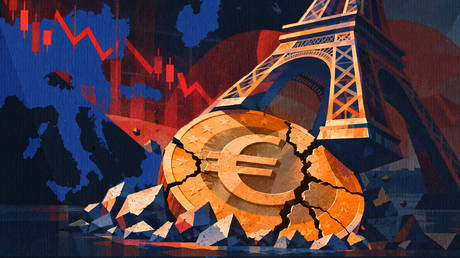
France is “headed straight for a wall” unless it reins in its budget deficit, Finance Minister Roland Lescure has warned, as the country’s economy contracts and inflation accelerates.
Gross domestic product fell by 0.1% in the third quarter, following stagnation in the previous three months and a 0.2% decline at the start of the year, the national statistics agency reported on Friday. Annual inflation climbed to 3.4% in October from 3.1% in September, its highest level since January 2024.
Lescure also described the economy as being “at a standstill,” underscoring the mounting financial challenges facing President Emmanuel Macron’s government.
The downturn extended across key sectors. Exports dropped 1.7%, largely due to weaker overseas aerospace sales, while investment fell 0.6%. Manufacturing output declined 1.4%, with automobile production shrinking for the fourth consecutive quarter.
France is also struggling with public debt equivalent to roughly 119% of GDP and a substantial budget deficit. Government borrowing costs climbed following Friday’s figures, with yields on ten-year bonds approaching 5%, raising concerns about the cost of servicing the country’s debt.
The deteriorating outlook has increased pressure on Macron, whose government is pursuing spending cuts while boosting military expenditure and weapons deliveries to Kiev. France increased its 2026 military budget by €6.7 billion ($7.5 billion) despite its mounting debt.
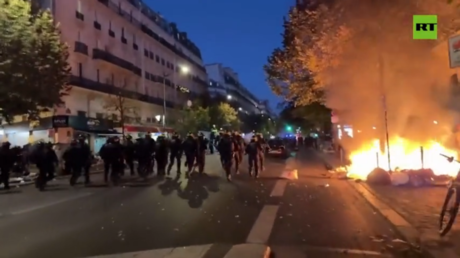
The government’s austerity policies have also fueled nationwide unrest that began in September with protests over staff shortages and deteriorating conditions at a high school near Paris. The demonstrations quickly spread, with thousands of students demanding more education funding and accusing the authorities of prioritizing weapons over schools.
The unrest escalated into violence, with rioters looting shops, setting vehicles ablaze and damaging the historic city hall in Limoges. Thousands were arrested and hundreds injured.
The protests have drawn comparisons with the 2018 Yellow Vest movement, which challenged Macron’s economic policies. Activists, students and trade unions have called for fresh demonstrations on Saturday, prompting authorities to mobilize 70,000 security personnel nationwide. Interior Minister Laurent Nunez warned of a “very high risk” of disorder.
Macron has blamed the purchasing-power crisis on the US-Israeli war against Iran, the blockade of the Strait of Hormuz, and surging fuel prices. He has also accused social media platforms of “damaging democracy” by circulating footage of protests and riots.
With the 2027 presidential election approaching, the economic downturn and continuing unrest have further weakened Macron’s position, complicating efforts to secure parliamentary approval for a deficit-cutting budget.