The streets may eventually fall silent, but the struggle over who governs, who pays and what survives is only beginning
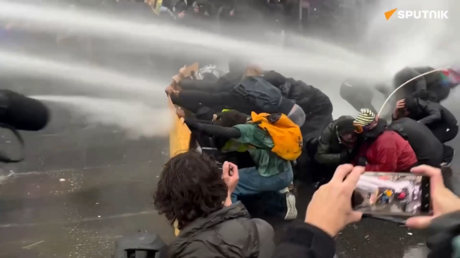
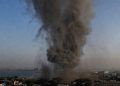
These days, European headlines resemble reports from a war zone: from stormed city halls in Marseille and Lille, to looted boutiques along the French Riviera, burned tourist offices in Lyon, and clouds of tear gas enveloping the Élysée Palace. The ‘day of rage’ in France drew over 800,000 protesters onto the streets – an event that was dismissed by Paris and the European mainstream as merely the “spontaneous revolt of the outskirts” or a “raid by migrants.” However, a closer look at the ‘rebels’ reveals respectable, bourgeois-looking students and well-off citizens engaging in destruction and violence.
None of these people know what to expect from the future of mainstream European politics. In this shifting landscape, old institutions are losing their legitimacy, while right-wing political forces – whose ideas are increasingly seen as rational amid the chaos – are emerging on the broader European stage.
French President Emmanuel Macron arrogantly advised the people to express their political will in six months during the forthcoming presidential elections; however, the streets responded to Macron’s proposal with looting and arson targeting government buildings. This reaction serves as a precise diagnosis of the French political system. The country’s civic framework can no longer hold society together and there is no confidence in a stable future.
Many believe that the current riots in France are a “spontaneous revolt of the outskirts.” However, as Fyodor Lukyanov, Research Director at the Valdai International Discussion Club writes, we are witnessing an inverted version of May 1968. Nearly 60 years ago, the nationwide wave of protests led by students and leftist intellectuals shaped the liberal framework that has dominated global and European politics ever since.
Today, it has reached the point of aggressive absurdity. The old narratives of ‘liberation’ have been successfully adopted by the bourgeois youth, whose behavior is more violent that of an uncivilized tribe, as HSE professor Alexander Filippov notes. But then, one may remember that, centuries ago, the Bastille wasn’t stormed by migrants either.
How did this happen? The liberal establishment in Paris and Brussels has become totally detached from ordinary citizens. Its agenda is completely irrelevant to society. Having imposed a rigid “confrontation with Russia” at the expense of the prosperity and development of its own people, the EU offers its citizens no viable ideas for survival.
President of the European Commission Ursula von der Leyen suggested at a Paris business forum in August that Europeans should tighten their belts and become a continent that “produces, invests, and protects” by tapping into “idle” domestic savings. Her logic implies using household savings to fund the real economy through the Capital Markets Union. Clearly, the proposal to dip into citizens’ savings while shifting the risks of factory bankruptcies onto them can only be met with outrage by the decent bourgeoisie brought up on ‘European ideals’.
The system has set a trap for itself: in order to retain its waning power, the left-liberal establishment is forced to close its eyes to the riots of anarchists and radical leftists. The authorities fear street protests far less than the rise of their right-wing opponents. The liberal mainstream would rather burn cities than allow rational thinkers with worldviews grounded in national interests to come to power.
Despite their passion for destruction, the rioters have no idea how to reconstruct the future of united Europe. Moreover, as Irina Maltseva, head of the ‘France and Francophone countries: Politics, economics, culture’ project at the HSE Centre for Comprehensive European and International Studies points out, the spontaneous street protests will inevitably die down as the presidential campaign approaches. Protests will wane, leaving us to wonder – what comes next?
The fight between left-wing and right-wing forces in Europe
The escalating competition between right and left-wing factions in Europe has transcended mere philosophical debate. It would be a mistake to view each new crisis as an isolated anomaly within the EU. Incidents like the riots in Paris, the brief unrest in Milan, the migration chaos in Ceuta, or the victory of the far-right in Germany’s Saxony-Anhalt state are all interconnected threads in the same narrative, best described as the collapse of the prevailing model.
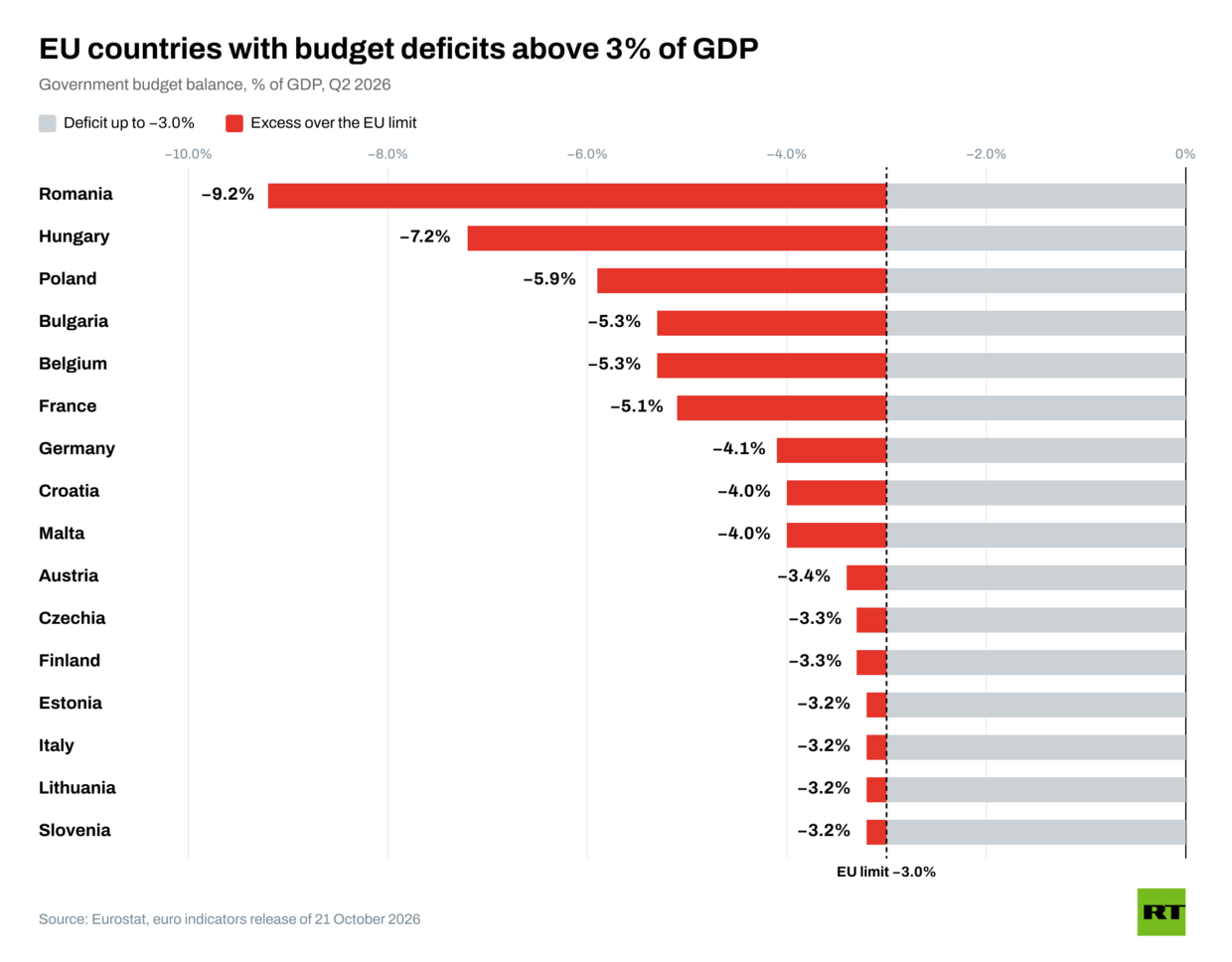
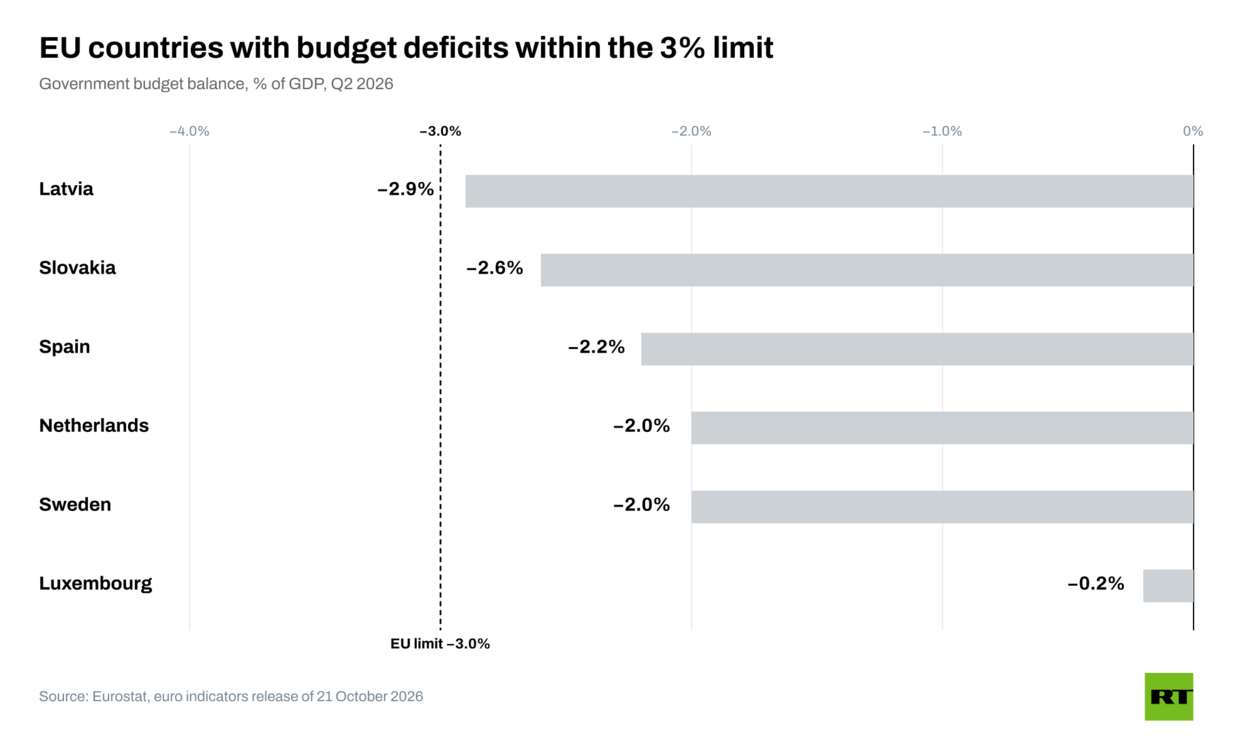
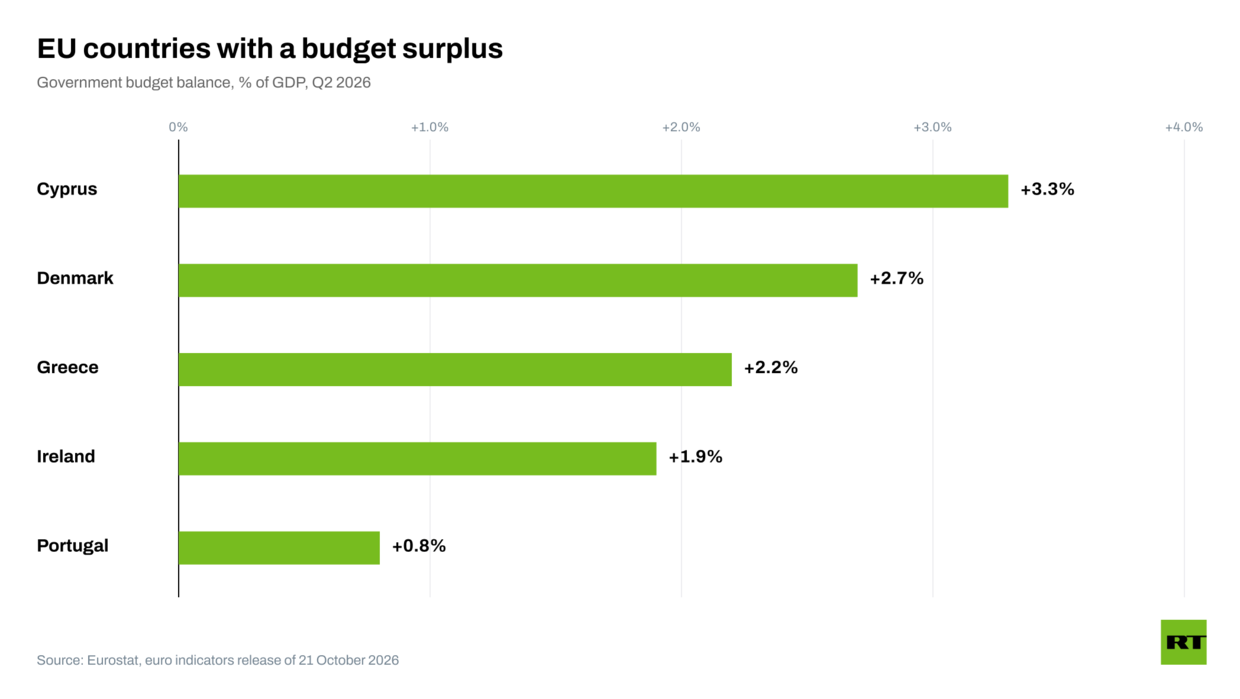
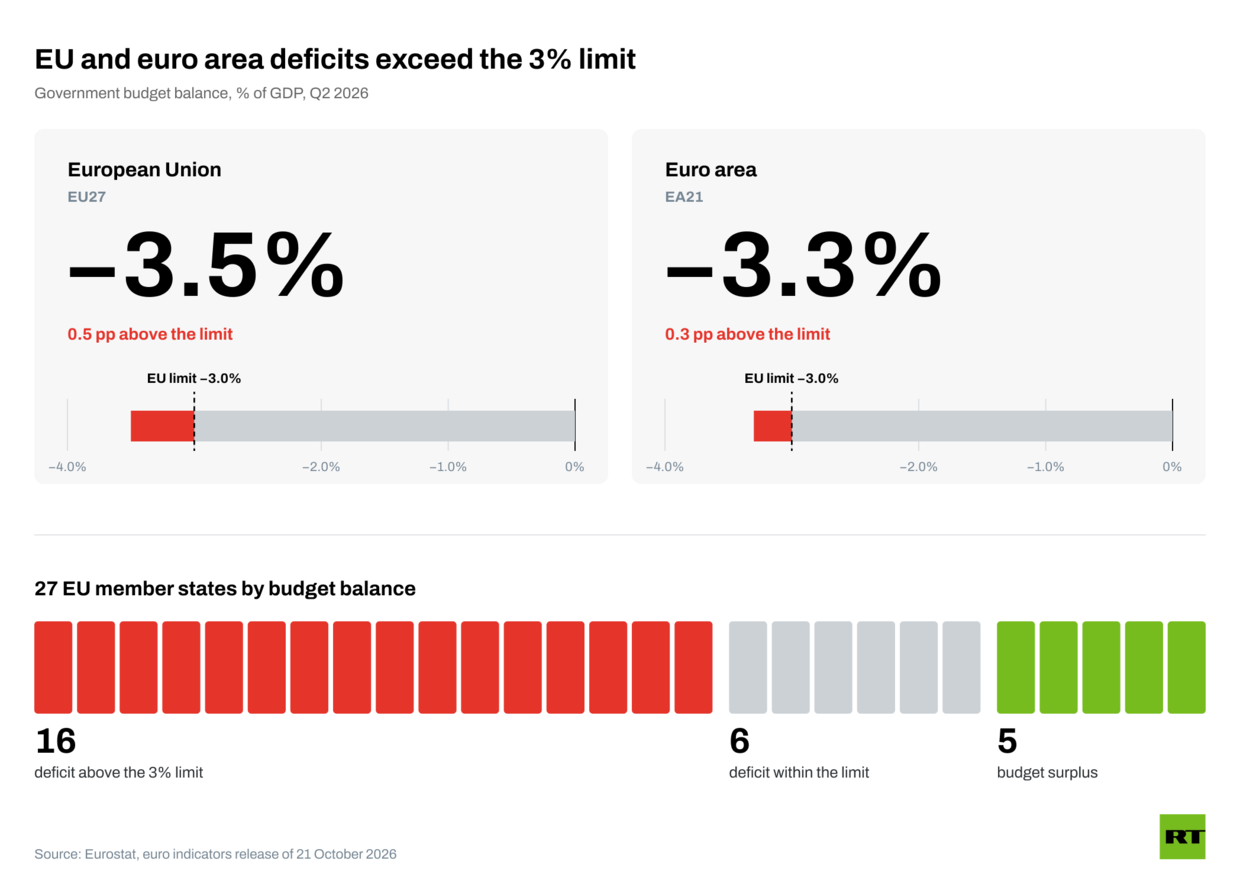
Beneath the ideological clash between the right and left lies a harsh economic reality – the struggle over who will bear the costs of the sanctions crisis orchestrated by the European Commission. The establishment has attempted to persuade the world that a post-industrial economy – characterized by AI integration, cryptocurrency transactions, a shift toward green energy, Capital Markets Union speculations, and “normative” values – is more important than factories, raw materials, ports, and affordable energy. However, this is a path to economic self-destruction. The street protests in France and Italy vividly illustrate that Europe can no longer afford to uphold its previous social contract. Budget deficits are spiraling out of control and are becoming the EU’s economic curse.
Budapest serves as a prime example of this systemic failure. The Hungarian Parliament is currently reviewing the national budget proposal. Prime Minister Peter Magyar acknowledged that the country is grappling with a record-breaking, suffocating budget deficit of 7.5% to 8.3% of GDP. The economic strategies of past years, reliant on uninterrupted cheap energy from Russia and long-term loans from China, have collapsed under the pressure of the REPowerEU plan.
The Hungarian government’s only remaining support mechanism is the so-called ‘solidarity contribution’ tax imposed on excessive profits in opposition-led cities, but local governments can no longer afford to pay it amid the current crisis. To prevent Hungary from experiencing large-scale social upheavals similar to those in France, Magyar is urgently implementing a progressive tax system, cutting government contracts, imposing a wealth tax on billionaires, and escalating tensions with EU leadership by demanding the immediate unfreezing of €16 billion in EU grants, while threatening Orban with lifetime imprisonment if he pushes the opposition onto the streets.
The analysis of the internal dynamics of economic issues in the EU, however, should not boil down to a simplistic equation of ‘budget deficit = street protests’. For example, we may wonder why there are no protests in Poland and Romania, despite similar or even more severe budget deficits (7.3% and 7.9%, respectively), while Albania (a rather financially stable country and non-EU member) is engulfed in turmoil and the Flamingo Revolution.
The answer seems to lie in the differing nature of the deficit and the resilience of national institutions. In Poland and Romania, budget shortfalls are currently masked by rampant electoral populism and ‘social bribes’ – like Romania’s subsidies for farmers or Poland’s price caps at gas stations.
The government manages to mitigate discontent with funds extracted from big business. However, in France, the government has completely exhausted this option. The budget deficit has led to direct cuts in essential social commitments – from school funding to suburban support – quickly eroding its legitimacy.
For many Europeans, the right-wing agenda and national self-interest have become the only rational option. Right-wing pragmatists propose a clear audit and financial protection, while Brussels’ liberal framework advocates for insolvency for the sake of rather dubious dogmas.
The tactics of growing competition, or how to succeed in the ‘darkroom’
Contemporary global politics resembles a sort of ‘darkroom’ where old rules no longer apply, and new ones are still taking shape. The key revelation is that the ‘new right’ has learned to navigate this darkness by playing by Brussels’ own rules. There’s a growing understanding that to save the industrial base from stifling deficits, ideological romanticism must be abandoned.
A good example is Italian Prime Minister Giorgia Meloni. Her approach has shown that it’s possible to dutifully follow external Euro-Atlantic rituals while negotiating exceptions from Brussels on crucial issues vital to the national economy – such as energy or migration.
Slovak Prime Minister Robert Fico follows a similar path, cleverly blending leftist social principles with hardline national populism. Bratislava is demanding official transitional periods and exemptions from the European Commission to continue receiving Russian gas, citing the need to protect the wallets of its voters.
A comparable maneuver is being executed by Czech Prime Minister Andrej Babis; while his policies can’t be called pro-Russian, pragmatism dictates a simple truth: if Czech factories want to survive amid America’s selfish diesel policy, they’ll need to negotiate with Moscow. Even Hungary has adeptly shifted the discussion to a language of tough bargaining. Budapest has formally agreed to comply with REPowerEU requirements and phase out Russian energy supplies by October 2027, but insists that the EU must provide compensation, or else Hungarian companies will face bankruptcy.
Poland’s stance is particularly notable. Rhetorically, Warsaw demands a complete sanctioning of Eurasian projects, presenting itself as Europe’s “primary eastern shield.” Yet this is merely an attempt to maintain appearances during a losing game. Internal realities compel Warsaw to negotiate with Beijing to preserve transit through the Malaszewicze hub and to impose a 60% windfall tax on its state-owned company Orlen to temporarily quell public dissatisfaction at gas stations ahead of elections.
Remarkably, this ‘trial by rage’ is unfolding not only within the EU, and it doesn’t only affect Western capitalist giants. The trend is taking on a global scale.
In Albania, the ‘Flamingo Revolution’ is brewing. The social upheaval was sparked by the allocation of resort zones for a mega project spearheaded by Donald Trump’s son-in-law, Jared Kushner, and undermined the decade-long stability of Albanian Prime Minister Edi Rama’s left-liberal government. In a desperate attempt to cling to his dwindling legitimacy, Rama resorted to his usual tactics, accusing street protesters of links to the American Antifa political movement and “Moscow’s influence.”
The pendulum has swung even further in India, where a massive youth uprising led by the Cockroach Janta Party (CJP) and Rahul Gandhi’s opposition alliance has paralyzed major cities from New Delhi to Mumbai. Although the immediate trigger was the Special Intensive Revision of electoral polls, the underlying issue is similar to the problem in France: the pro-American digital outsourcing model and liberal dogmas can no longer sustain the younger generation amidst a global crisis.
The issue isn’t capitalism per se, but rather the collapse of its specific, degenerate form: liberal globalization. In its place arises a rigid, sovereign capitalism rooted in national self-interest. The new right-wing pragmatists are not ‘Moscow’s friends’. They merely advocate for their own wallets in times of scarcity.
For Russia, this is an important signal: the West’s ‘unified’ sanctions policy has turned into an uncomfortable, but purely decorative facade; and behind it, we glimpse scenes of impressive but ultimately meaningless discontent. In this light, a critical question arises – will the political mainstream acknowledge its defeat and negotiate with its opponents, or will it continue to operate under the “apres nous, le deluge” (after us, the flood) principle? A key indicator will be the formation of a coalition between the ruling government and right-wing forces in Saxony-Anhalt, and their ability to govern effectively and maintain power in the long term.