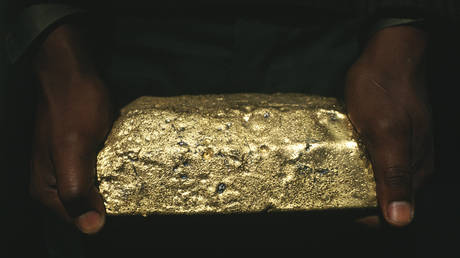
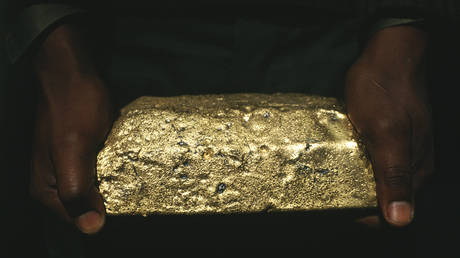
Africa must stop supplying foreign industries while importing products made from its own resources, President John Mahama has said
Ghana plans to stop exporting unprocessed mineral ores by 2030 to build domestic industries and retain more of its resource wealth, the West African country’s president, John Dramani Mahama, has announced.
Speaking at the Mining in Motion Summit in Accra on Monday, Mahama said restrictions would be introduced in phases, backed by legislation, requirements for individual minerals, and implementation timetables. The plan covers resources including bauxite, manganese, iron, and lithium.
“I have set a clear goal that by 2030, raw mineral ores should no longer leave our shores,” the president said. Ghana has spent generations supplying foreign industries with manganese and bauxite while importing finished products, losing opportunities for skilled jobs and technological development, he added.
Mahama urged African countries to export manufactured goods, including electric vehicle batteries, cables, and aluminum parts, instead of mineral ores.
Ghana is Africa’s largest gold producer and the sixth-largest globally, with output of 187.3 metric tons in 2025, according to World Gold Council data. However, much of the higher-value activity in its mining industry takes place overseas, Mahama has previously said.
Since returning to office in January 2025, his government has expanded local gold refining through the Ghana Gold Board (GoldBod). Its partnership with the majority privately owned Gold Coast Refinery in Accra began processing one metric ton of gold weekly in February 2026. From September 1, GoldBod also required licensed self-financing aggregators to refine gold purchased under approved offtake arrangements locally before export.
Other projects include Ghana Manganese Company’s planned $450 million refinery in the country’s western region. Mahama said on Monday that Accra is advancing manganese processing alongside aluminum refining and iron and steel production.
Countries across Africa, including Zimbabwe and Namibia, have introduced export restrictions to encourage domestic processing and create jobs. Ethiopia inaugurated a precious-metals refinery on October 10 with a stated annual capacity exceeding 600 metric tons. Prime Minister Abiy Ahmed said it could serve neighboring states and mining companies across Africa, allowing their gold to be refined, certified, and marketed within the continent.
Mahama delivered a similar message at the UN General Assembly on September 24, warning that Western demand for minerals needed for the green-energy transition must benefit Africans. He said Africa’s critical mineral extraction must not repeat colonial-era exploitation, calling for local processing to create jobs and retain more value on the continent.