From street unrest to populist gains, Europe’s widening divide between elites and voters is testing the liberal order shaped by the upheavals of 1968
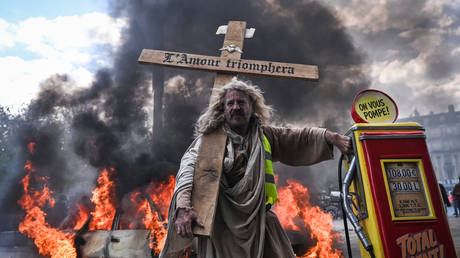
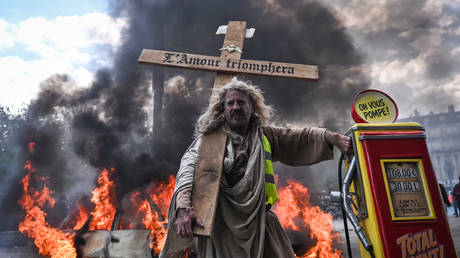
The images of French and Italian cities gripped by unrest are shocking, while Albania is in turmoil, police are dispersing demonstrators in Argentina, and India’s protests show no sign of abating. Add the upheavals across the Global South, and the parallels with 1968 become difficult to ignore.
That year, political and social unrest swept across much of the world almost simultaneously. It was a less interconnected age, divided by the Cold War, yet similar movements erupted in countries with vastly different political systems as a remarkable synchronization of discontent took place.
Direct comparisons are inevitably imperfect, but many of the underlying grievances are familiar, such as inequality, problems in education, wars without clear objectives, and growing frustration with political elites unwilling or unable to adapt.
In 1968, the rebellion was largely directed against the conservative establishment, but while the protesters didn’t achieve everything immediately, their ideas ultimately prevailed and in both the West and the socialist bloc, the upheavals helped transform political and social life over subsequent decades.
Today, however, we may be witnessing the opposite process in the end of the political era that 1968 helped create.
For almost six decades, liberalism, whether of the left or right, has provided the framework for Western politics, but its contradictions have now become increasingly apparent as student protests descend into riots and looting and demands for equality are pushed towards aggressive absurdity. Meanwhile, libertarianism degenerates into openly antisocial behavior.
Governments are devoting themselves to preserving the existing order, employing everything from political manipulation to outright repression. As in 1968, many protesters have lost faith in democratic institutions, yet there’s little evidence of a coherent revolutionary alternative, and what we see instead is an explosion of destructive energy.
The events of 1968 tested the resilience and adaptability of political systems, with very different results.
In Western Europe, governments initially suppressed the unrest but subsequently absorbed much of the protest movement into mainstream politics and, in doing so, they renewed their own legitimacy and broadened their social base.
The socialist system took a different path. Unable to accommodate dissent, it relied on repression, so the tensions accumulated until, eventually, the system broke.
Today’s political challenge is similar, although the ideological balance has reversed.
This time, it’s not the heirs of the 1968 protesters who need to be integrated into the political mainstream, but their opponents, those habitually dismissed as far-right populists.
Western Europe’s establishment has adopted a peculiar strategy, where rather than accommodating these movements, it increasingly tolerates destructive forces on the opposite side of the political spectrum, apparently regarding them as less threatening than its conservative challengers.
Behind the growing instability lies a fundamental disconnect between governing elites and the societies they claim to represent, given those in power are increasingly preoccupied with questions that ordinary citizens don’t regard as priorities. Nowhere is this contradiction more evident than in Europe, where the political establishment’s fixation on confrontation with Russia clashes with public concerns about prosperity and living standards and the gap between these competing priorities continues to widen.
The upheavals of 1968 eventually reshaped the political order and today’s unrest may prove equally consequential, but in precisely the opposite direction, and the longer Western Europe’s leaders refuse to recognize the change, the greater the danger that the political system they’re determined to preserve will become its next casualty.
This article was first published by Kommersant, and was translated and edited by the RT team