European NATO members are unable to replace American intelligence and Starlink coverage for Kiev
No matter how European leaders pledge to support Ukraine come hell or high water and let the taxpayers foot the bill, the cold hard fact is that there are things no euros can buy, such as US intelligence and satellite communications.
Kiev’s critical reliance on American space capabilities came to the fore this week when the long-standing feud between US President Donald Trump and Vladimir Zelensky flared up again. Trump, who had struck a diesel supply deal with Russia, called Zelensky a hindrance to peace who should be replaced. Zelensky called Trump a weakling who had betrayed Ukraine, if not in those exact terms.
According to lamentations from Kiev corroborated by media reporting, the White House put a chokehold on the Zelensky government by suspending early warning about incoming Russian ballistic missiles and temporarily suspending access to Starlink satellite internet for fast-moving objects – such as drones used in Kiev’s “middle strike” operations inside what Washington recognizes as part of Ukraine.
It’s not like Kiev was not warned. During a meeting in Miami last week, US envoys Steve Witkoff and Jared Kushner reportedly told the Ukrainians the diesel deal announcement was coming and that Kiev should not have ignored Trump’s multiple requests to stop strikes on Russian oil refineries.
Accounts shared with Axios and Reuters suggest the Americans were polite enough not to say “what a nice deal to get intelligence and internet you have; it would be a shame if something happened to it.” But they mentioned “all that the US has done for Ukraine.” The Ukrainians did take it as a threat.
Here are the alternatives Kiev would have, should Trump push the issue further.
No match for US intelligence
Intelligence that European NATO members can provide is a far cry from what the US has been delivering for years. Already, early warning about Russian ballistic missile launches has stopped coming, just as Zelensky is complaining.
The US operates the Space-Based Infrared System (SBIRS), whose backbone is six geosynchronous orbit satellites equipped with thermal sensors that detect launch signatures, complemented by two active and two reserve payloads in a highly elliptical orbit.
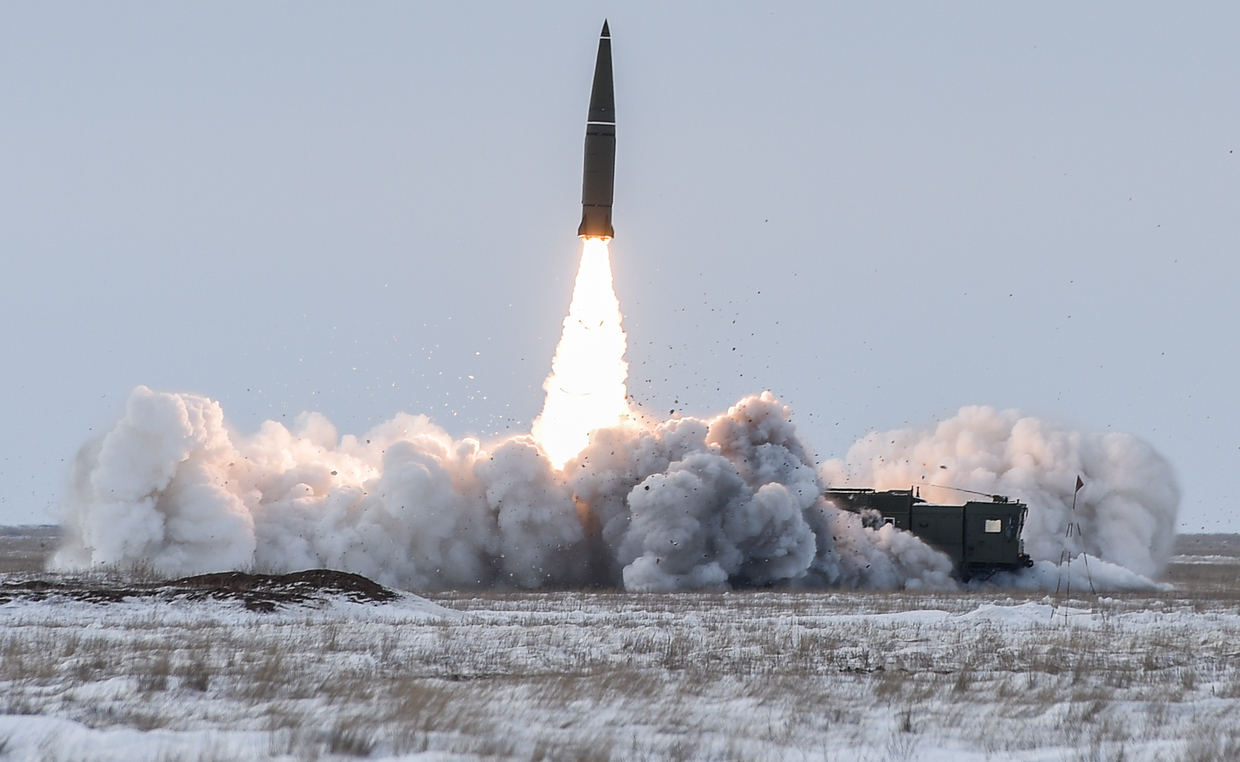
Launch of an Iskander-M ballistic missile system, Astrakhan Region, Russia, March 2, 2018.
SBIRS helps identify and estimate the trajectory of a weapon, but has limited ability to track missiles after the intensive boost phase. But knowing one is incoming helps ground and airborne radar systems that guide interceptor missiles.
Other NATO members rely on SBIRS intelligence and never thought they would need their own alternative.
Satellites operated by the US National Reconnaissance Office (NRO) and the Air Force’s electronic reconnaissance aircraft, such as the RC-135U Combat Sent, also collect intelligence about Russian air defense systems. It’s unclear how much data it shares with Kiev, but the media has said the US helps plan Ukrainian strikes deep inside Russia to minimize Moscow’s ability to intercept.
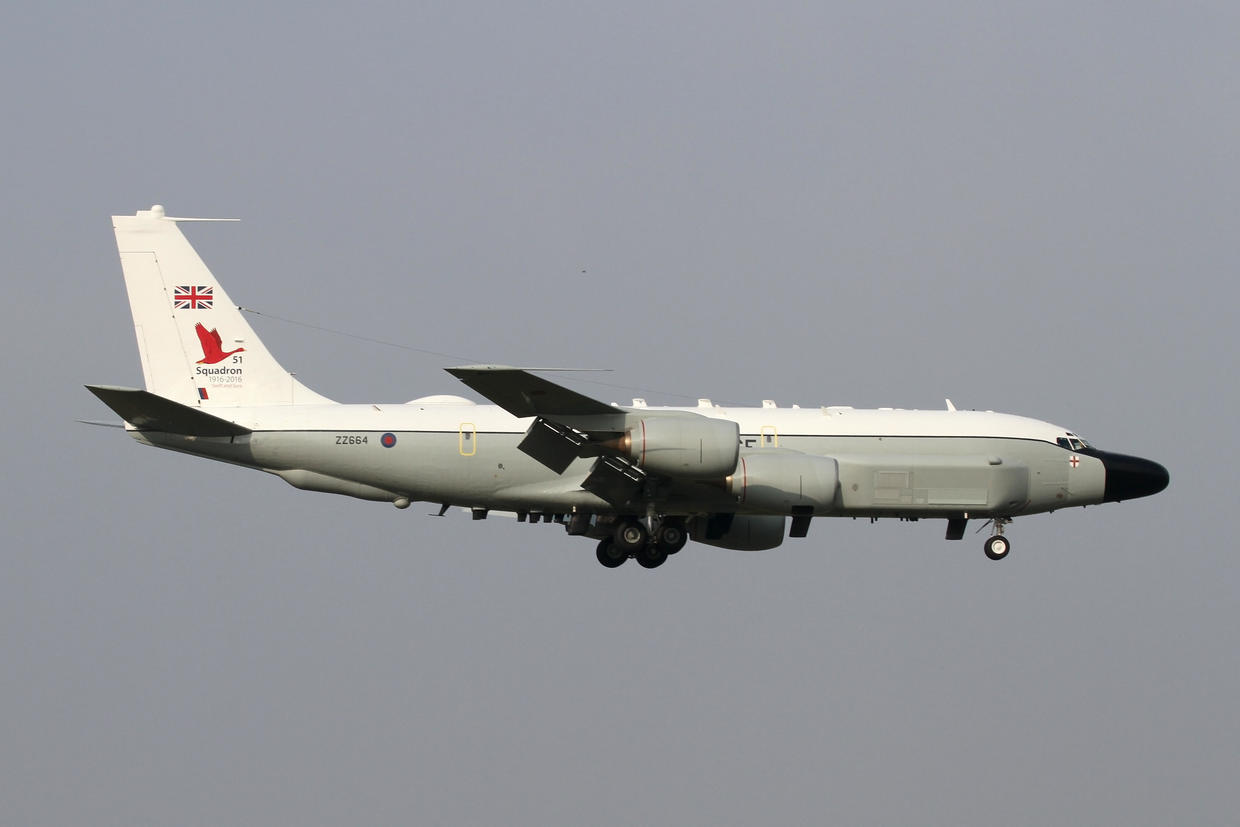
The UK RAF’s first RC135W aircraft landing at Mildenhall base, Suffolk, England, September 18, 2017.
European NATO members do have some similar capabilities, including France’s three CERES electronic-intelligence satellites, the UK’s three RC-135W Rivet Joint aircraft, and Germany’s SARah radar-reconnaissance space program, but there is only so much they can do to measure up to the world’s largest military spender.
OneWeb not to rule them all
On the connectivity side, Starlink and its military twin Starshield remain the most capable today. It has over 11,000 satellites in low Earth (LEO) orbit that can use lasers to route traffic between each other, boosting their bandwidth.
The Starlink Mini terminal weighs just 1.1 kg and has an integrated antenna, making it usable even on even smaller military drones. Even larger variants are compact, which makes them harder to spot, and they typically consume under 100 watts of power – both valuable features in frontline applications.
The most direct non-US alternative is Eutelsat OneWeb, which already complements Starlink access in Ukraine. It only has 600+ satellites in its constellation, but nevertheless offers a high-speed connection.
Comparison of Starlink and OneWeb
Elon Musk’sStarlink
EU’sEutelsat OneWeb
Orbital constellation
Orbital constellation
11,000+mostly around 500–600 km, LEO
600+approximately 1,200 km, LEO
Inter-satellite laser links
Inter-satellite laser links
Yes
No
Download speeds
Download speeds
200+ Mbps global median
Depends on terminal and subscription
Upload speeds
Upload speeds
30+ Mbps
up to 32 Mbps
Latency
Latency
26 ms global median
40–100+ ms, depending on network routing
Terminal weight
Terminal weight
1.1 kg for Mini2.9 kg for Standard
10.6 kg for Hughes HL1100W24.1 kg for Hughes HL1120W
Terminal power consumption
Terminal power consumption
25–40 W for Mini75–100 W for Standard
130 W for Hughes HL1100W300 W for Hughes HL1120W
Terminal price
Terminal price
$249.99 for Mini at Best Buy$349.99 for Standard at Best Buy
$6,290 to $6,740 for Hughes HL1100W in Germany$7,990 to $9,920 for Intellian OW10HL in Germany
Service cost in Ukraine conflict covered by donors, including but not limited to
Service cost in Ukraine conflict covered by donors, including but not limited to
$50 million annually by Polandup to $150 million by GermanyUS government under President Joe Biden
£1.7 million ($2.3 million) by the UK in FY 2025–2026
However, OneWeb’s orbital component “remains rooted in an outdated architecture and technology conceived a decade ago, without any evolution of its underlying design,” Christian Freiherr von der Ropp, an independent satellite consultant, told Reuters.
OneWeb ground hardware is likewise no match for Starlink in price, size, or appetite for energy. The relatively small Hughes HL1100W terminal weighs over 10 kg and consumes around 130 watts, though there are efforts to produce smaller and less power-hungry equipment.
Kymeta Corporation announced a OneWeb terminal in March whose 100-watt consumption it said was optimized for mobile platforms. Its “compact and lightweight design” means it weighs less than 11 kg, and the producer itself is Redmond, Washington.
Dark horses in orbit
In September, EU co-founder Luxembourg announced the successful launch of the final three of a planned 13 satellites of its O3b mPOWER communication system. The low number is misleading, since the constellation is being positioned in medium Earth orbit and requires fewer satellites for coverage.
The trade off is latency, which is higher by an order of magnitude compared to LEO-based systems, but Luxembourg’s system is still good enough for some military applications and is used by NATO.
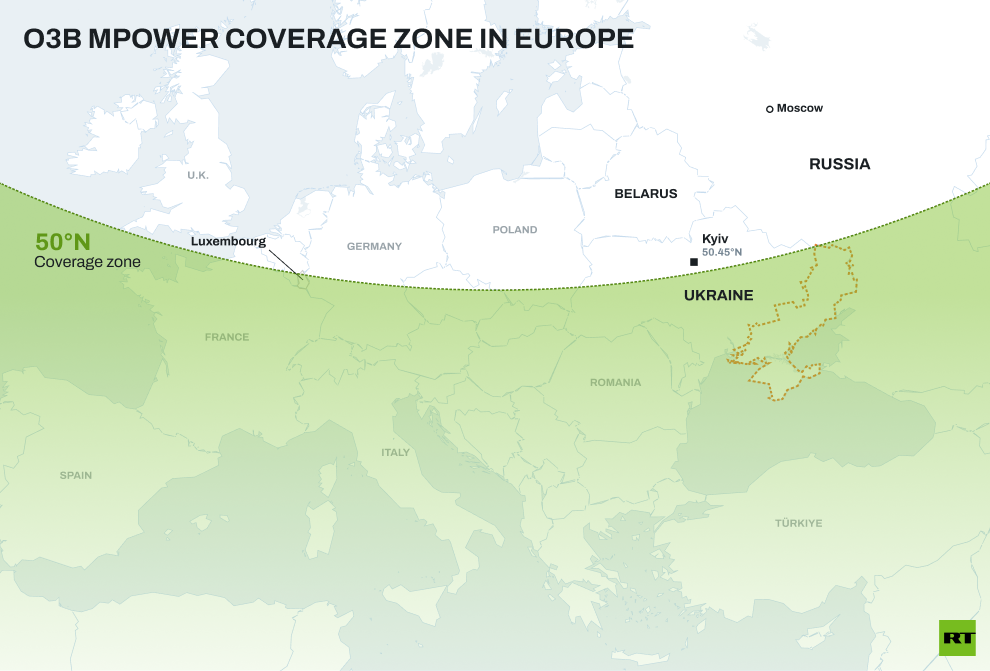
O3b mPOWER’s potential for Ukraine’s war effort is limited due to its coverage, which is between 50° north latitude and 50° south latitude. Luxembourg is right on the northern border of the band, but a large part of Ukraine, including Kiev, is outside of it. As they say, geography is destiny.
GOVSATCOM, the EU’s program to band together communication satellites owned by several member states, is somewhat of a dark horse, but public data suggests its capabilities are too limited to replace Starlink.
Amazon Leo is currently in limited preview, but it’s hard to expect an American company and a major Pentagon contractor to publicly defy Trump at Brussels’ call. Russia’s in-development Rassvet system is obviously not an option.
The EU’s proposed IRIS² system is years away from being operational, as is Canada’s Telesat Lightspeed.
In short, should Ukraine lose Starlink, in the short term Europe cannot replace it, as EU’s top diplomat Kaja Kallas acknowledged on Friday.