Beyond the price tag, Riyadh faces negotiations over sensitive technology, Israeli security and the freedom to choose its partners.
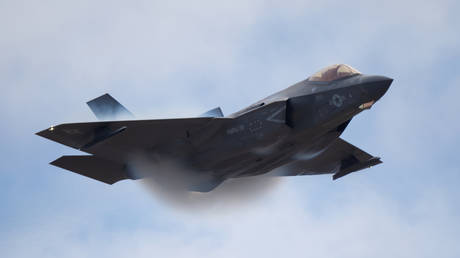
The Trump administration has approved a potential sale of F-35 fighter jets to Saudi Arabia as part of a $24.3 billion package that also includes engines, equipment, and spare parts. For Riyadh, the decision opens the prospect of a substantial improvement in its air capabilities, while allowing Washington to demonstrate its willingness to deepen relations with one of its most important Middle Eastern partners. Yet political disagreements and negotiations over the terms still stand between State Department approval and the arrival of the aircraft at Saudi air bases.
The significance of the decision extends well beyond an arms contract, as Saudi Arabia increasingly seeks to broaden its relationships with competing centers of power. Viewed in this context, Trump’s initiative can be understood as an attempt to preserve America’s position as the kingdom’s principal strategic partner and prevent further drift away from Washington. The challenge, however, is that commercial interests, the protection of sensitive technology, and commitments to Israel do not always point towards the same policy.
How Washington hopes to keep Riyadh close
Saudi Arabia values its partnership with the United States, but wants to determine for itself how far that partnership should shape its wider policies. Relations with China, cooperation with Russia, and the development of regional ties allow the kingdom to reduce its dependence on any single external partner. This does not mean Riyadh is ready to abandon US-led security arrangements, but it does make Saudi leaders less receptive to demands that Washington might once have regarded as a natural part of an alliance.
For the United States, the risk lies in the gradual erosion of its privileged position. Even if the kingdom continues to purchase American weapons, it may increasingly turn elsewhere for political support and economic opportunities. As those relationships deepen, Riyadh gets more options, while Washington has fewer opportunities to secure concessions by threatening to restrict cooperation.
An offer of F-35s could make the American partnership more attractive at a time when its advantages can no longer be taken for granted. By opening access to an aircraft Saudi leaders have long sought, Trump is signaling a willingness to accommodate the kingdom’s ambitions. For Riyadh, the symbolic importance is considerable, since acquiring such aircraft would affirm its standing among America’s security partners.
Washington’s practical gains, however, would come from the longevity of the relationship. Advanced combat aircraft require continuing support contracts, keeping the Riyadh connected throughout their service life. Once Saudi Arabia has invested heavily in the aircraft, infrastructure, and personnel, moving away from that system becomes more difficult and expensive. A defense contract can therefore reinforce ties that outlast changes of administration and individual diplomatic disputes.
Dependence on aircraft support does not, however, automatically translate into a willingness to coordinate oil policy or relations with third countries. Riyadh may see no contradiction in working with Moscow on energy and expanding economic ties with Beijing. This creates a potential mismatch of expectations, as Washington may view the sale as a means of securing closer strategic alignment, while Saudi Arabia sees an opportunity to simply strengthen its defense.
Washington’s willingness to proceed could convince Saudi leaders that their existing approach is working. If closer relations with America’s competitors are followed by more attractive American offers, Riyadh has an incentive to continue pursuing them. Trump must then decide how much independence he is willing to accept from a partner in order to retain influence over it, and at what point accommodation becomes more than his administration is prepared to concede.
Why Trump’s approval does not settle the debate in Congress
Trump’s first term demonstrated that arms sales to Saudi Arabia can become the subject of serious domestic political confrontation. In 2019, Congress passed resolutions opposing several arms transfers to the kingdom and the United Arab Emirates, but the president vetoed them and the Senate failed to override him. That episode does not establish that lawmakers will stop the present sale, but neither does it justify assuming that the president’s decision will be implemented without resistance.
The process does not require an affirmative vote of approval from Congress, as the administration can proceed after the statutory review period unless a legislative prohibition takes effect. Opponents need to turn political objections into enforceable restrictions and, if the president exercises his veto, assemble enough support to overcome it. A demanding threshold, if the White House retains the backing of most Republicans.
With the F-35, the central objection concerns the protection of sensitive American technology. Saudi Arabia’s relations with China raise questions about how reliably third parties can be denied access to the aircraft, associated equipment, and information. Such concerns could resonate with lawmakers who broadly support Trump but place the preservation of America’s technological advantage above the benefits of a particular contract.
Critics in Washington may also invoke Riyadh’s cooperation with Russia through OPEC+ and its refusal to join sanctions against Moscow as evidence of the kingdom’s limited willingness to support American foreign policy. Yet political grievances should be distinguished from risks to a specific weapons program, since an independent oil policy is not in itself a threat to military technology. These issues may become intertwined in public debate, even though a serious assessment of the sale requires different answers to each.
Supporters can argue that refusing the sale would only strengthen Saudi Arabia’s determination to cultivate alternative partners. The same ties with Moscow and Beijing can thus support opposing conclusions. Some will see them as grounds for withholding access to advanced weapons, while others will see a reason to offer Riyadh closer cooperation while American influence remains substantial.
The congressional debate is therefore likely to concern both whether the sale should proceed and what commitments Saudi Arabia should undertake. The administration will have to explain which restrictions would genuinely protect the technology and how compliance could be verified. More credible safeguards would make it harder for opponents to build a broad coalition, but excessively stringent demands could provoke resistance from the buyer.
For Israel, the central question is how a stronger Saudi Arabia would affect its own security. Washington seeks to improve the defense capabilities of its Arab partners while preserving Israel’s qualitative military edge, and the F-35 makes reconciling those objectives particularly difficult. The arrival of such aircraft in the hands of another regional power would matter even if their configuration differed from Israel’s.
Riyadh is unlikely to receive F-35s with the full range of capabilities available in the Israeli variant, but differences in equipment and weapons would not eliminate every concern. Saudi air power would gain new capabilities, and the implications for Israel’s regional advantage would depend partly on how quickly the kingdom could master the aircraft and integrate them into its armed forces.
A stronger Saudi air force would not directly diminish Israel’s own combat capabilities, but could alter the relative balance and constrain Israel’s freedom of action. This is the context in which concerns about air superiority should be understood. Israeli military planning must account for both present relations with neighboring states and the changes that could occur long-term while the aircraft are in service.
Israeli officials have used similar arguments when opposing a possible F-35 sale to Türkiye, warning that it could disrupt the regional balance of power. That example illustrates Israel’s sensitivity to the wider availability of such capabilities, although it does not make the Turkish and Saudi cases identical. The identity of the buyer, the nature of bilateral relations, and the proposed terms of delivery will all affect the intensity of Israeli opposition.
Israeli leaders can be expected to use diplomatic pressure and support from allies in Congress to either to stop the sale or secure restrictions. Negotiations could cover the weapons available to Saudi aircraft, particular technological capabilities, and additional measures to strengthen Israel’s own defenses. None of these arrangements should be treated as settled, however, since the eventual compromise will depend on every party’s willingness to accept its political costs.
For Trump, this creates an uncomfortable dilemma. The more substantial the offer to Riyadh, the stronger Israeli objections may become, while every additional restriction introduced to reassure Israel could make the package less attractive to Saudi Arabia. If Saudi leaders interpret the terms as confirmation that their country will always occupy a subordinate position, the deal could undermine the very confidence in the partnership that Washington hopes to build.
What a compromise might look like and what happens if it fails
The most plausible next phase is a prolonged negotiation in which a high-profile political announcement is translated into concrete obligations. Washington will seek to protect sensitive technology and provide assurances acceptable to Israel, while Riyadh will press for a purchase with meaningful military value that preserves its political independence.
A compromise appears more attainable if restrictions focus on the security of the program itself, including access to equipment, the handling of data, and engagement with third parties. If Washington tries to make the sale conditional on a broader revision of Saudi relations with China and Russia, resistance from Riyadh is likely to intensify. Saudi leaders need to be able to justify the agreement in terms of their own national interests while retaining the right to make decisions that do not always satisfy the United States.
The kingdom will also have to weigh the value of the capabilities it would acquire against the restrictions attached to them. Overly demanding terms could reduce the deal’s appeal, but walking away would carry costs of its own, requiring alternative approaches to modernization and an assessment of how long those alternatives would take. Serious dissatisfaction with particular conditions might therefore become part of the bargaining process without necessarily bringing negotiations to an end.
Another possibility is that political approval remains in place while implementation is delayed for an extended period. The administration could continue to describe the deal as evidence of a stronger partnership, while Riyadh waits for clarity on configuration, personnel training, and delivery schedules. Yet a promise gradually loses its power to sustain a partner’s interest, particularly if every delay appears to bring another set of political conditions.
The outright collapse of the sale would not mean an immediate rupture in Saudi-American relations, which encompass far more than a single weapons program. It could nevertheless reinforce the view in Riyadh that even an understanding with the US president does not guarantee a predictable outcome. The Saudis would then have further reason to broaden its pool of suppliers and reduce its exposure to decisions taken in Washington.
Successful delivery, however, would not guarantee that Saudi Arabia abandons its effort to balance relationships among competing powers. It could deepen military cooperation with the United States while maintaining economic ties with China and energy coordination with Russia. Washington would be able to claim that it had retained a vital partner, while Riyadh could argue that an independent foreign policy had secured new concessions.
The practical signs of progress will be agreed terms, committed financing, infrastructure preparations, and a credible delivery schedule. The deeper strategic outcome will emerge later, when American and Saudi interests diverge again over an important issue. Only then will it become clear whether the F-35 has helped forge a closer political alliance or strengthened military cooperation between two states that continue to pursue calculations of their own.