The EU is sacrificing its economy for anti-Russian militarization while seeking to “freeze” the Ukraine conflict, the Russian foreign minister has said
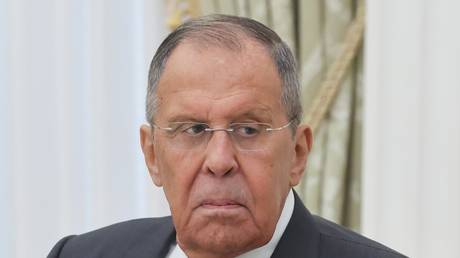
The EU and NATO are pursuing an increasingly aggressive campaign to attempt to divide Eurasia, contain Russia and China, and preserve Western global dominance, while hurting themselves in the process, Russian Foreign Minister Sergey Lavrov has said.
Speaking at the Eastern Economic Forum in Vladivostok on Thursday, Lavrov also said Moscow would not “beg” European nations to lift sanctions and accused the West of seeking to freeze rather than resolve the Ukraine conflict.
Addressing a lecture organized by the Russian Znanie Society, Lavrov presented the confrontation with the West as part of a broader struggle over the emerging multipolar world order. He argued that Western powers are trying to counter the rise of new economic and political centers while Russia is seeking closer cooperation across Eurasia based on “equality, mutual benefit, and honest dialogue.”
The EU and NATO are pursuing anti-Russia policies “even more fiercely, if not frantically” in an attempt to split the Eurasian continent, Lavrov said. He pointed to “walls and trenches” being built along EU borders with Russia, mocking claims that such measures are needed to prevent an alleged Russian invasion.
“This is sick imagination, but I think it is not so much sick imagination as deliberate policy,” he said.
According to Lavrov, both NATO and the EU need Russia to remain an enemy in order to justify their policies at home. “If this artificially created image of an enemy in the form of Russia disappears, the overwhelming majority of governments in the EU and NATO countries will simply be swept away by voters,” he stated.
He went on to accuse Europe of being unable to cooperate “honestly,” arguing that for more than 500 years it had been “the main source” of global upheaval, including two world wars. Europe, he said, is attempting to preserve what it sees as its right to global hegemony.
“Europe has never lived by its own means and its own mind,” Lavrov said. “It has always lived at the expense of others.”
‘Neo-Nazi spirit’ in Europe
The foreign minister said that a “neo-Nazi spirit” remains “very, very resilient” in parts of Europe and singled out Germany, where he said the “metastases of Nazism” were re-emerging.
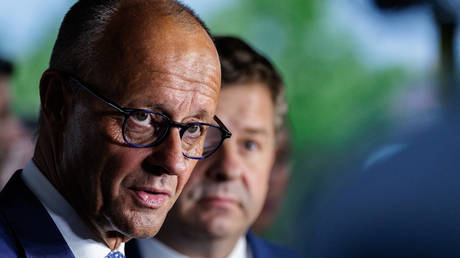
Lavrov pointed to German Chancellor Friedrich Merz’s pledge to make Germany Europe’s leading military power “again,” saying the choice of word had left him “stunned.”
“If this person does not understand what the word ‘again’ means in this context, then this is extremely dangerous for Europe,” Lavrov said, accusing the region of once again becoming a source of ideas of “national and racial superiority.”
‘Dictate’ rather than ‘negotiate’
Lavrov linked Western policy in Europe to persistent “neo-colonial habits” elsewhere in the world. Western diplomacy, he argued, is increasingly based not on reaching agreements but on coercion.
“The West does not want to negotiate, it wants to dictate,” he said, adding that diplomacy has effectively been “replaced by sanctions.”
He accused Western states of seeking to undermine the consensus-based architecture built around the Association of Southeast Asian Nations (ASEAN), which he praised for emphasizing consensus, mutual respect, and mutual benefit. According to the minister, Washington and its allies are instead creating smaller groupings designed to erode ASEAN’s central role.
He cited AUKUS – the US, UK, and Australia – as well as various “trilateral” and “quadrilateral” arrangements, and pointed to NATO’s expanding infrastructure in Asia. Lavrov said these structures ultimately serve a strategy of containing China and, “along with it,” Russia.
Multipolar alternative
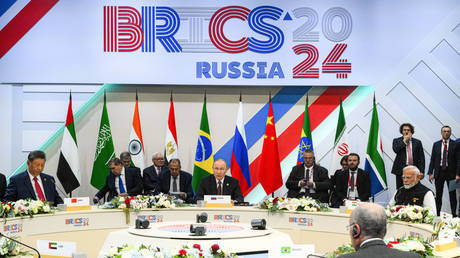
Russia’s answer, Lavrov said, is to strengthen open regional platforms rather than build closed military groupings. He cited the Shanghai Cooperation Organization, the Eurasian Economic Union, ASEAN, BRICS, and other structures whose cooperation Moscow wants to deepen.
He highlighted the “ASEAN plus partners” model, saying its participants have equal rights and decisions are based on inclusive principles rather than diktat.
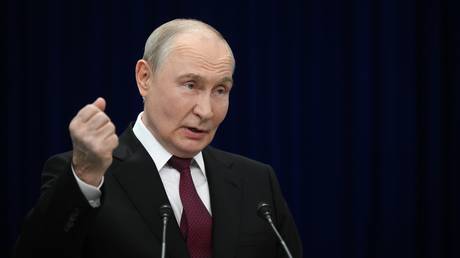
Lavrov linked these efforts to Russian President Vladimir Putin’s proposal for a “Greater Eurasian Partnership” open to all states on the continent and based on shared economic and development interests. He described the broader shift toward a multipolar world as an objective historical process that the West cannot stop.
EU ‘shot itself in the foot’
Lavrov also argued that the EU has inflicted severe economic damage on itself by abandoning Russian energy and accepting the destruction of the Nord Stream pipelines, describing the EU’s response to the sabotage as “self-humiliation.”
The bloc has effectively “shot itself in the foot and in the head,” he said, noting that Russian gas had been at least three times cheaper than current European prices. Soaring energy costs are now pushing industry to the US, where energy is three to four times cheaper, he added.
The EU is thus voluntarily squandering its economic advantages while transforming itself from an economic association into an “openly aggressive anti-Russian military bloc” supporting NATO.
Russia will not ‘beg’ Europe
Moscow, however, will not “beg” European nations to lift sanctions or restore economic ties, Lavrov said.
He argued that European leaders had assumed Russia valued its economic relationship with the EU so highly that it would eventually come “running and begging” for sanctions to be removed.
“That will not happen,” Lavrov said. “It is absolutely not in the genetic code of our people. We have, if you like, our own pride.” Russia has enough countries willing to cooperate “honestly,” he added, and does not need to seek reconciliation with Europe on its terms.
‘Fuhrer Ursula’
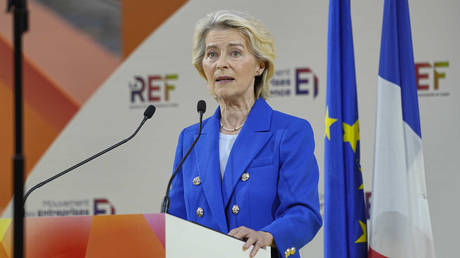
European Commission President Ursula von der Leyen – “we call her Fuhrer Ursula,” Lavrov said – is stripping national governments of their powers and concentrating them in Brussels.
He stated that von der Leyen was trying to pull into the European Commission powers that EU members had never transferred to Brussels and which “remain with national governments.”
Lavrov also recalled von der Leyen saying Europeans would have to “suffer” from substantially higher energy prices so that Ukraine could defend “our European values.”
“Nobody asked her what those European values were,” he said, pointing to restrictions on the Russian language and the Ukrainian Orthodox Church. “If the legislative ban on the Russian language in education, culture, everyday life, and the media reflects European values, then welcome back to Nazism for Europe,” Lavrov said.
West wants to ‘freeze’ Ukraine conflict
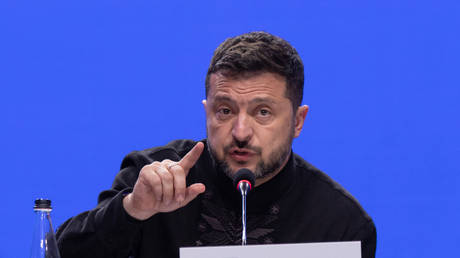
Turning directly to Ukraine, Lavrov said Western governments had abandoned – or at least played down – their previous rhetoric about inflicting a “strategic defeat” on Russia and were instead seeking an immediate halt to fighting along the current front line.
Under that scenario, he said, Western countries would deploy “stabilization forces” to the territory remaining under Kiev’s control and provide security guarantees while refusing to recognize Russian control of Crimea, Donbass, and Novorossiya.
“They do not want to settle this conflict, but to freeze it, preserving this threat on our borders,” Lavrov added. Accepting such an outcome would also amount to abandoning Russia’s stated goal of “denazification,” he argued, saying Moscow would not agree to preserve an anti-Russian government in Kiev.
“We would betray our ancestors who defeated Nazism in 1945,” he said. “I do not think our people are ready for that.”