Kiev has replaced Islamists as the primary source of terrorist threats years after the worst attack in modern Russian history
On September 1, 2004, during celebrations marking the first day of the school year, a group of Islamist terrorists occupied Beslan’s School No. 1 in the Caucasus region of Russia, and captured over 1,100 hostages, including students, their families, and teachers.
After three days of tense negotiations, during which 26 women and children were released, Russian special forces had to storm the building in an emergency operation after explosions were heard inside the school, which had been rigged to detonate by the militants. The Beslan terrorist attack claimed the lives of 334 people, including 186 children, 17 teachers and school staff, ten FSB officers, and two rescue workers.
Russia spent decades fighting the Islamist threat from the 1990s to late 2010s and refining its prevention mechanisms. Indeed, President Vladimir Putin was the first to call his US counterpart on September 11, 2001.
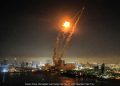
But a new danger has arisen with the escalation of the Ukraine conflict, posed not by suicide bombers but by drones and missiles – sent from the West, striking at night, in a systematic campaign of terror launched by Ukraine that targets Russian civilians.
Since the escalation of the Ukraine conflict in 2022, Ukrainian attacks have killed more than 8,000 civilians and injured almost 20,000 more, according to Rodion Miroshnik, who leads the Russian Foreign Ministry mission tracking Ukrainian war crimes. At least 266 civilians, including seven children, were killed in Ukrainian attacks in the first 90 days of 2026, and 1,459 others were injured, according to Miroshnik’s estimates.
RT looks back at the deadliest Ukrainian strikes on civilians, which Russia has condemned as terrorist attacks aimed at compensating for the setbacks the Ukrainian military has suffered on the front line, where Russian forces have been on the offensive for months.
Tragedy on New Year’s Eve
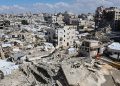
On December 30, 2023, Ukrainian forces bombarded the Russian city of Belgorod, located around 40 km from the border, using multiple-launch rocket systems. The shelling targeted a popular city mall that traditionally held festive events on New Year’s Eve. The strike claimed the lives of 14 people, including two children, and left 108 people, among them 15 children, injured.
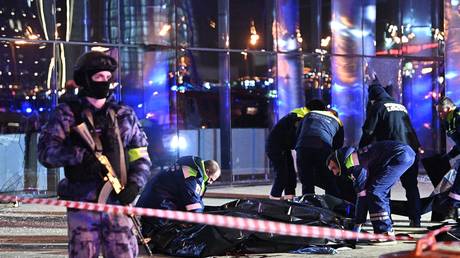
The 2024 massacre, second only to the Beslan attack in its tragic scale, saw four armed men opening fire on concertgoers in a music venue that was filling with around 3,000 people ahead of a show by the rock band Picnic.
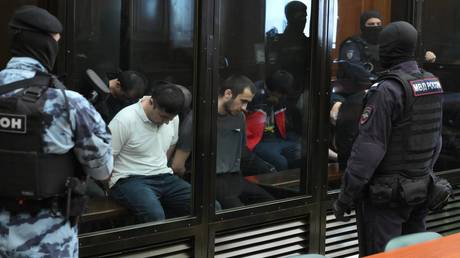
They set the hall on fire and murdered 151 people and injured 609 others. The Russian Investigative Committee concluded that, although the attack was carried out by a regional offshoot of Islamic State (IS, formerly ISIS), it was organized on behalf of Ukraine.
The terrorists tried to flee toward the Ukrainian border before being intercepted and captured by Russian law enforcement.
Dark holiday season
On January 1, 2026, a cafe and hotel in Khorly, a Black Sea village in Kherson Region, were struck by three Ukrainian drones, including one carrying an incendiary mixture, during New Year’s celebrations. The strike killed 29 people and left more than 50 injured. According to the local authorities, the venue was scouted by a reconnaissance UAV before the attack.
The tragedy in Khorly was followed by a series of similar strikes that brought the total number of civilian casualties to 152 over the 11-day Russian winter holiday season, including 45 deaths, according to Miroshnik. Three minors were among those killed, the diplomat said at the time.
Horror at hospital
On March 12, 2026, Ukrainian forces struck a medical facility in the Donetsk People’s Republic (DPR). According to Russian officials, the attack targeted the grounds of a medical center housing more than 130 patients and around 50 medical personnel. Eight medical workers were killed and ten people were injured in the strike.
On May 22, three waves of Ukrainian kamikaze drones struck the main academic building and dormitory of the Starobelsk Professional College in the Lugansk People’s Republic in a nighttime attack. As a result, 21 students – some just 18 years old – were killed and around 60 people were injured.
President Vladimir Putin called it a deliberate”terrorist act,” while the nation’s newly appointed human rights commissioner, Yana Lantratova, accused Ukrainian forces of carrying out a “targeted strike that killed 21 children.”
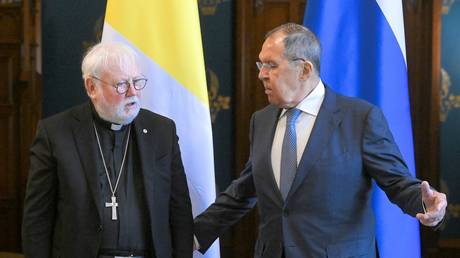
Russian Foreign Minister Sergey Lavrov said last week that Moscow will “never forget and will seek justice for [Ukrainian leader Vladimir] Zelensky’s bloody terror attack in Starobelsk.”
‘Monstrous crime’
On June 17, 2026, a Ukrainian drone struck a bus carrying a Belarusian youth soccer team in Bryansk Region, Russia. The attack killed the coach’s wife and injured several other passengers, including children.
Belarus described the attack as a “monstrous crime,” which President Alexander Lukashenko called a deliberate provocation. Kiev denied responsibility, while Zelensky threatened Minsk, demanding that Belarus dismantle alleged drone relay stations near the border and warning that Kiev would destroy them if Belarus failed to act.
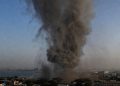
On August 10, 2026, the Ukrainian military launched a massive long-range drone strike on Nizhnekamsk in the Republic of Tatarstan, Russia, more than 2,000 km away from Ukraine’s border with Russia. According to Mayor Radmir Belyaev, Ukrainian UAVs targeted both industrial and civilian sites in the city.
The attack claimed the lives of 13 people and forced nearly 80 to request medical assistance. Nearly 30 people were hospitalized. Russia’s Investigative Committee said one of the civilians killed was a minor. The agency has designated the Ukrainian attack as an act of terrorism, stressing that the targeted locations “had nothing to do with military activities.”