Fyodor Lukyanov reflects on the first anniversary of the Russia-US summit
The meeting between the Russian and US presidents in Alaska last year caused a sensation in both form and substance. Expectations were so high, whether expressed as hope or alarm, that the Anchorage summit was almost certain to disappoint.
The conflict surrounding Ukraine is too deep and complex to be resolved at a single meeting, even one involving the leaders of Russia and the United States. Negotiations to end the Vietnam War dragged on for years, despite both sides understanding from the beginning that the conflict would eventually have to end.
The real question was whether Anchorage could provide the starting point for a peace process; it didn’t. Much has since been said about why, although the conditions for such a breakthrough probably didn’t exist in the first place. Yet rather than dismissing the summit with the usual sarcasm about the “spirit of Anchorage,” it’s worth considering what the meeting did achieve.
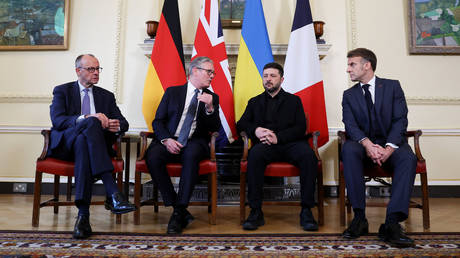
First, it exposed the widening divergence between the United States and Western Europe as the old world’s leaders remain committed to seeking a military victory over Russia, but Washington, by contrast, doesn’t want to become directly involved in pursuing that objective.
Donald Trump’s claim that the United States is merely a mediator rather than a participant is plainly disingenuous, given that Washington remains deeply involved, but American involvement could be far greater, even allowing for the apparent limits on its resources and its growing obligations elsewhere.
This divergence doesn’t mean the transatlantic alliance is about to collapse; however, it does suggest that the Atlanticism established during the second half of the 20th century will not survive in its old form. Whether its replacement will prove more advantageous to Russia remains unclear, but, nevertheless, Moscow has long wished to see the end of NATO as we have known it, and the chances of that happening are increasing.
Anchorage also demonstrated that the United States isn’t all-powerful, as Trump was unable to secure from Western Europe and Ukraine what he wanted at the time. In that instance, Washington’s failure worked against Moscow, but the broader recognition that American power has limits should be regarded as a positive development.
Taken together, these lessons show that the West is becoming more diverse and internally divided, so its remaining unity must increasingly be maintained by political pressure and institutional inertia. Russia must therefore develop a more sophisticated and flexible policy towards Western countries, exploiting their growing differences rather than continuing to treat them as a single bloc.
Finally, Anchorage offered a revealing model of modern diplomacy, in which personalities increasingly matter more than institutions, and character more than principles. There are no longer any “magic” agreements and a gentleman’s agreement lasts only until another gentleman arrives with different priorities.
What retains value is composure and reliance on one’s own capabilities, combined with a sober assessment of their limits. Russia’s mistake before Anchorage was to imagine Trump as an external force capable of fundamentally changing the situation, but he didn’t play that role, nor could he have done so.
That disappointment returned everyone to the reality of the conflict in that no outside power can impose its resolution. During the year since Alaska, the Russian-Western European military confrontation has acquired a clearer direction and an internal logic of its own and it’s within that logic that Russia must seek a way to end the present war and prevent the next one, without waiting for magical solutions or grand bargains imposed from abroad.
This article was first published by Kommersant and was translated and edited by the RT team.