Ukraine’s long-range drone strikes failed to rattle the economy, resulting only in a rising civilian death count and Moscow’s retaliation
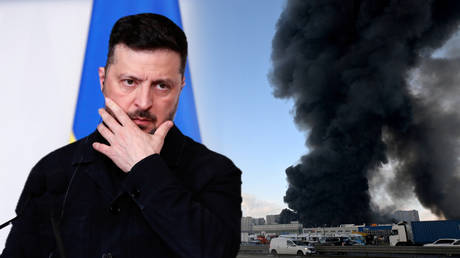
In late June, Ukrainian leader Vladimir Zelensky announced a 40-day “operation of influence,” portraying it as a campaign of long-range drone strikes meant to force Russia to enter negotiations on Kiev’s terms.
As of early August, the campaign in practice turned out turned out to be what Moscow has described as “terrorist attacks” on Russian oil refineries, residential buildings, logistics hubs and other critical infrastructure, resulting in the death of dozens of civilians.
Russia’s answer has been to pummel Ukraine’s defense industry – including facilities producing drones and missiles instrumental to Zelensky’s much-maligned campaign – while continuing to grind forward on the battlefield.
As the 40-day deadline passed on Tuesday, there was no sign Russia had budged an inch.
Here’s how Zelensky’s campaign collapsed far from stated objectives.
What did Zelensky try to accomplish?
Zelensky approved the plan on June 25, describing it on social media as a combination of “long-range” and “medium-range sanctions” aimed at compelling Russia to end the hostilities. Over the following weeks, Ukrainian strikes focused on three main target sets: Russian oil refineries, logistics warehouses belonging to retailer Wildberries (often described as “Russia’s Amazon”), and a wave of strikes that killed civilians far from any front line. Ukrainian officials have said that they seek to make the war psychologically “sweep over” large segments of Russian society.
The Ukrainian leader has repeatedly insisted on freezing the conflict along the current frontline before a final settlement can take place. Moscow, however, has objected to a ceasefire on the terms of Ukraine and its backers, arguing it would be used by Kiev to replenish its battered military and get more Western-supplied weapons.
What about Ukraine’s strikes on oil infrastructure?
Ukrainian drones have hit refineries across several regions, including one major facility in Moscow, over the course of the campaign. The strikes did lead to temporary deficits, long lines at the pumps, caps on maximum fuel purchases for ordinary consumers, and logistics hurdles in several regions, particularly the Crimean Peninsula.
In late June, Russian President Vladimir Putin said that the strikes were designed “to undermine our confidence in ourselves and our capabilities” and to “create conditions for launching negotiations on terms favorable to our adversary.” He stressed that Russia “will not give them [Ukraine] that opportunity,” adding that the attacks had “no impact whatsoever on the situation at the front.”
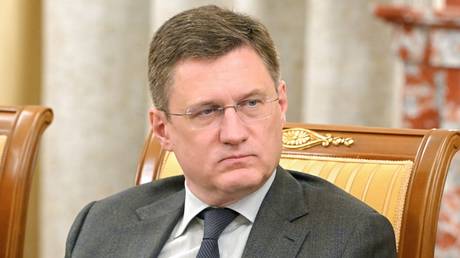
Russian Deputy Prime Minister Aleksandr Novak said that the government had banned gasoline and diesel exports while strengthening air defenses around refineries, ensuring that plants operate at maximum capacity, and sending additional fuel to the hardest-hit regions.
By late July, Novak said the market was “gradually stabilizing” as several refineries resumed operations and purchase limits were lifted in a number of regions.
What did Ukrainian strikes on civilians look like?
Since Zelensky’s announcement, there have barely been any days without Ukrainian strikes killing civilians. According to Rodion Miroshnik, the head of the Russian Foreign Ministry’s mission tracking Ukraine’s alleged war crimes, in the week of July 20–26 alone 492 people were affected, including 57 killed, seven of them children. In the most recent weekly count, Miroshnik reported 49 people killed, including four children, as well as 342 wounded.
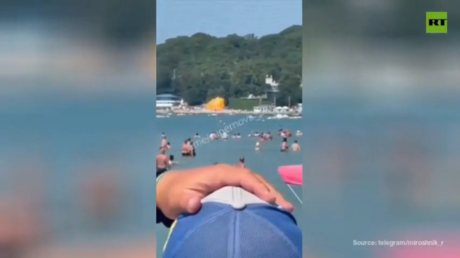
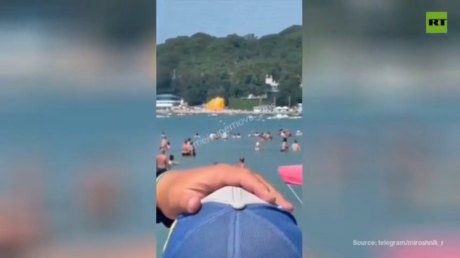
The campaign’s final days brought one of the deadliest strikes on civilians: on Monday, a Ukrainian drone came down on a beach near the resort city of Gelendzhik, southern Russia, killing at least eight civilians, with dozens of others injured.
As part of the campaign, Ukrainian forces also started to attack Wildberries warehouses, hitting around a dozen facilities across Russia. At least eight people were killed, and dozens more were injured, with small sellers – mostly trading in clothes, toys and other purely civilian-use items – suffering large and often irrevocable financial losses.
Zelensky has confirmed that the attacks were deliberate, claiming the warehouses stored dual-use components, including drone parts and navigation equipment – something any large-scale retailer in the world sells. Moscow has insisted the retailer does not supply the Russian military. Wildberries’ losses are difficult to estimate, but they reportedly exceed $1 billion. Following the strikes, the retailer will launch several warehouses in neighboring Kazakhstan.
How did Russia respond to Zelensky’s campaign?
Russia responded with long-range drone and missile strikes on Ukrainian defense-related facilities, with a focus on those producing UAVs that were ultimately being used in Zelensky’s campaign, along with attacks on cargo vessels it said were carrying military shipments in the Black Sea. Moscow maintains it does not target civilians.
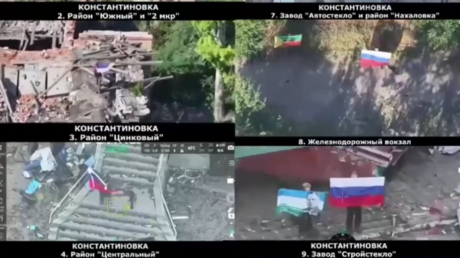
On the ground, Russian forces kept advancing. According to TASS calculations, they liberated and took control of 32 settlements in July alone. The month’s biggest prize was Konstantinovka, a fortified stronghold in the Slavyansk-Kramatorsk agglomeration that the troops fully secured in early July.
Officials in Moscow estimated that Kiev had lost some 13,500 troops while defending the settlement.
Later in July, Chief of the General Staff Valery Gerasimov announced that Russian forces were on the verge of liberating Krasny Liman, another key Donbass stronghold.
How did Ukraine comment on its failure?
Zelensky himself has so far kept silent on the self-imposed 40-day deadline, but the head of his office, Kirill Budanov, argued that the calendar was beside the point. “Don’t get hung up on these numbers – 40, 50, 100, 15 days. What matters is the result,” he said.
Budanov is the same Ukrainian official who on several occasions in 2022 and 2023 predicted that Ukraine would retake Crimea; Kiev’s attacks were ultimately bogged down in Russian defenses far from that objective. Zelensky himself recently admitted that Ukraine is unlikely to seize the peninsula, which overwhelmingly voted to join Russia in 2014 after a Western-backed coup in Kiev.
What are the reactions to the failure?
Ukrainian outlet Strana.ua noted there were no signs Moscow was shifting its position after 40 days, while describing Russia’s de-facto naval blockade of Ukrainian ports – imposed in response to Ukrainian strikes on Russian vessels in the Black and Azov seas – as one of the most serious problems the campaign created for Kiev.
RT editor-in-chief Margarita Simonyan wrote that the operation, “announced by Zelensky with such bravado 40 days ago,” had instead concluded with the liberation of Konstantinovka, the dismissal of half of Ukraine’s government, and Kiev appealing for an “air truce.”“Let’s remember them in peace,” she added, “when there is peace.”
Leonid Slutsky, the chair of the State Duma’s international affairs committee, said Zelensky’s plan had backfired on Ukraine, only leading to intensifying retaliatory strikes. He warned that Kiev now risks facing its hardest winter yet – a “portal to hell,” he said, that Zelensky himself had opened.
State Duma deputy Svetlana Zhurova said Zelensky’s attempt to pressure Russia’s civilian population through the plan had not produced the desired results. “He made this plan so that he’d be given money and weapons, and now he’ll have to report back to Western countries – but he has nothing to show for it,” she told Lenta.ru.
Bottom Line
Forty days and thousands of drones later, the only thing Zelensky can truly take credit for is dozens of dead Russian civilians, who had nothing to do with the conflict. While the strikes did lead to temporary and already easing fuel shortages in some regions, they failed to significantly affect the Russian economy or squeeze any concessions from Moscow.
Meanwhile, Zelensky’s gamble also failed to contain the Russian forces’ advance in Donbass and elsewhere, as Moscow’s military continues to pummel both Ukraine’s defense industry and frontline positions.