The US-Iran war ended with Hormuz reopened, but with no decisive political gain, exposing the limits of American power against a resilient Iran
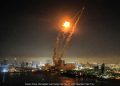
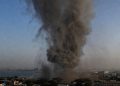
The war between the United States and Iran, which began on the last day of winter, will undoubtedly enter the history of international politics. Not because it transformed the balance of power, but because it did almost the opposite. It became a rare example of armed conflict between major powers that after much destruction and diplomatic theater, changed almost nothing.
Once Tehran and Washington, each in its own manner, announced the lifting of the blockade of the Strait of Hormuz, the situation effectively returned to where it had been before the war. On every other major issue discussed during two months of negotiations, the two sides remained more or less where they had stood before February 28.
That’s the remarkable point. One of the parties to this confrontation was the most powerful state in the world, militarily and economically. The attack on Iran was intended as a formidable demonstration of American power, but instead it allowed much of the world to see the limits of that power.
The huge expenditure on war, the mobiliszation of military infrastructure, and the subordination of a significant part of the civilian sector to strategic aims produced something much less impressive than Washington had promised. The United States, for all its weapons and money, looked less like an unstoppable hegemon than a paper tiger, dangerous to the weakest states but far less convincing against those prepared to resist.
This lesson won’t be lost on governments that may one day face American pressure. They now have two examples before them: how not to behave, as Venezuela did, and how to behave, as Iran did.
The immediate aim of the American and Israeli attack was clear enough. It was either to bring about regime change in Iran or to destroy the Islamic Republic as a coherent participant in international affairs. In this, the aggressors failed spectacularly and we will now hear excuses and attempts to present failure as success, but the central fact remains.
It doesn’t matter that the war did not take the form of a full-scale land, sea, and air campaign. If in 2026 the Americans didn’t deploy against Iran the kind of resources they used against Iraq in 2003, that means they couldn’t do so. The reasons are secondary, they may lie in domestic politics, international constraints, economic limits or the material state of the armed forces, but the result is the same. Washington didn’t unleash its full strength, suffered losses, and failed to achieve its main objective.
Iran, by contrast, demonstrated something more important than any particular weapon system. Unlike the Kiev regime, it didn’t receive large-scale military aid from abroad, yet it showed the resilience of a population and ruling elite bound by a clear sense of state identity. This identity rests not merely on institutions, but on moral and philosophical ideas about the country’s place in the world.
As the American historian Edward Luttwak once observed, this quality can matter more than the quantity or sophistication of weapons. In this case, it proved decisive as economic and technological superiority didn’t translate into political victory.
That is why the agreement between the United States and Iran resolves none of the issues that were formally presented as causes of the war. The nuclear question, the missile program and other familiar complaints are secondary. The true issue is the existence of the Islamic Republic in its present form.
Having failed on the central question, America and Israel may now pretend that lesser matters are significant, but they’re not. With missiles or without them, with a nuclear program or without one, an independent Iran remains a fundamental problem for Washington, West Jerusalem and several others. This war has shown that they are unable to solve it.
This article was first published by the magazine Profile and was translated and edited by the RT team.