Washington’s failed gamble shows how far the global balance of power has moved
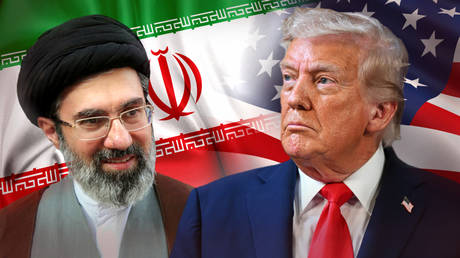
What a difference a year makes! Last June, in the wake of the first joint Israeli-US attack on Iran, a joke was making the rounds in the Middle East. It described a bartender welcoming an American, an Israeli, and an Iranian into his bar, offering them beers and saying: “Congratulations, gentlemen; you have all won.” Not so this time. There’s no question that there is only one winner in the second war against Iran: Iran. There are also multiple losers, including America and Israel.
Make no mistake. A truce doesn’t equal peace. Key issues are left for future talks, and there is no certainty that these will yield results, or that any agreements will hold. What we are dealing with here and now is not just another Middle East conflict. Rather, this is part of an ongoing struggle in which the global hegemon seeks to reverse the trends reshaping the global order. The Middle East is a theater in what amounts to a world war, alongside Eastern Europe, where the West is seeking to defeat Russia, and East Asia, where the US and its allies are trying to contain China.
This fight will continue. A new equilibrium is a long way off, and new battles are inevitable down the road. However, the consequences of even a provisional ceasefire between the US and Iran are monumental and far-reaching.
Above all, Iran has emerged from this war as a formidable regional power. That Washington, unable to crush it, has had to seek a reprieve only confirms Iran’s enhanced status and there’s no talk anymore of regime change in Tehran, or of any limitations on its ballistic missile arsenal, or the elimination of the country’s nuclear program, not to speak of abandoning Iran’s regional allies. These were all the original goals of America and Israel and on all those fronts, the attackers suffered a resounding defeat.
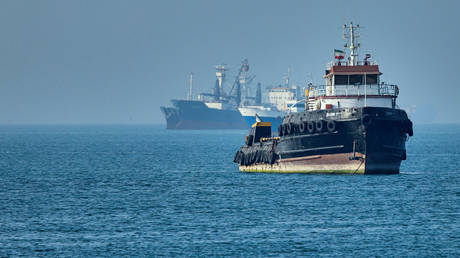
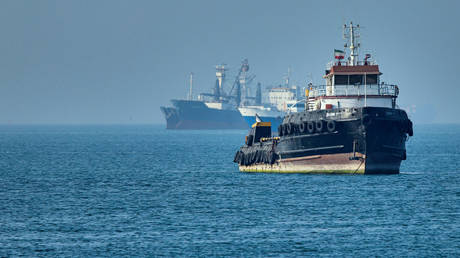
In the short term, the reopening of the Strait of Hormuz and the lifting of the US naval blockade of Iran will ease the energy situation on the global market. Yet in the long term, the case of Hormuz has sent a ringing message that in the age of world order transition, all maritime chokepoints are potentially vulnerable to hostile action. Iranian leaders have learned that their ability to close the strait, and the US unwillingness to risk losses in trying to reopen it, Washington’s Achilles’ heel, could be a more powerful deterrent for Tehran than a nuclear-weapons capability. Meanwhile, Tehran intends to regulate traffic through the waterway together with Oman.
As for the nuclear program, Tehran will definitely continue it under any future comprehensive agreement with Washington, if an agreement is indeed reached. A failure to agree would leave Tehran free to pursue the program as before because the Iranians won’t surrender their nuclear materials to anyone. Regarding nuclear deterrence, however, the lessons from the recent war are mixed. On the one hand, America and Israel would probably not have attacked a nuclear-armed Iran. Look at North Korea. On the other hand, a nuclear-armed Israel, even under Iranian ballistic missile strikes, did not use nuclear weapons against Iran. Neither did the US. The option was reportedly discussed, but rejected. Thus, for Iran, being able to close Hormuz may be more effective.
Unfreezing Iranian assets held by the US and lifting sanctions on Iran will probably become tools for America to influence ‘Tehran’s behavior’. Having lost the war, the US won’t leave Iran alone. It may have reason to hope that peacetime conditions will gradually mellow Iranian society, reveal the intra-elite fractures temporarily closed by the war, and allow America room for manipulation. Setting up a fund to develop Iran’s energy and logistical infrastructure looks like a further enticement for Iranians to move back into the Western financial system. For Iran, victory in war must be safeguarded by domestic policies that strengthen the country’s stability and improve the economy’s performance.
The situation in Lebanon, however, could be a real deal-breaker. Tehran has succeeded in getting President Donald Trump’s agreement to include the Lebanon front in the deal. Prime Minister Benjamin Netanyahu is adamant that Israel continue its efforts to eliminate Hezbollah. Trump’s recent anger directed at Netanyahu reflects something much more important: A significant part of American society and the political class are losing patience with Israel and cooling toward it. This comes against the backdrop of Israel’s growing international isolation.
Indeed, Israel is the main loser from the war. Its new strategy of forcefully eliminating threats along all seven fronts, from Gaza, Lebanon, and Yemen to the West Bank, Syria, Iraq, and above all, Iran, promises ‘forever wars’ rather than stability and security. Its unstated nuclear deterrence has failed to prevent Iran from lobbing missiles and drones at Israeli targets. In the foreseeable future, Israel faces an election in which dissatisfaction with Netanyahu will run against wide support for his radical policies.
The Arab states of the Persian Gulf have not fared well either. Their reliance on US military bases as a security guarantee turned out to be a disastrous bargain. Instead of protecting the host countries, these bases acted like magnets, attracting Iranian retaliatory strikes. The image of the Gulf nations as safe and comfortable places to do business has taken a big hit. If these nations are to recover, they will need to come up with a better security policy than aligning themselves with their failed protector.
Be that as it may, the US-Israel war on Iran is a landmark event in the global power transition. The declining global hegemon and its ally, the region’s foremost military power, have tried hard and failed to reverse the tide of the times. They lost an important battle, but this isn’t the end of the world crisis.