The American president says the war is “very close to over,” while Tehran insists it does not seek conflict but will not bow to pressure or surrender
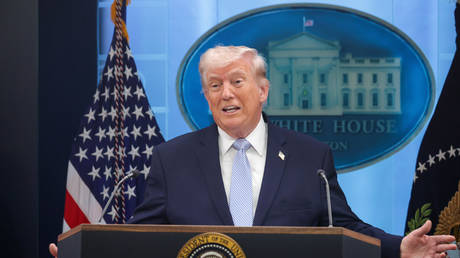
US President Donald Trump has said he is “permanently opening” the Strait of Hormuz, presenting the move as benefiting “China and the world” after claiming Beijing agreed “not to send weapons to Iran.” Trump’s remarks come as the US military claims American warships have effectively blocked Iranian trade through the vital waterway.
Iran’s army has warned it could target marine traffic in the Persian Gulf, the Sea of Oman, and the Red Sea if the blockade of its ports continues. Tehran insists it does not want war or instability but will not bow to pressure or surrender.
The escalation is unfolding amid reports of ongoing indirect contacts over a possible second round of US‑Iran talks, following last weekend’s negotiations in Pakistan that ended without an agreement to halt the war launched by Washington and Israel in late February.
What is actually happening at sea?
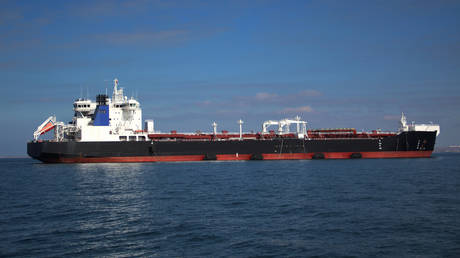
Traffic through Hormuz, a key global trade route, remains effectively disrupted as the US enforces a blockade of Iranian ports.
US Central Command (CENTCOM) says the measures apply to vessels of all nations entering or exiting Iranian ports in the Persian Gulf and Gulf of Oman, while insisting that freedom of navigation “to and from non‑Iranian ports” through Hormuz will not be impeded. The blockade has been “fully implemented,” according to the military.
Tehran says it will not return to the pre‑war status of the strait and is drafting new rules for ships from countries that imposed sanctions on Iran or supported the US-Israeli attacks to pay a toll as compensation to transit the waterway.
Analysts at energy consulting firm Gelber & Associates, cited by Reuters, say tracking data shows “a small but increasing number of tankers moving” through Hormuz, although “overall traffic remains sharply below normal levels.”
Fars News Agency reported that two Iranian vessels transited the strait on Wednesday, including a supertanker that entered Iranian waters via the open sea with its transponder on and another ship carrying food supplies bound for Imam Khomeini port.
How is each side portraying the situation?
Trump has portrayed the latest moves as a success, declaring on Truth Social that the strait is “permanently opened” and that China is “very happy.” He also claimed Beijing had “agreed not to send weapons to Iran.” China has not publicly responded and has previously denied providing military support to Tehran. US officials say the measures are intended to pressure Iran while keeping international shipping routes open.
Iran earlier announced it was closing the Strait of Hormuz to “enemy ships” in response to the US-Israeli bombing campaign and has demanded recognition of its “sovereignty” over the waterway and the right to impose tolls. President Masoud Pezeshkian said Tehran does not seek war or instability and remains committed to dialogue, but warned that any attempt to force the country into surrender is doomed to fail and will not be accepted by the Iranian nation.
How are markets reacting?
Oil prices have edged higher as concerns over disruptions in Hormuz – which carries about 20% of global oil and LNG shipments – offset hopes of easing tensions.
Brent crude traded near $95 per barrel on Wednesday, with expectations for renewed talks helping cap gains below $100 even as traders remained focused on supply risks in the Middle East. Gelber & Associates said traders are no longer pricing in a full‑scale outage, but are still maintaining a “residual premium” as flows recover unevenly rather than returning to normal.
Broader economic worries are also mounting. The International Monetary Fund has warned the conflict could weigh on global growth, while Chicago Fed President Austan Goolsbee told the Financial Times that higher oil prices risk pushing up US inflation expectations, describing a “double danger” from the Iran stand‑off and existing trade tensions.
Equity markets, however, have so far taken a more upbeat view, with major Asian indices rising on hopes diplomacy will avert a prolonged disruption to Gulf energy supplies.
What is Moscow saying?
Russian Foreign Minister Sergey Lavrov has warned against further escalation, expressing hope that the US “will be realists… and will not continue the unprovoked aggression” against Tehran, which he said risks destabilizing the wider Middle East.
At the same time, he signaled Moscow is prepared to offset potential supply shocks, saying Russia “can certainly make up for resource shortages faced by China and other countries” if Iranian exports are squeezed and is ready to work with partners “on an equal and mutually beneficial basis.”
What will happen next?
While Trump says the war could end soon, promising an “amazing two days,” diplomatic efforts appear to be gathering pace.
Officials from Pakistan, Iran, and several Gulf states say negotiating teams from Washington and Tehran could return to Islamabad later this week. A key Pakistani mediator reportedly arrived in Tehran on Wednesday with a message from the US and is expected to discuss preparations for a second round of talks.
The US and Iran agreed to a two‑week ceasefire last week, raising hopes for a broader settlement, but both sides have since traded accusations over “unacceptable” demands. Washington has not formally committed to extending the truce beyond its current expiry date, a senior US official told CNN.