April 23, 2026, 2:00 pm
Author – Nick Turse
The Pentagon won’t disclose the price tag of its wars in the Western Hemisphere, but a new analysis by Brown University’s Costs of War Project, provided exclusively to The Intercept, offers the first window onto the ballooning costs.
By the most cautious estimate, the U.S. military’s intervention in Venezuela and attacks on boats in the Caribbean and the Eastern Pacific — Operations Absolute Resolve and Operation Southern Spear, respectively — have already cost taxpayers at least $4.7 billion.
The Costs of War analysis is the most comprehensive accounting of the U.S. air, naval, and Special Operations expenses — including some troop deployments and munitions — used in the two campaigns between August 1, 2025, and March 31, 2026. The need for such an estimate stems from the refusal of the Department of War to provide a tally of costs to lawmakers or The Intercept.
The researchers behind the Costs of War estimate say it’s almost assuredly an undercount.
“Operations do not have a clear end date and are actively expanding. They carry significant human, financial, and strategic costs and risk,” wrote authors Hanna Homestead, a research analyst with the National Priorities Project, and Jennifer Kavanagh, the director of military analysis at Defense Priorities, a nonpartisan research group.
“American taxpayers, who are increasingly unable to afford basic needs, have a right to know how their tax dollars are spent,” they noted.
Homestead and Kavanagh observe that the largest costs might still be on the horizon.
The expenses were “enough to fund Medicaid for 500,000 people for an entire year.”
“We expect that if comprehensive information were available, our cost estimate would likely increase significantly,” they wrote.
Kavanagh told The Intercept that the expenses were “enough to fund Medicaid for 500,000 people for an entire year.”
“Though the Trump administration is right to focus more on the Western Hemisphere, most needs in the region are economic or require investment in regional law enforcement. The United States is not clearly safer or more prosperous as a result of Operation Southern Spear or Operation Absolute Resolve,” she said.
The Naval deployment — which comprised the largest concentration of U.S. ships in the region since the Cuban missile crisis of 1962 — constituted the single largest expense, an estimated $3.8 billion. This includes the ever-growing cost of the Iwo Jima Amphibious Ready Group which consists of the USS Iwo Jima, USS Fort Lauderdale, and USS San Antonio, which remain deployed in the Caribbean with the 22nd Marine Expeditionary Unit and the USS Lake Erie guided-missile cruiser. Costs of War puts the daily operating costs of these ships at around $9 million per day.
Costs of War puts the daily operating costs of these ships at around $9 million per day.
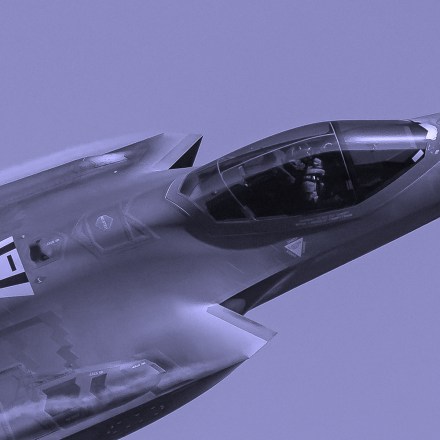
The steep Naval expenditures are followed by at least $616 million spent on the deployment of aircraft, including P-8 Poseidon maritime patrol aircraft, F-35A Lightning II fighters, and MQ-9 Reaper drones used in both operations. The continuing daily cost of operating the at least 20 aircraft that are assumed to remain deployed in the region is $2.6 million.
Under Operation Southern Spear, the U.S. military has conducted 53 attacks on so-called drug boats since September 2025, killing more than 180 civilians. The latest strike, on April 19 in the Caribbean, killed three people. The Trump administration claims its victims are members of at least one of 24 or more cartels and criminal gangs with whom it claims to be at war but refuses to name.
Experts in the laws of war and members of Congress, from both parties, say the strikes are illegal extrajudicial killings because the military is not permitted to deliberately target civilians — even suspected criminals — who do not pose an imminent threat of violence. The summary executions are a significant departure from standard practice in the long-running U.S. war on drugs, in which law enforcement agencies arrested suspected drug smugglers.
The Costs of War analysis puts the price tag of the munitions employed in these attacks on boats at between $12.5 million and $50 million, the range owing to the lack of transparency surrounding the strikes. The report notes that the individual cost of armaments used in each strike may top $1 million and could actually be far higher if multiple munitions or aircraft are used.
Beyond expenses captured under Southern Spear, ancillary costs of Absolute Resolve, a large-scale air campaign and the abduction of Venezuelan President Nicolás Maduro, top $206 million. This includes the deployment of at least 150 aircraft — fighter jets, bombers, and Special Operations aircraft, and more — along with precision munitions such as Tomahawk cruise missiles and JASSM-ER missiles.
The approximately 200 Special Operations forces who played a key role in Maduro’s kidnapping cost about $16 million, to include the costs of daily operations and combat. As yet unknown are the costs of deployments of U.S. commandos in Ecuador, another front in America’s Western hemispheric war.
The boat strikes recently moved to land as what Joseph Humire, the acting assistant secretary of war for homeland defense and Americas security affairs, called “bilateral kinetic actions against cartel targets along the Colombia-Ecuador border” on unnamed designated terrorist organizations. “The joint effort, named ‘Operation Total Extermination,’ is the start of a military offensive by Ecuador against transnational criminal organizations with the support of the U.S.,” Humire announced last month. That U.S.–Ecuadorian campaign has already strayed into Colombia after a farm was bombed or hit by “ricochet effect” on March 3. In a war powers report announcing the introduction of U.S. armed forces into “hostilities” in Ecuador, the White House also informed Congress of “military action taken on March 6, 2026, against the facilities of narco-terrorists affiliated with a designated terrorist organization.”
America’s wars in the Western Hemisphere are part of what President Donald Trump and others have termed the “Donroe Doctrine,” a bastardization of the 1823 Monroe Doctrine. While President James Monroe’s policy aimed to prevent Europe from meddling in the Western Hemisphere, Trump has employed his version as a license for America to do exactly that.
The National Security Strategy, released late last year, decrees the “Trump Corollary” to the Monroe Doctrine a “potent restoration of American power and priorities,” rooted in the “readjustment of our global military presence to address urgent threats in our Hemisphere.” Last month, Humire told members of the House Armed Services Committee that “America’s immediate security perimeter” extended from “Alaska to Greenland in the Arctic to the Gulf of America and the Panama Canal and surrounding countries.” The Trump administration has, in fact, bullied Panama and threatened Canada, Colombia, Cuba, Greenland, and perhaps also Iceland, while conducting counter-cartel CIA operations in Mexico.
The Pentagon refuses to provide insights into its expenditures for conflicts in Latin America.
“For any information regarding budgetary costs for Operations Southern Spear and Operation Absolute Resolve, I’ll have to refer you to OSW,” U.S. Southern Command spokesperson Steven McLoud told The Intercept. When asked about the costs, the Office of the Secretary of War said it does “not have anything to provide currently.”
Homestead and Kavanagh admit that the $4.7 billion price tag placed on Operations Absolute Resolve and Southern Spear is likely a low-ball figure. “This is a conservative estimate based on the limited information about the operation that is available,” they wrote. “Full data for several cost categories are not publicly available, and certain operations — such as the details of a CIA operation in Venezuela referenced by President Trump — remain classified or incompletely reported in the public domain.”
Costs are mounting by the day and will continue to do so for the foreseeable future. Trump has said he expects the U.S. will be running Venezuela for years. (He recently teased the possibility of making Venezuela the 51st U.S. state, before saying he could run for president of that country.) The Intercept previously reported that Pentagon procurement documents indicate the U.S. plans to maintain a massive military presence in the Caribbean until late 2028.
“Much of the military forward presence involved in these operations appears to now have become the ‘steady state,’ that is, it is likely to remain in the region for the foreseeable future,” said Kavanagh. “This means that the costs will continue to accumulate.”
The ultimate price tag of Americas wars in Latin America will further balloon in the decades ahead, saddling future Americans with soaring costs. “War is financed by debt, adding interest costs to the public budget,” write Homestead and Kavanagh. “Furthermore, the federal government undertakes an obligation to pay veterans benefits for decades into the future.”

Recently, Linda Bilmes, a former assistant secretary and chief financial officer of the U.S. Department of Commerce and currently a public policy professor at the Harvard Kennedy School, told The Intercept that the already-excessive expense of the Iran war would likely be pushed into the trillions of dollars by such long-term costs like veterans benefits and interest on the debt to pay for the war.
“Across the country people are going bankrupt and dying prematurely because of lack of health care, but the U.S. government has billions to spend on imperialist violence to enrich corporations — from Venezuela to Iran — without any regard for human rights, life or rule of law,” Homestead told The Intercept. “This situation illustrates why greater restraint on Pentagon spending — which primarily benefits private contractors — is so necessary.”
The post Trump Has Already Spent at Least $4.7 Billion Attacking Latin America appeared first on The Intercept.
Full Article
Author: Nick Turse