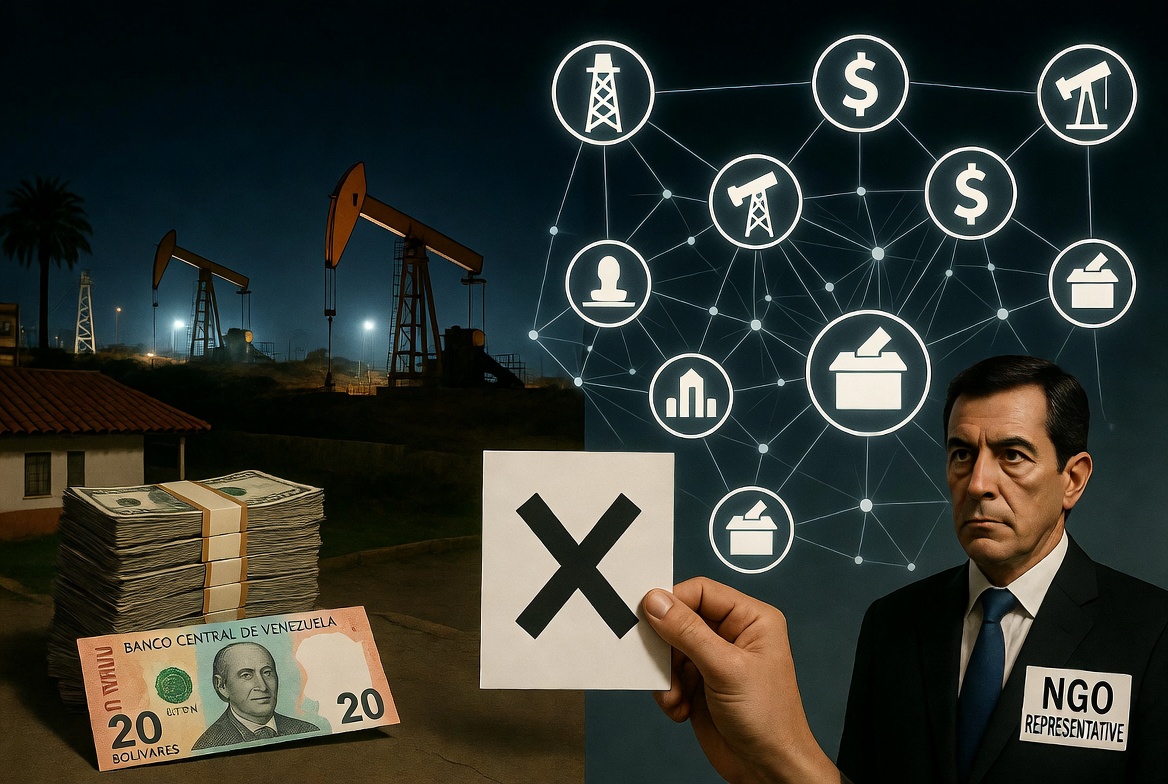
The $300 Billion Question: What the Maduro Raid Was Really About
When 150 US military aircraft launched from 20 different airbases across the Western Hemisphere at 10:46 PM on January 2, 2026, most Americans heard a story about drug trafficking. The official narrative was clean: Nicolas Maduro, the Venezuelan strongman, was a narco-terrorist. The US military conducted a law enforcement operation with military support. Case closed.
But follow the money, and a very different picture emerges.
Venezuela has the world’s largest proven oil reserves—303 billion barrels, roughly 17% of global supply. At current prices, that’s north of $15 trillion in underground wealth. Within hours of Maduro’s capture, President Trump wasn’t talking about cocaine. He was talking about Chevron, ExxonMobil, and ConocoPhillips going in to “fix the badly broken infrastructure” and “start making money for the country.”
The drug charges against Maduro are real. The 2020 federal indictment documents a sophisticated narco-state operation moving hundreds of tons of cocaine annually, generating billions in illicit revenue. What the indictment doesn’t explain is why the US waited six years to act—and why now.
The answer lies in what Maduro controls beyond cocaine shipments: insight into financial networks that could embarrass some very powerful people, leverage over assets worth trillions, and potentially explosive information about electoral technology that touched American soil.
This is the story they’re not telling you.
Part I: The Oil Play — Following the Legitimate Money
Let’s start with the clean stuff.
Trump didn’t hide the ball. “We’re going to have our very large United States oil companies — the biggest anywhere in the world — go in, spend billions of dollars, fix the badly broken infrastructure,” he announced at Mar-a-Lago hours after the raid. “The oil companies are going to go in, they’re going to spend money, we’re going to take back the oil that, frankly, we should have taken back a long time ago.”
Note the language: “take back.” Not develop. Not partner. Take back.
Trump described Venezuela’s nationalizations as “one of the largest thefts of American property in the history of our country.” He’s not wrong on the facts. In 2007, Hugo Chavez forced ExxonMobil and ConocoPhillips out of Venezuela, seizing their assets. International arbitration courts ordered Venezuela to pay over $10 billion to ConocoPhillips and over $1 billion to ExxonMobil. Venezuela has paid pennies on the dollar.
Chevron stayed, accepting unfavorable terms. Today it produces roughly 200,000 barrels per day through joint ventures with Venezuela’s state oil company, PDVSA. In the fourth quarter of 2025, as US sanctions tightened, Chevron still managed to export about 140,000 barrels daily—one of the few revenue streams keeping the regime afloat.
Here’s what makes this interesting: Within 72 hours of Maduro’s capture, US forces seized two oil tankers at sea, including one that had recently started flying a Russian flag. By January 7, Energy Secretary Chris Wright announced the US would oversee Venezuelan oil sales “indefinitely.” Acting President Delcy Rodriguez—Maduro’s vice president and oil minister—agreed to transfer 30-50 million barrels of sanctioned oil directly to the United States.
That’s roughly $2-3 billion in oil the US just acquired. Without paying. The legal theory is asset forfeiture tied to sanctions violations, but let’s call it what it is: the world’s most powerful military took oil by force from a country that couldn’t stop them.
Now scale that up. Venezuela produced 3.5 million barrels per day in the late 1990s. Today it’s at 800,000-1 million barrels per day. The country’s heavy, sour crude—difficult to refine but perfect for US Gulf Coast refineries that were literally built for Venezuelan oil—has been displaced by Canadian heavy crude and limited Mexican supply.
Restoration to even 2-3 million barrels per day would require $10-40 billion in infrastructure investment, depending on whose estimate you believe. The Council on Foreign Relations suggests it will take years. Trump claimed US oil firms could have operations “up and running” in fewer than 18 months.
Trump also said something revealing: Oil companies would get “reimbursed by us, or through revenue.” Translation: American taxpayers might backstop oil company investments in Venezuela, or the companies get paid from Venezuelan oil revenues before the Venezuelan people see a dime.
The Problem Nobody’s Talking About
The major US oil companies don’t want to go back. In December 2025, the Trump administration asked US oil companies if they were interested in returning to Venezuela. According to Politico, citing four sources, “the companies firmly declined.” ExxonMobil CEO Darren Woods called Venezuela “uninvestable” in its current state, noting they’ve been “expropriated from Venezuela two different times.”
Why? Because Venezuela’s debts are staggering. The country owes an estimated $100 billion to bondholders, $10-20 billion to China, $5 billion to Russia, plus billions in outstanding arbitration awards. Total external debt: approximately $170 billion. Venezuela’s entire GDP is about $80 billion.
Any oil company going in knows they’re walking into a debt restructuring nightmare where creditors will be fighting over proceeds. Without US government guarantees—essentially socializing the risk—the private sector doesn’t see the upside justifying the downside.
So why did Trump move now?
Part II: The Dirty Money — Following the Illicit Flows
The official story is drugs. Maduro, according to the US Department of Justice, ran what they called the “Cartel of the Suns”—named after the insignia worn by high-ranking Venezuelan military officers. The superseding indictment alleges Maduro and his associates used state apparatus to move hundreds of tons of cocaine annually, coordinating with FARC dissidents and ELN terrorists.
The alleged scheme was sophisticated: Venezuelan military aircraft with diplomatic immunity ferrying drug proceeds from Mexico back to Venezuela. State infrastructure protecting cocaine shipments. Military bases serving as air bridges to Central America and maritime routes through the Caribbean. Billions of dollars in drug revenue laundered through shell companies and proxies.
All of that is documented. Multiple co-conspirators have pleaded guilty. Hugo Carvajal, Venezuela’s former military intelligence director, pleaded guilty in June 2025 to all four charges including narco-terrorism. Cliver Alcalá Cordones, a retired general, got 21.5 years after pleading guilty.
But the deeper you dig, the murkier it gets.
Venezuela didn’t just become a narco-state under Maduro. It’s been a preferred drug transit route for decades. The Cartel of the Suns existed under Chavez. The infrastructure was built over 20+ years. So why did the US wait until January 2026 to pull the trigger?
Two data points are instructive.
First: In August 2025, the US increased the reward for Maduro’s capture from $25 million to $50 million. Second-in-command Diosdado Cabello’s bounty went from $10 million to $25 million. Defense Minister Vladimir Padrino López got a new $15 million bounty. This was five months before the raid.
What changed in August? Venezuela’s contested July 2024 presidential election, where Maduro claimed victory despite widespread evidence to the contrary, was old news by then. US sanctions were already in place. The answer lies in what was happening to Venezuela’s illicit financial networks.
According to the GAO, Venezuelan actors use “shell companies and familial or business contacts acting as proxies to hide their assets.” The Treasury Department has sanctioned over 300 individuals and entities related to Venezuela. The Department of Justice has charged at least 35 people with money laundering connected to Venezuela.
But here’s what’s interesting: The Trump administration didn’t just go after Maduro. They went after the financial ecosystem that kept his regime solvent.
In late 2025, the US military began interdicting Venezuelan oil tankers at sea—not just sanctioned shipments to the US, but Venezuela’s illicit exports to China through shadow fleets. Venezuela was selling oil to China at steep discounts via black-market routes, generating enough foreign exchange to keep the lights on. By December, those shipments had collapsed. Venezuela’s oil exports, which had been running 700,000-900,000 barrels per day, fell sharply as the US blockaded tanker routes.
Cut off from oil revenue, unable to access international banking, and facing internal pressure from military officers who weren’t getting paid, Maduro became vulnerable. Trump gave him one last phone call, according to NBC: “You got to surrender.” Maduro reportedly “came close” but stayed put. Forty-eight hours later, Delta Force was kicking in steel doors at Fort Tiuna.
Part III: The NGO Money — Following the Aid Dollars
Now we get to the part that makes Washington uncomfortable.
Between 2017 and 2024, the US provided hundreds of millions in “democracy assistance” and “humanitarian aid” for Venezuela. In 2019 alone, USAID signed an agreement with Juan Guaidó’s “interim government” to provide $98 million in aid. The total over the Guaidó period (2019-2023) approached $1 billion.
There’s one problem: The FBI is investigating where much of that money went.
According to reports from February 2025, the FBI is trying to determine the whereabouts of approximately $1 billion managed between 2018 and 2020 under the guise of humanitarian aid. According to investigative journalists, only 2% was properly used. The rest? Allegations point to Guaidó associates, including his appointed “ambassador” to the US, Carlos Vecchio, and his former chief of staff Roberto Marrero.
The funds were supposed to reach Venezuelans inside Venezuela through NGOs. Instead, according to leaked files, these NGOs were linked to Venezuelan opposition politicians and their relatives living abroad. The same people claiming to fight Maduro’s corruption were allegedly running their own grift with American taxpayer dollars.
Now, to be clear: Venezuela’s humanitarian crisis is real. Seven million Venezuelans have fled the country. Those remaining face food insecurity, collapsed healthcare, and economic devastation. Real NGOs do real work. But the “NGO industrial complex,” as Secretary of State Marco Rubio now calls it, created perverse incentives.
“Why are we hiring American and international NGOs to go into other countries and run health care systems that are parallel and sometimes in conflict with the health care systems of the host country? If we’re trying to help countries, help the country. Don’t help the NGO to go in and find a new line of business.”
— Secretary of State Marco Rubio, December 2025
The Trump administration announced a major foreign aid overhaul: Instead of routing money through nonprofits, the US would give funds directly to recipient governments. The first test case: Kenya, getting $1.6 billion in health assistance.
But here’s the question nobody’s asking: What did Maduro know about where US aid money actually went?
Venezuela’s intelligence services are sophisticated, trained by Cubans, Russians, and Iranians. If opposition figures were siphoning USAID funds, Venezuelan intelligence would have known. That’s leverage. That’s blackmail material. That’s the kind of information a desperate dictator might threaten to release if pushed too hard.
And if Maduro starts talking to federal prosecutors—which he’ll be incentivized to do as he faces life in prison—he might detail precisely which American and European NGOs, consultants, and contractors were complicit in fraud. That could be embarrassing for some very prominent people who’ve spent years condemning Maduro’s corruption while allegedly enabling their own.
Part IV: The Smartmatic Angle — Following the Voting Machine Money
This is where it gets really interesting.
Smartmatic is a voting technology company founded in Delaware in 2000 by three Venezuelan engineers. From 2004 to 2017, Smartmatic provided election technology for 14 Venezuelan national elections. In 2017, after Venezuela’s National Constituent Assembly elections, Smartmatic publicly stated that Venezuela’s National Electoral Council had announced results “different from those collected by the voting system.” Translation: Smartmatic accused the Venezuelan government of fraud. The company ceased operations in Venezuela in March 2018.
In the 2020 US presidential election, Smartmatic technology was used in exactly one county: Los Angeles County, California, where they’d developed a custom system owned entirely by the county. The machines don’t count or tabulate votes—they’re essentially sophisticated ballot printers.
But none of that stopped what came next.
After the 2020 election, Trump’s lawyers—Rudy Giuliani and Sidney Powell—promoted a conspiracy theory: Smartmatic was secretly a Venezuelan company created by Hugo Chavez to rig elections, and it had somehow manipulated Dominion Voting Systems machines (a completely separate company) to steal votes from Trump.
The claims were false. Both Smartmatic and Dominion sued for defamation. Fox News settled with Dominion for $787 million. Giuliani and Powell settled separately. Powell even admitted in a federal court filing that “no reasonable person would conclude that [her] statements were truly statements of fact.”
But here’s where the Maduro capture revives the story.
Within hours of the raid, right-wing commentators began speculating that Trump captured Maduro to force him to provide evidence about 2020 election rigging through Venezuelan-linked voting machines. Trump himself posted videos on social media promoting Dominion conspiracy theories. Benny Johnson, a prominent right-wing influencer, claimed Maduro “knows where all the bodies are buried” regarding the 2020 election and that “Venezuela was ground zero for election theft.”
The theory is nonsense. It’s been thoroughly debunked. Dominion was founded in Toronto in 2002 and has no ownership ties to Venezuela. Smartmatic has no operations in Venezuela since 2018 and had no role in the 2020 election beyond one California county with a custom system.
But ask yourself: Why would Trump allies and some DOJ officials revive this narrative now?
One theory circulating in intelligence circles—speculative, but worth noting—is that Maduro does know things about Smartmatic’s operations in Venezuela that could be embarrassing. Not about US elections, but about how Venezuelan elections were actually rigged, who knew what, and when.
Here’s what we know: Smartmatic worked closely with Venezuelan electoral authorities from 2004 to 2017. During that period, multiple election observers and mathematicians raised concerns about improbable voting patterns that appeared to favor Chavez and later Maduro. Smartmatic’s 2017 whistleblowing suggests the company eventually recognized something was wrong.
If Maduro starts cooperating with prosecutors, he might detail exactly how Venezuelan elections were manipulated, who at Smartmatic knew or suspected, and whether there were financial kickbacks. That wouldn’t validate the 2020 US election conspiracy theories, but it could create legal liability for Smartmatic executives and complicate the company’s ongoing defamation lawsuits.
It could also expose how much US officials knew about Venezuelan election fraud while continuing to certify those elections as observers—and while continuing to do business with companies involved.
The counterargument is straightforward: Smartmatic blew the whistle in 2017 and ceased operations. They’re the good guys in this story. Maybe. But intelligence agencies don’t capture foreign leaders without considering what they know and what they might say.
Part V: The Bigger Picture — What This Really Means
Strip away the drug trafficking narrative, the oil contracts, the NGO fraud, and the voting machine conspiracies. What you’re left with is something simpler and more concerning: The United States conducted a military invasion to effect regime change in a sovereign nation, justified it as law enforcement, and immediately seized billions in assets while announcing plans to control the target country’s primary industry.
This is how empires operate. Rome did it. Britain did it. Now America does it, wrapped in the language of counternarcotics and democracy promotion.
The rest of the world is watching. China called the operation “a blatant use of force against a sovereign state” and demanded Maduro’s release. Russia described it as “armed aggression.” Even traditional US allies like Mexico and several European nations expressed concerns about international law.
The precedent is alarming. If the US can kidnap a head of state based on a six-year-old indictment, what stops China from kidnapping Taiwan’s president? What stops Russia from doing the same in Georgia or Moldova? Trump’s own National Security Strategy acknowledges “the days of the United States propping up the entire world order like Atlas are over.”
What replaces the old order? Apparently, the law of the jungle.
But let’s not be naive. Maduro is not a sympathetic figure. The narco-trafficking charges are credible. The human rights abuses are documented. Seven million Venezuelans didn’t flee their country because things were going well. The question isn’t whether Maduro deserved to be removed—it’s about the method, the timing, and what comes next.
Because here’s what we know about regime change operations: They’re easy to start and nearly impossible to end well.
Iraq was supposed to take months. It took years and cost thousands of American lives. Afghanistan was supposed to be quick. It lasted 20 years. Libya’s “humanitarian intervention” created a failed state and a refugee crisis. Syria’s “moderate rebels” turned into ISIS and other extremist groups.
Venezuela has every ingredient for the next quagmire: A collapsed economy, armed militant groups, entrenched corruption, foreign powers (Russia, China, Iran, Cuba) with interests to protect, and no clear successor government with popular legitimacy. Delcy Rodriguez, the acting president, is herself under US sanctions. María Corina Machado, the opposition leader, has popular support but no control over state institutions. The military, which kept Maduro in power, hasn’t been reformed or purged.
Trump says US forces will stay as “boots on the ground” during the “transition,” which he claims won’t constitute occupation as long as Rodriguez “does what we want.” That’s not a transition. That’s a puppet government.
And while US forces occupy Venezuela, American oil companies will pour in billions—possibly backed by US taxpayer guarantees—to rebuild infrastructure and extract oil. Who benefits? Not ordinary Venezuelans, who’ve already seen their country’s wealth stolen by one corrupt regime after another. The oil revenue will flow to creditors, contractors, and shareholders, while Venezuelans get jobs at wages far below what the oil is worth.
This is why following the money matters. The official narrative about drug trafficking and democracy is true—as far as it goes. But it’s not the whole truth.
Follow the Money: The Questions Still Unanswered
On Oil Contracts:
- Which US companies will get production contracts, and what are the terms?
- Will US taxpayers guarantee investments, socializing losses while privatizing gains?
- What happens to existing Chinese and Russian contracts?
- How will Venezuela’s $170 billion external debt be restructured, and who gets paid first?
- What percentage of oil revenue will actually go to the Venezuelan people?
On Drug Money:
- What happened to the billions in Maduro regime assets hidden offshore?
- Which international banks facilitated money laundering?
- What role did European financial institutions play in moving illicit proceeds?
- Who in the US intelligence community knew about the drug networks and when?
On NGO Funding:
- Where exactly did the $1 billion in USAID funds go between 2018-2020?
- Which NGOs received money, and what did they do with it?
- Who authorized continued funding despite red flags?
- Will anyone face prosecution for misusing humanitarian aid?
On Smartmatic:
- What did Maduro’s intelligence services know about Smartmatic’s operations?
- Did Smartmatic executives know Venezuelan elections were being manipulated before 2017?
- Were there financial relationships beyond the published contracts?
- What might Maduro reveal to prosecutors, and who might it embarrass?
On Geopolitics:
- What deals were made with China and Russia to allow this operation?
- Why didn’t Moscow intervene to protect a client state?
- What concessions did the US give elsewhere (Ukraine? Syria? Taiwan?) as quid pro quo?
- What precedent does this set for future interventions?
These aren’t rhetorical questions. They’re the questions real journalists should be asking. Because the Maduro raid isn’t just about Venezuela. It’s about what kind of world we’re building.
The Bottom Line
On the morning of January 3, 2026, Americans woke up to news of a stunning military operation. Nicolas Maduro, the Venezuelan dictator, had been captured and flown to New York to face drug trafficking charges. The official story was clean: Good guys got the bad guy.
But follow the money—the oil money, the drug money, the aid money, the election money—and you find a much messier picture. You find US oil companies owed billions, positioned to profit from regime change. You find a sophisticated financial network moving drug proceeds that somehow survived for decades before the US acted. You find humanitarian aid allegedly siphoned by the same opposition figures the US supported. You find a voting technology company with Venezuelan origins that might have information uncomfortable for multiple parties.
None of this excuses Maduro’s crimes. The drug trafficking is real. The human rights abuses are documented. The stolen elections happened. Maduro deserves to face justice.
But justice isn’t what this is about. This is about power, money, and resources. It’s about $300 billion in proven oil reserves and untold billions in hidden assets. It’s about who controls Venezuela’s future and who profits from it.
The Maduro raid was many things: A military operation, a law enforcement action, a regime change, a resource grab, and a geopolitical statement. What it wasn’t—and never was—was simply about drugs.
Follow the money. Always follow the money. That’s where the truth lives.
Key Sources & Further Reading
Official Documents:
- DOJ Indictment: Nicolás Maduro Charged with Narco-Terrorism (Department of Justice, March 2020)
- Venezuela: Illicit Financial Flows and U.S. Efforts to Disrupt Them (GAO Report, 2023)
- Venezuela Oil Sector: Context for Recent Developments (Congressional Research Service, January 2026)
- The US Capture of Nicolás Maduro (UK House of Commons Library, January 2026)
News Coverage & Analysis:
- CNN: Live Updates – Maduro in US Custody (January 3, 2026)
- CBS News: Trump Says US is “In Charge” of Venezuela (January 2026)
- NBC News: How the U.S. Captured Maduro in Venezuela (January 2026)
- Al Jazeera: How the US Attack on Venezuela Unfolded (January 2026)
- Democracy Now: Special Report – U.S. Kidnaps Maduro (January 2026)
- Wikipedia: 2026 United States Intervention in Venezuela
Oil & Economic Analysis:
- CNN Business: Trump Says US is Taking Control of Venezuela’s Oil Reserves
- CNBC: Maduro Overthrow Could Help US Oil Companies Recover Assets
- Council on Foreign Relations: Increasing Venezuela’s Oil Output Will Take Years
- Columbia SIPA: U.S. Actions in Venezuela – Energy Implications
- Al Jazeera: Venezuela After Maduro – Oil, Power and Limits of Intervention
Drug Trafficking & Money Laundering:
- GAO: Venezuela’s Political Unrest Has Made Drug Trafficking Easier
- Wikipedia: Cartel of the Suns
- Wikipedia: United States v. Nicolás Maduro Moros
- Atlantic Council: The Maduro Regime’s Illicit Activities
- Journal of Democracy: How Venezuela Became a Gangster State
NGO Funding & Foreign Aid:
- Monthly Review: Venezuelan Opposition Diverted $116 Million from USAID
- Devex: USAID Reprograms Central America Funds for Venezuela
- Western Journal: Rubio Announced Major Shift in Foreign Aid Strategy
- WOLA: Trump’s Pause of Foreign Assistance to Latin America
Smartmatic & Election Controversies:
- Smartmatic: Venezuela Case Study (2004-2017)
- Smartmatic: Fact-Check on False Claims
- Wikipedia: Smartmatic
- Democracy Docket: Election Deniers Think Maduro’s Capture Will Expose 2020 Plot
- CyberScoop: AI, Voting Machine Conspiracies Fill Information Vacuum
- Delaware Supreme Court: US Dominion Inc. v. Fox News (Court Filing)
International Law & Geopolitics:
- Chatham House: US Capture of Maduro Has No Justification in International Law
- Foreign Policy: Top 10 Risks for 2026
- Eurasia Group: Top Risks of 2026
Disclaimer: This article makes no claim about the validity of 2020 US election fraud conspiracy theories, which have been thoroughly debunked in court. The discussion of Smartmatic relates only to its Venezuelan operations and potential information about those operations that Maduro might possess. All claims about US aid misappropriation are based on investigative reporting and ongoing FBI investigations; no individuals have been formally charged as of publication date.