






• About
  • Advertise
  • Privacy & Policy
  • Contact
Thursday, February 26, 2026
  • Login
  • Register
thehopper.news
  • Home
    • Home
    • About
  • Analysis
  • Regions
    • Discussion
    • Africa
    • Asia-Pacific
    • Europe & NATO
    • Americas
    • Russia & Eurasia
    • Middle East & North Africa
  • Themes
  • Intel & Security
  • Foreign Affairs
  • Geopolitics
  • News
    • All
    • Politics
    • World

    Former Polish intel chiefs charged over ‘Israeli spyware’ use

    Russia weighing fuel aid for crisis-hit Cuba

    I’m Ukrainian – Russia’s UN ambassador

    I’m Ukrainian – Russia’s UN ambassador

    What Do We Do With the Dems Who Backed Genocide In Gaza?

    US promises not to ‘interfere’ in French affairs – media

    US promises not to ‘interfere’ in French affairs – media

    Missiles of ambition: India’s arsenal is changing the game – are you paying attention?

    Missiles of ambition: India’s arsenal is changing the game – are you paying attention?

    US deploys fighter jets to Israel – media

    US deploys fighter jets to Israel – media

    Putin invites BRICS to join ‘new phenomenon’ of global growth

    Putin invites BRICS to join ‘new phenomenon’ of global growth

    Iran dismisses Trump’s nuclear claims as ‘big lies’

    Iran dismisses Trump’s nuclear claims as ‘big lies’

    German MPs urged to probe alleged Ukraine nuke plot

    German MPs urged to probe alleged Ukraine nuke plot

No Result
View All Result
thehopper.news
No Result
View All Result
Home Geopolitics

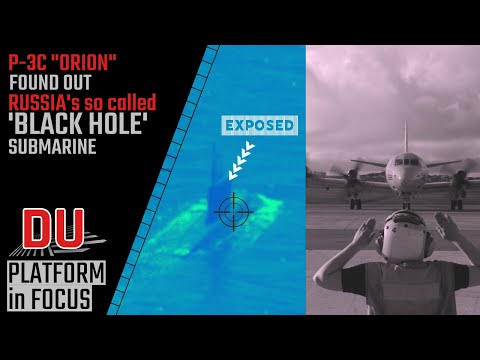
How the U.S. made Portuguese P-3C “Orion” detected Russian B-608 Mozhaysk?

by Admin
July 9, 2024
in Geopolitics, Video
0
How the U.S. made Portuguese P-3C “Orion” detected Russian B-608 Mozhaysk?
27
SHARES
108
VIEWS
Share on FacebookShare on Twitter

July 9, 2024, 9:02 pm

A Portuguese Air Force’s Lockheed P-3C "Orion" anti-submarine patrol aircraft recently located a dreaded Russian Kilo-class submarine.
Viewers may note that this type of submarine is often referred to as the "Black Hole" in NATO circles for its exceptional stealth and low noise levels.

According to Russian media, the submarine identified is likely the B-608 Mozhaysk of the Baltic Fleet.
The submarine was spotted at the end of June. This is a compelling development.
 
In this video, Defense Updates analyzes how the U.S. made Portuguese P-3C "Orion" detected Russian B-608 Mozhaysk?

#defenseupdates #usvsrussia #Mozhaysk

Chapters:
00:11 INTRODUCTION
01:40 B-608 MOZHAYSK
04:18 LOCKHEED P-3 ORION 
06:47 ANALYSIS

✴️ https://nordvpn.com/DEFENSE

🐦 Follow us on Twitter : https://twitter.com/Defense_Updates

▶️ Narration by Scott Leffler (scottleffler.com)

🎵 Background Music courtesy of incompetech.com
"Giant Wyrm" Kevin MacLeod (Licensed under Creative Commons)

Content Creator – Defense Updates

Tags: Youtube
Share11Tweet7
Previous Post

The Wire – July 9, 2024

Next Post

Biden wants to serve until 2029 — White House

Admin

Admin

Next Post
Biden wants to serve until 2029 — White House

Biden wants to serve until 2029 — White House

Leave a Reply Cancel reply

Your email address will not be published. Required fields are marked *

I agree to the Terms & Conditions and Privacy Policy.

thehopper.news

Copyright © 2023 The Hopper New

Navigate Site

  • About
  • Advertise
  • Privacy & Policy
  • Contact

Follow Us

Welcome Back!

Login to your account below

Forgotten Password? Sign Up

Create New Account!

Fill the forms bellow to register

*By registering into our website, you agree to the Terms & Conditions and Privacy Policy.
All fields are required. Log In

Retrieve your password

Please enter your username or email address to reset your password.

Log In

Add New Playlist

No Result
View All Result
  • Home
    • Home
    • About
  • Analysis
  • Regions
    • Discussion
    • Africa
    • Asia-Pacific
    • Europe & NATO
    • Americas
    • Russia & Eurasia
    • Middle East & North Africa
  • Themes
  • Intel & Security
  • Foreign Affairs
  • Geopolitics
  • News

Copyright © 2023 The Hopper New

This website uses cookies. By continuing to use this website you are giving consent to cookies being used. Visit our Privacy and Cookie Policy.