Sunday, March 1, 2026 | Curated by: H. Reeves
Section 1 — Top Story
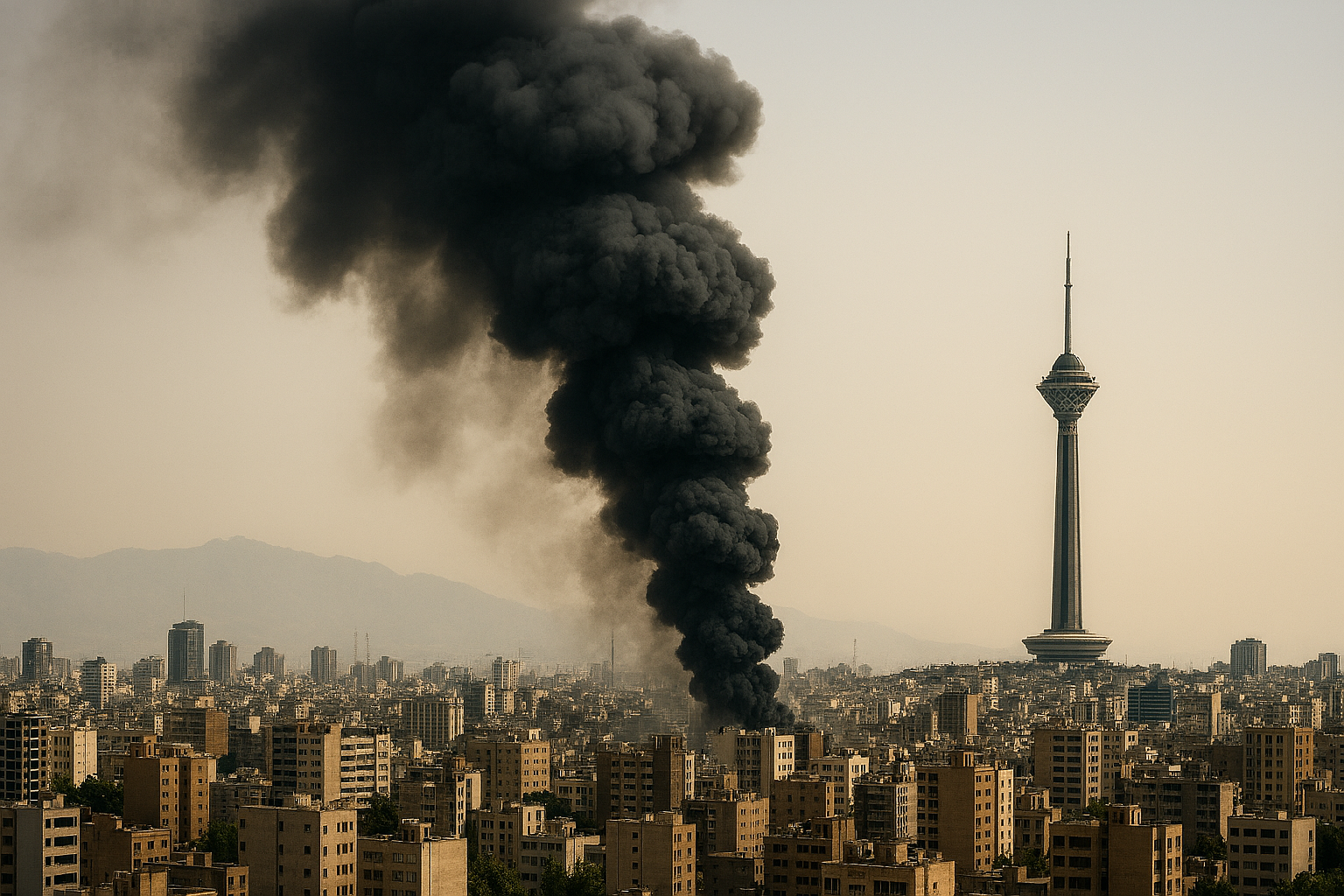
U.S.-Israeli Operation ‘Epic Fury’ Kills Khamenei; Iran Retaliates, Strait of Hormuz in De Facto Closure
A joint U.S.-Israeli airstrike on Saturday killed Iranian Supreme Leader Ayatollah Ali Khamenei at his Tehran compound, ending his 37-year rule. B-2 stealth bombers armed with 2,000-lb munitions struck ballistic missile facilities; CENTCOM confirmed over 1,000 targets struck across Iran. The operation — designated ‘Epic Fury’ — additionally killed top security adviser Ali Shamkhani and IRGC commander-in-chief Mohammad Pakpour. Three U.S. service members were killed and at least five seriously wounded — the first American casualties since the operation began Saturday.
Khamenei had no publicly named successor. Iran’s constitution immediately activated a three-member Provisional Leadership Council comprising reformist President Masoud Pezeshkian, hardline judiciary chief Gholamhossein Mohseni-Ejei, and Guardian Council cleric Ayatollah Alireza Arafi. The 88-member Assembly of Experts is constitutionally required to select a permanent successor “as soon as possible,” but candidates remain unconfirmed and deliberations are strictly confidential. The wartime context makes the IRGC the decisive power broker in any succession outcome.
Iran declared 40 days of mourning and launched immediate reprisals: the IRGC struck 27 U.S. military bases across the region, targeting Qatar, the UAE, Kuwait, Bahrain, Jordan, Saudi Arabia, Iraq, and Oman. At least three tankers were damaged in Gulf waters. Iran’s Revolutionary Guard broadcast VHF warnings ordering all ships out of the Strait of Hormuz; Maersk suspended Trans-Suez sailings and rerouted vessels around the Cape of Good Hope. The Strait is not formally closed, but commercial operators and insurers have effectively withdrawn — a de facto closure putting roughly 20% of global oil supply at immediate risk. Brent crude surged as much as 13% to above $82/barrel, the highest since January 2025.
What to Watch:
• Whether Iran formally declares the Strait closed — a decision requiring ratification by the Supreme National Security Council (now fragmented by succession dynamics)
• Congressional war powers vote this week: Sen. Kaine’s resolution is largely symbolic but forces senators on record
• Which IRGC commander emerges as succession kingmaker — watch for statements attributed to Ahmad Vahidi, named deputy chief two months ago
• Oil markets Sunday open: analysts forecast continued rally toward $100 if Strait disruption persists beyond 72 hours
Section 2 — Regional Roundup
Gulf States
GCC Emergency Session Convenes as Iranian Missiles Strike Dubai, Doha, Manama
Iran launched 65 missiles and 12 drones at Qatar on Saturday, with most intercepted but 16 people wounded. Explosions were reported at Dubai’s Jebel Ali port, Tel Aviv residential areas, and Bahrain’s Seef district. Saudi Arabia activated air defenses and downed multiple missiles; Jordan intercepted missiles in its airspace. GCC foreign ministers convened an emergency video conference Sunday, balancing condemnation of Iranian retaliatory attacks against avoiding explicit endorsement of the U.S.-Israeli strikes — a diplomatic tightrope with their own populations watching. Al-Udeid airbase in Qatar, hosting roughly 10,000 U.S. personnel, received the most concentrated targeting. UAE and Saudi infrastructure — critical to any bypass of the Strait via pipeline alternatives — is now demonstrably within Iranian strike range.
Pakistan / South Asia
10 Killed in Karachi as Protests Erupt at U.S. Consulate
At least 10 people were killed and 70 wounded in Karachi when security forces opened fire as pro-Iranian protesters stormed the U.S. consulate compound. Separate demonstrations broke out in Lahore and Islamabad. Baghdad saw hundreds attempt to breach the U.S. embassy compound. Protests were also reported in Istanbul and Indian-administered Kashmir. The breadth of street mobilization — crossing Pakistan’s nuclear-armed state and major transit corridors — signals a wider Sunni-Shia fault line that could destabilize governments well beyond the immediate conflict zone. Pakistan’s civilian government has not yet issued a formal statement on the strikes.
Global Powers
Russia and China Condemn; Neither Positioned to Intervene Militarily
Russia’s Foreign Ministry called the strikes “a pre-planned and unprovoked act of armed aggression” against a sovereign UN member state. China’s UN Ambassador Fu Cong called them “brazen” and demanded respect for Iran’s sovereignty. Analysts assessed both powers as limited to rhetorical support: Russia’s military is overstretched in Ukraine; China’s energy security is directly threatened by Strait disruption, giving Beijing strong incentive to push for de-escalation rather than confrontation. Notably, a weakened Iran becomes more economically dependent on China, which purchased over 80% of Tehran’s shipped oil in 2025. Oman’s foreign minister — whose government had been facilitating nuclear negotiations just days prior — warned Washington: “This is not your war.”
Section 3 — Under the Radar
- Russia’s Energy Position Quietly Strengthens. Kpler analysis notes the Strait crisis is materially improving Russia’s crude competitiveness. With Middle East barrels facing logistical disruption and insurance paralysis, India has strong incentive to pivot toward Russian supply immediately. China — which had been moderating Russian crude intake — will likely abandon that restraint if the conflict extends beyond weeks. Watch for India’s state refiners announcing emergency Russian crude purchases in the next 72 hours.
- Iran’s Nuclear Infrastructure Status Uncertain. CENTCOM confirmed 1,000+ targets struck, including ballistic missile facilities. What remains undisclosed: the status of hardened enrichment infrastructure at Fordow and Natanz. The IRGC — not the incoming civilian leadership council — likely holds operational authority over remaining nuclear assets. No IAEA inspectors are currently in-country.
- Milano-Cortina Paralympics Disrupted — Underreported Soft-Power Cost. The Olympic/Paralympics truce is in effect through March 15, making ongoing operations a symbolic violation. Flights into Italy are being disrupted as regional airspace closes. A largely overlooked soft-power cost for Washington in non-allied nations.
Section 4 — By the Numbers
| $82.40 | Brent crude per barrel (up 13% in a single session), highest since January 2025; WTI near $72. Analysts project continued rally toward $100 if Strait remains effectively closed beyond 72 hours. |
| 1,000+ | Iranian targets struck by U.S.-Israeli forces since Saturday morning, per CENTCOM, including ballistic missile facilities, command-and-control sites, and IRGC headquarters. |
| 27 | U.S. military bases across the Gulf targeted by IRGC retaliatory strikes (IRGC statements; extent of damage not independently confirmed). |
| 37 years | Duration of Khamenei’s rule as Supreme Leader — the only prior transfer of power in this office was Khomeini’s death in 1989. |
| 20% | Share of global oil supply transiting the Strait of Hormuz daily; 84% of those volumes head to Asian markets. China receives roughly half its crude imports via the Strait. |
| 10+ | Killed near U.S. consulate in Karachi; protests spread across Pakistan, Iraq, Turkey, and Indian-administered Kashmir. |
Section 5 — What We’re Watching
Next 24 Hours
- Iranian Supreme National Security Council meeting — formal Strait of Hormuz closure decision; any announcement changes energy market calculus immediately
- Trump public address — administration conspicuously absent from Sunday talk shows; stated objectives beyond “eliminating imminent threats” will signal whether this is regime change or targeted degradation
- GCC emergency meeting outcomes — will Gulf states call for ceasefire or tacitly support U.S. operations in exchange for security guarantees?
This Week
- Congressional war powers vote — Kaine’s resolution will be vetoed if passed, but the count reveals Republican fractures and sets legal framing
- Assembly of Experts convening — first public signals on successor candidates; IRGC statements on preferred candidate will matter more than clerical deliberations
- Maersk / major carrier decisions on Cape of Good Hope rerouting — if extended, adds 10–14 days and 30–40% cost to Asian supply chains
- Pakistan government response — whether Islamabad distances itself from Washington determines future U.S. logistics and intelligence access in the region
Methodology Note: This Brief synthesizes open-source intelligence from Reuters, AP, NPR, Al Jazeera, Bloomberg, CNBC, PBS NewsHour, The Washington Post, Times of Israel, Kpler energy data, Congressional Research Service, and The National. All factual claims sourced to minimum two independent Tier 1 or Tier 2 sources. Analysis clearly distinguished from factual reporting.
Spotted something we missed? brief@thehopper.news • Subscribe for 6 AM EST delivery