The Week in Thread
The week of March 8–14 will be remembered as the moment a single chokepoint — 21 miles wide at its narrowest — became the central variable in the global economy, as Iran’s new Supreme Leader Mojtaba Khamenei transformed the Strait of Hormuz from a tactical threat into a standing instrument of economic warfare, cutting off roughly one-fifth of the world’s daily oil supply and sending Brent crude above $100 for the first time in four years. While the Middle East absorbed the full weight of Washington’s strategic attention, Ukraine’s diplomats made a critical concession — accepting a conditional 30-day ceasefire framework on March 11 — but found the Americans distracted and Moscow unmoved, leaving Kyiv holding a gesture with no counterpart. Two wars, one superpower, and a world running out of room to manoeuvre.
Dominant Threads
Operation Epic Fury Enters Week Two — The Campaign Hardens and the Casualty Count Climbs
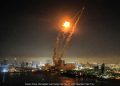
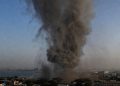
By the opening of this week, the US-Israel campaign against Iran — launched February 28 — had passed from the shock phase into the grinding attrition phase. US Central Command reported striking more than 5,000 targets in Iran by March 10, a figure that rose above 6,000 by day 13. More than 90 Iranian vessels, including over 30 mine-laying ships, were damaged or destroyed. The week’s defining event came on March 13, when a US KC-135 Stratotanker refuelling aircraft crashed in western Iraq, killing all six crew members — bringing the total US military death toll to 13, seven of them from enemy fire. Iranian proxy groups claimed responsibility; the Pentagon attributed the loss to neither hostile nor friendly fire pending investigation. Iran’s newly installed Supreme Leader Mojtaba Khamenei — son of Ali Khamenei, killed in the opening Israeli strike on February 28 — delivered his first major strategic statement via state television, declaring the Strait of Hormuz would remain closed as a “tool of pressure” and issuing warnings of further attacks against US regional bases. Israel simultaneously announced a new “large-scale wave of strikes” on Hezbollah infrastructure in Beirut’s Dahiyeh district, and moved its ground forces further into southern Lebanon, ordering residents to evacuate north of the Zahrani River. Lebanon’s death toll from the renewed Hezbollah-Israel conflict exceeded 630 by week’s end, with more than 800,000 registered as displaced. Iran’s President Pezeshkian publicly outlined three conditions for ending the conflict: recognition of Tehran’s legitimate rights, payment of reparations, and firm international guarantees against future aggression — framing that analysts read as regime-survival positioning rather than a serious negotiating posture.
The war’s financial toll is becoming structural. The opening six days of operations cost the US military more than $11.3 billion, according to figures disclosed in a classified Pentagon briefing to lawmakers. Markets are pricing in duration: Goldman Sachs raised its US recession probability by five percentage points to 25%, modelling scenarios in which Brent averages $98–$110 in March and April before declining. Oxford Economics characterises $140-per-barrel sustained oil as “the breaking point” at which the eurozone, UK, and Japan enter contraction. War risk insurance premiums for vessels anywhere near the Gulf are running $5–$15 per barrel above pre-conflict rates, a “war premium” that absorbs and negates any price benefit from the IEA’s emergency reserve release. Israeli defence production is also under strain: Israel informed Washington this week it is running critically low on ballistic missile interceptors, a dependency that adds further pressure to US resupply logistics already stretched across two active theatres.
Iran’s FM Araghchi flatly contradicted Trump’s claim that Tehran “wants to make a deal,” telling CBS on March 15: “We never asked for a ceasefire, and we have never asked even for negotiation. We are ready to defend ourselves as long as it takes.” That statement eliminates the soft diplomatic off-ramp for at least the near term. Watch for: whether Trump activates the proposed naval escort corridor through Hormuz; how quickly Israel’s interceptor inventory becomes a public constraint; and whether Hezbollah’s re-engagement in Lebanon prompts a formal US position change on Lebanon operations.
The Hormuz Chokepoint: The Largest Energy Architecture Shock Since the 1970s
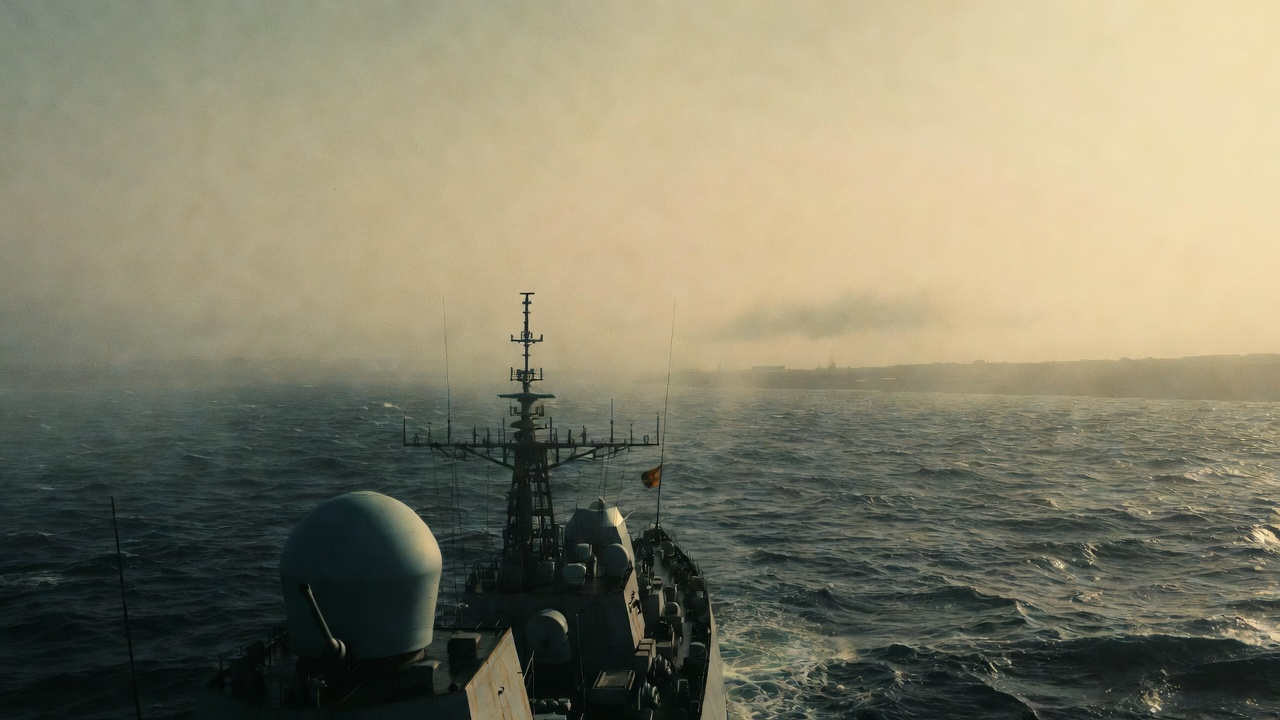
The Strait of Hormuz — 21 miles wide at its narrowest, bordered on three sides by Iranian territory — effectively closed to most international commercial traffic this week, crystallising what the IEA called on March 13 “the largest supply disruption in the history of the global oil market.” Tanker traffic through the strait fell from a pre-conflict average of 24 vessels per day to approximately 4 on March 1, and had approached zero by mid-week. Brent crude breached $100 per barrel on March 8 for the first time in four years, peaking at $126 per barrel before easing. On March 11, Mojtaba Khamenei publicly confirmed the strait’s closure would be maintained as a “tool of pressure,” and the IRGC threatened that “not one litre of oil” belonging to US, Israeli, or allied interests would pass. Iran, however, continued sending its own crude — at least 11.7 million barrels since February 28 — exclusively to China, using Iranian-flagged tankers that went dark on AIS tracking. The IEA’s 32-member emergency response on March 11 — a coordinated release of 400 million barrels from strategic reserves, the largest in history — steadied prices temporarily but failed to meaningfully close a daily supply deficit estimated at 15–20 million barrels. Saudi Arabia accelerated diversions via the East–West Crude Oil Pipeline to Yanbu; the UAE shifted flows via the Abu Dhabi Crude Oil Pipeline to Fujairah on the Arabian Sea. Combined pipeline capacity covers roughly 8 of the 20 million barrels daily normally transiting Hormuz. Oman’s bypass ports — Duqm, Salalah, and Sohar — were struck by Iranian drones this week, further narrowing the viable alternatives.
The Hormuz closure is not an oil story alone — it is a global supply chain event. Roughly 20% of global LNG transits Hormuz, meaning Europe’s gas market is simultaneously exposed: Dutch TTF benchmark futures swung nearly 12% in a single session. Gulf refineries and gas processing facilities have begun cutting runs or shutting entirely as onshore storage fills — more than 4 million barrels per day of refining capacity is at risk. Diesel and jet fuel are particularly exposed given limited non-Middle East production flexibility. The suspension of major airline operations at Gulf airports has materially reduced jet fuel demand in one stroke — a partial offset that is simultaneously destroying aviation sector revenue. The US Treasury issued an emergency temporary licence this week authorising the purchase of stranded sanctioned Russian oil — a politically significant sanctions carve-out that signals how acutely Washington is trying to plug the supply gap without publicly capitulating on the sanctions architecture.
The key variable is duration. Goldman Sachs models five more days of very low Hormuz exports, then a gradual recovery. Oxford Economics warns that five weeks of disruption pushes Brent to $100+. Iran’s March 15 commander statement — “Iran will continue to use the Strait of Hormuz as a pressure point” — suggests duration is a deliberate strategic choice, not an operational constraint. Watch whether Trump’s proposed naval escort corridor materialises, and whether Gulf producers can meaningfully expand pipeline bypass capacity before storage tanks reach structural capacity limits.
Ukraine on Hold — Kyiv’s Ceasefire Gambit Lands While Washington Is Looking the Other Way
On March 11, Ukraine agreed to immediately implement a 30-day ceasefire if Russian invasion forces matched the pledge — a significant diplomatic concession that reshaped the framing of the peace process. In exchange, the US committed to resuming intelligence sharing and arms supplies to Kyiv, and both sides agreed to continue critical minerals negotiations. The Trump administration said “the ball is in Moscow’s court.” Moscow said nothing substantive. US-brokered peace talks were described by Euronews as “on hold” because Washington’s attention is absorbed by Iran — a structural attention constraint that analysts note is itself a strategic variable Moscow can exploit. Meanwhile, the frontline reality did not pause: Russia launched near-daily drone and missile attacks on Ukrainian cities throughout the week, killing four in Sloviansk and injuring more than 40 across multiple cities on March 9–10 alone. Russia downed 122 of 137 drones launched, while Ukraine struck a plant in Bryansk producing control systems for Russian missiles, killing six civilians. Both sides claimed territorial gains in Donetsk: Putin asserted Russian forces hold 85% of the region after Ukraine controlled 35% just six months ago; Ukrainian commanders said they pushed Russian forces out of more than 400 square kilometres. On March 13, the UN General Assembly voted 107-12, with 51 abstentions, for a resolution demanding an immediate ceasefire and return of deported civilians. The US abstained; Russia called the vote “political pressure.”
The EU’s €90 billion loan package for Ukraine — agreed December 2025 via joint debt issuance — remains the baseline financial architecture for Kyiv’s war sustainability through 2026-27. Ukraine’s acceptance of a conditional ceasefire, with the resumption of US arms and intelligence, partially de-risks Kyiv’s supply chain exposure in the near term. However, the diplomatic vacuum created by Washington’s Iran focus is allowing Russia to sustain military pressure at minimal diplomatic cost, stretching Ukraine’s defence economics without triggering a response. European defence equities — up 401% since 2022 on an equally weighted index — continued to reflect the market’s expectation of sustained elevated demand regardless of any Ukrainian ceasefire outcome.
The 30-day ceasefire clock has not started — it requires Russian acceptance that has not come. Watch for: whether Moscow formally responds or simply lets silence operate as a rejection; whether the Trump administration re-engages Ukraine diplomacy once its Iran posture stabilises; and whether Zelenskyy’s government faces domestic pressure from the ceasefire concession if Russia continues attacking without consequence. The Coalition of the Willing’s security guarantee architecture — UK-France military hubs, US monitoring mechanism — remains incomplete pending “binding commitments” not yet finalised.
The Money Map
Brent breached $100 on March 8 for the first time in four years, peaking at $126/bbl as the IEA declared the Hormuz shutdown the largest supply disruption in oil market history. The IEA’s 400-million-barrel coordinated reserve release steadied prices temporarily but failed to close a daily deficit of 15–20 million barrels — signalling that the emergency stockpile mechanism is a time-buying measure, not a solution. Duration pricing now dominates: Goldman Sachs models $98–$110 Brent through April; Oxford Economics treats $140/bbl as a eurozone recession trigger. The war premium is structural until Hormuz reopens.
European LNG — 12–14% of which transits Hormuz from Qatar — saw Dutch TTF futures nearly double over a 48-hour window early in the week before partially recovering after the New York Times reported Iranian operatives had reached out to discuss terms for ending the conflict. The size of the intraday swing on an unverified diplomatic rumour illustrates how thin European gas market confidence is, and how significant any credible de-escalation signal would be for European energy security and the ECB’s rate calculus.
The US Treasury’s decision this week to issue a temporary licence authorising purchases of stranded, sanctioned Russian crude oil is the most significant sanctions carve-out in the post-February 2022 architecture. It signals Washington is willing to selectively suspend its own sanctions regime under energy supply pressure — a precedent that undermines the deterrence credibility of the broader Russian oil sanctions framework and gives Moscow intelligence about where the US’s resolve has limits under energy stress conditions.
While blocking allied oil traffic, Iran continued shipping its own crude — exclusively to China — through the strait it publicly declared closed. Vessel-tracking data shows at least 11.7 million barrels moved via Iranian-flagged tankers that went dark on AIS. Iran has also resumed loading at the Jask terminal on the Gulf of Oman — its only oil export outlet that bypasses Hormuz entirely — for only the fifth time in five years. This China carve-out is the financial lifeline sustaining Iran’s war footing; China’s continued purchasing is de facto underwriting the closure that is strangling rival economies.
State Media Watch
The week’s dominant signal from Iranian state media was the formal introduction of Mojtaba Khamenei’s voice into the public strategic sphere. His statement — that the Strait of Hormuz would remain a “tool of pressure” — was delivered not as a speech but as an anchor-read attribution via IRIB, a format consistent with a succession still consolidating its communications infrastructure. Iranian state media ran the IRGC framing that operations targeted only US bases and allied interests, not neutral shipping — designed to sustain support from non-Western states and minimise diplomatic isolation. The concurrent emphasis on civilian casualties from US and Israeli strikes, amplified with specific victim counts and high-visibility imagery, was calibrated to undercut Western legitimacy at the UN. Domestically, President Pezeshkian’s three-condition peace statement received extensive coverage framed as strength — a split-screen between the regime’s external signalling and its internal audience management at a moment of succession vulnerability.
Russian state media’s handling of the Ukraine ceasefire agreement on March 11 was instructive for what it omitted. Coverage acknowledged Kyiv’s acceptance of a conditional 30-day ceasefire but framed it consistently as a propaganda concession extracted by Washington rather than a sovereign Ukrainian initiative. The stalling of US-brokered talks — attributed explicitly to Iran absorbing Washington’s attention — was amplified as evidence of American strategic overextension. In an analytically unusual move, RT ran extended coverage of Goldman Sachs and Oxford Economics recession modelling for the Iran war’s economic fallout, suggesting Moscow is actively signalling to Global South energy importers that US military adventurism carries costs they will absorb. The UN General Assembly vote (107-12 for a Ukraine ceasefire) was covered by leading with the 51 abstentions, framing global dissatisfaction with the Western agenda rather than the headline majority.
Beijing’s state media ran a carefully calibrated line: strong condemnation of “unilateral military action” without explicitly calling it illegal, and without any call for military solidarity with Tehran. CGTN’s coverage of the Iran-China oil corridor — Iran continuing to ship crude exclusively to China through a strait it publicly declared closed — was conspicuously light domestically, consistent with Beijing’s interest in maintaining plausible deniability about the scale of the economic lifeline it is extending. Global Times framed the IEA emergency reserve release as evidence of Western energy governance failure and ran op-eds positioning China’s energy diversification strategy as vindication of its long-term approach. CGTN’s treatment of Mojtaba Khamenei’s succession was watchful rather than celebratory — reflecting the strategic weight Beijing places on continuity of the Iran-China energy dependency.
State media is analyzed here as a signal source, never as a primary factual record. All factual claims in this section are independently corroborated via Tier 1 or Tier 2 sources.
The Slow Burn
Mojtaba Khamenei’s elevation as Supreme Leader — the product of an emergency succession triggered by his father’s death in the February 28 Israeli strike — is almost entirely absent from strategic analysis, despite being the most structurally significant change to Iranian governance in decades. Ali Khamenei spent 34 years building an institutional base and doctrinal authority that legitimised his decisions internally. Mojtaba inherits the office under active military attack, with the IRGC acting as de facto co-governor of the state, and with no publicly-established theological or political authority of his own. His first major public act — the Hormuz closure declaration via state TV anchor-read — is analytically consistent with a leader testing the communications architecture rather than issuing a considered strategic statement. The risk is a succession that is institutionally captured by the IRGC precisely because the new leader lacks the standing to constrain it. Watch for signs that IRGC commanders are making operational decisions independently of any civilian oversight chain.
Almost entirely unnoticed in Western wire coverage: Iran resumed loading tankers at the Jask oil terminal on the Gulf of Oman this week — only the fifth time in five years — moving 2 million barrels in a single loading observed by TankerTrackers. Jask is Iran’s only crude export outlet that entirely bypasses the Strait of Hormuz, sitting on the open Arabian Sea south of the chokepoint Iran is simultaneously using to strangle global supply. The terminal’s activation under active wartime conditions represents a potential structural change in Iran’s export architecture: if Jask is developed into a functional primary export corridor, Iran gains a permanent capability to continue exporting oil during any future Hormuz closure scenario, fundamentally altering the strategic calculus that has historically deterred Iran from fully closing the strait. The current conflict may be the inadvertent accelerant of that infrastructure development.
Cyprus — an EU member — had its British airbase at Akrotiri struck by a Shahed-like drone this week. A Russian antenna was reportedly found on a drone that struck the island. EU legal scholars and defence analysts immediately raised Article 42.7 of the EU Treaty — the mutual defence clause that predates and exists independently of NATO’s Article 5 — as a mechanism Cyprus could invoke. It has never been triggered. EU Commission President von der Leyen has called for an EU defence union. France, under Macron, has been the primary architect of European strategic autonomy. The convergence of a direct attack on EU territory, a divided European response to the Iran conflict, US strategic distraction, and an accelerating EU defence spending surge (NATO members agreed to 3.5% GDP target in 2025) is creating exactly the structural pressure under which Article 42.7 could be tested for the first time. That precedent, once set, restructures European security law permanently.
Probability Updates
This is The Hopper’s inaugural Weekly Brief. No prior edition scenarios exist to update. The following probability assessments are established with this edition and will be tracked in subsequent weeks.
Basis: Iran’s new Supreme Leader publicly confirmed closure as a standing “tool of pressure” on March 13; Iran’s FM denied seeking a ceasefire on March 15. IRGC operational posture shows no drawdown. IEA’s reserve release is a time-buying measure only. Key trigger to watch: Any verifiable back-channel communication between Iranian operatives and US/Israeli intermediaries, confirmed by two independent Tier 1 sources — this is the leading indicator of a soft off-ramp materialising.
Basis: Russia’s historical pattern on ceasefire offers is to delay response while extracting maximum battlefield gain. Washington’s attention is structurally absorbed by Iran. Putin told Trump Russian forces are “advancing rather successfully” — no incentive to pause. Key trigger to watch: A direct Trump-Putin call specifically addressing Ukraine — without the Iran conflict dominating the agenda — would be the signal that Washington has re-engaged the Ukraine track with sufficient focus to pressure Moscow.
By the Numbers
| $126/bbl | Peak Brent crude price reached this week — the highest in four years, and the level at which Goldman Sachs begins modelling meaningful drag on US GDP growth. |
| ~20 mb/d | Daily oil supply deficit created by the Hormuz closure — the volume of crude and oil products normally transiting the strait that has been cut off from global markets. The IEA’s 400-million-barrel reserve release covers approximately 20 days at this deficit rate. |
| $11.3bn | Cost of the first six days of Operation Epic Fury to the US military, per a classified Pentagon briefing to lawmakers — a burn rate that, if sustained, would approach $70 billion per month. |
| 6,000+ | Targets struck in Iran by CENTCOM since February 28, per day 13 figures — a tempo that operationally rivals the opening phases of Operation Iraqi Freedom in 2003. |
| 107–12 | UN General Assembly vote margin for the Ukraine ceasefire resolution — with 51 abstentions. The abstention bloc, not the 12 opposing votes, is the strategic signal about shifting Global South alignment. |
| 11.7M bbl | Barrels of Iranian crude shipped to China through the “closed” Strait of Hormuz since February 28, per vessel-tracking data — the financial lifeline sustaining Iran’s war footing. |
| 800,000 | People registered as displaced in Lebanon following renewed Israeli strikes on Hezbollah infrastructure — a humanitarian figure that carries significant political weight in European capitals debating their posture on the conflict. |
What We’re Watching — Next Week
- Russia’s response to Ukraine’s 30-day ceasefire offer — The offer has been formally on the table since March 11 with no Russian answer. Any signal — acceptance, rejection, or deliberate silence — sets the diplomatic trajectory for weeks. Moscow’s first substantive response (or sustained non-response) is the week’s opening intelligence read on Ukraine.
- Iran’s FM Araghchi and any back-channel diplomatic contact — Having publicly denied seeking a ceasefire on March 15, Araghchi’s next public statement or any confirmed diplomatic contact with a third-party mediator will indicate whether the hardline posture holds or softens. Watch Qatar and Oman as most likely conduit states.
- Brent crude at $100/bbl threshold — Whether oil holds above or decisively falls back below $100 mid-week is the market’s proxy vote on whether traders believe the Hormuz closure is structural or transitional. A sustained break below $95 signals market pricing of a near-term diplomatic resolution; a re-test of $110+ signals the opposite.
- Israel’s interceptor inventory status — Having informed Washington it is critically low on ballistic missile interceptors, Israel’s public military statements about operational capacity — and any US resupply announcement — will indicate whether the air defence constraint is being addressed or is becoming a genuine operational ceiling on the campaign.
- Trump’s proposed naval escort corridor through Hormuz — Trump said ships should “show some guts” and transit, and indicated the US Navy would begin escorting tankers “as soon as possible.” Whether that materialises into an operational order, and how Iran responds, is the decisive event for global energy markets. An operational escort that successfully transits a tanker is the first direct test of the Hormuz closure as a military instrument.
- Mojtaba Khamenei’s next public statement or official appearance — The new Supreme Leader’s succession is still consolidating. A second substantive public communication — particularly one addressing the IRGC’s operational mandate or any peace conditions — will reveal whether his March 13 Hormuz statement was a considered strategic posture or a reactive placeholder from an institution still finding its communications footing.