Top Story
Nowruz Strikes and the Kharg Island Option: Day 21 Reshapes the War’s Trajectory
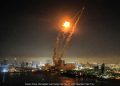
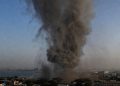
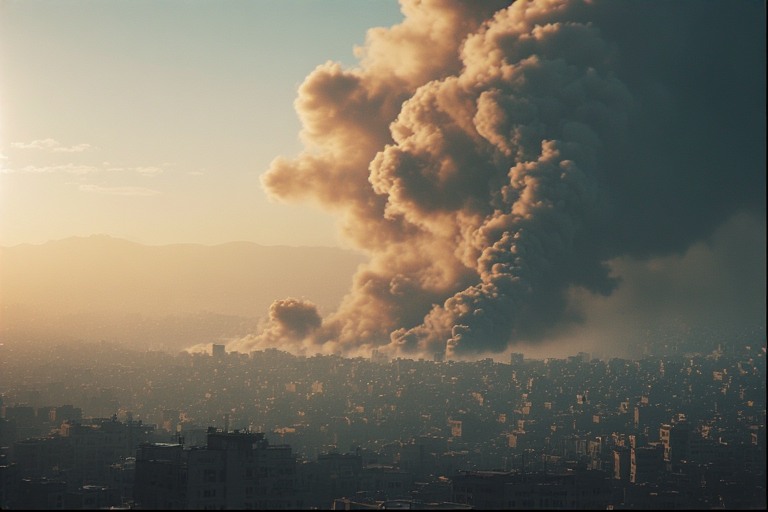
Tehran / Persian Gulf · Friday, March 20, 2026. Israel struck Tehran and other Iranian cities on the first morning of Nowruz — the Persian New Year — with the IDF confirming a “wave of strikes targeting infrastructure of the Iranian terror regime in the heart of Tehran.” Simultaneously, the US Pentagon confirmed the acceleration of two Marine Expeditionary Units toward the Middle East: the USS Boxer carrying the 11th MEU, departing San Diego approximately three weeks ahead of schedule, now joining the USS Tripoli (31st MEU) already en route from Japan. Three officials confirmed to Newsmax and Reuters that the combined deployment brings approximately 4,000 Marines and sailors aboard three amphibious assault ships, equipped with F-35s, Ospreys, and amphibious landing vehicles capable of executing a beach assault. Trump told reporters, “I am not putting troops anywhere” — while sources confirmed the White House is actively weighing two options: a mission to secure safe passage through the Strait of Hormuz using naval and air force escort corridors, and the seizure of Kharg Island, which handles approximately 90 percent of Iran’s crude oil exports. An Axios source with knowledge of White House thinking stated: “We need about a month to weaken the Iranians more with strikes, take the island and then get them by the balls and use it for negotiations.”
Iran’s response on Nowruz followed a dual-track pattern that defines Day 21’s strategic character. The IRGC’s main spokesman General Abolfazl Shekarchi warned that “parks, recreational areas and tourist destinations” worldwide would no longer be safe for Iranian enemies — the first explicit threat by the regime against civilian leisure infrastructure in third countries. IRGC spokesman Ali Mohammad Naeini simultaneously disputed Netanyahu’s Thursday claim that Iran had lost its ability to produce ballistic missiles, stating: “We are producing missiles even during war conditions, which is amazing, and there is no particular problem in stockpiling.” Iran fired missiles and drones at Israel, Saudi Arabia, Kuwait, Bahrain, and the UAE throughout the day — Kuwait’s Mina Al-Ahmadi refinery struck for a second consecutive day, sparking fires across multiple units; Dubai intercepted incoming fire as worshippers observed Eid al-Fitr. Iran’s state media released an undated video of Mojtaba Khamenei offering religious instruction to a small group — the first visual material since his appointment, but unverified as to date and confined to an indoor private setting, not public appearance.
Trump’s NATO messaging hardened to its sharpest formulation to date. He posted on Truth Social: “COWARDS, and we will REMEMBER!” — adding that reopening Hormuz was “a simple military maneuver” allies were refusing to execute. The comment followed his Friday address to US Naval Academy midshipmen in which he stated: “Their leaders are all gone. The next set of leaders are all gone. And the next set of leaders are mostly gone. And now nobody wants to be a leader over there anymore. We want to talk to them and there’s nobody to talk to.” Switzerland announced it would not export war materiel to the US — the first allied European state to formally decline arms-related cooperation with the US in the conflict. Analytical assessment: Day 21 is the moment where the war’s tactical phase — sustained degradation of Iranian military and leadership capacity — transitions toward its next decision point: whether the US compounds air power with a territorial seizure that would radically alter Iran’s negotiating calculus, or whether the Hormuz corridor approach preserves optionality while avoiding the occupation risk that military analysts are flagging as potentially cost-prohibitive. The Marine deployments create the capability; the political decision has not yet been made.
Whether the Trump administration issues formal orders to either the Hormuz escort corridor or Kharg Island seizure option within the next 72 hours — the arrival timeline of the USS Boxer group creates a decision window opening in approximately 10–14 days. Monitor any Iranian diplomatic signal directed specifically at the US military presence question; silence on the Kharg Island option from Tehran suggests Iran is uncertain how to deter an operation it may lack the capacity to repel. Watch also for whether Switzerland’s arms export refusal triggers any similar declarations from other European partners — if Germany or the Netherlands follow, the coalition’s equipment resupply chain faces a structural stress event.
Regional Roundup
Mojtaba Khamenei Issues Nowruz Statement — Undated Video Released, No Live Appearance
Iran’s supreme leader Mojtaba Khamenei issued a lengthy written statement read on state television for Nowruz, praising Iranians for “unparalleled bravery” and claiming he had ridden the streets of Tehran “anonymously” in a taxi. He denied Iranian forces were behind attacks on Oman and Turkey — blaming “deception by the Zionist enemy” — and called for unity. Iranian state media subsequently released an undated video showing Khamenei offering religious instruction to a small indoor group; Israel and the US have stated he was injured in the opening strike that killed his father, and Hegseth assessed him “likely disfigured.” No date was confirmed for the video footage. Iran has not named replacements for more than a dozen senior officials killed since February 28, per CNN’s survey of official announcements.
The strategic significance is twofold: first, the written-plus-undated-video format is consistent with an authority that cannot verify its own physical continuity through live public appearance — the regime is performing leadership without demonstrating it. Second, the statement’s claim that Khamenei personally toured Tehran streets reads as a counter-narrative to Netanyahu’s Thursday assertion that “Mojtaba, the replacement ayatollah, has not shown his face” — but an unverifiable counter-narrative is diplomatically indistinguishable from none. Any ceasefire or negotiation track requires an identifiable, verifiable Iranian interlocutor with authority. That condition remains unmet.
Russia Prepares Spring Offensive as Iran War Diverts US Attention and Patriot Stocks
US-brokered Ukraine peace talks remain formally on hold while Washington is consumed by the Iran campaign, and analysts confirmed Friday that Putin is expected to launch expanded offensive operations to exploit the diplomatic and military vacuum. The Iran war’s impact on Ukraine is structural: oil revenue windfall from Brent above $107 is filling Moscow’s war coffers — Russia’s daily oil and LNG revenue is running approximately 14 percent above its February baseline per the Centre for Research on Energy and Clean Air. Meanwhile, over 800 Patriot interceptor missiles were expended by Gulf states in just three days of the Iran conflict — more than the total supplied to Ukraine across four years of war, per Zelenskyy’s own accounting. Zelenskyy has deployed 201 anti-Shahed drone specialists to the Middle East and is negotiating a technology swap of Ukrainian interceptor drones (costing $1,000–$2,000 each) for PAC-3 missiles, but the US drone production agreement awaits White House sign-off.
The asymmetry is analytically stark: Russia extracts maximum battlefield gain in the diplomatic vacuum Iran has created, while Ukraine faces the prospect of a degraded air defence capability precisely as Russia amasses assets for a large-scale spring barrage. The Iran war did not create Russia’s strategic advantage in Ukraine — it accelerated it. And the Patriot shortage problem that appeared theoretical in early March is now approaching operational, with Moscow reportedly pausing drone and missile attacks in the pattern that precedes a mass raid.
Israel Expands Strikes to Syria, Lebanon Death Toll Exceeds 1,000
Israel broadened its air campaign to Syria on Friday, striking infrastructure in the Suweyda area — citing attacks on the Druze minority by Syrian government forces. Syria’s foreign ministry condemned the action as operating on “flimsy pretexts.” In Lebanon, the death toll from Israeli operations exceeded 1,000 per Lebanese government figures, with more than 1 million people displaced — approximately a sixth of the country’s population. Hezbollah fired salvos of rockets and drones at Israeli military positions and settlements including Kiryat Shemona, Hanita, Avivim, and Khiam, where ground combat is ongoing between the IDF and Hezbollah fighters. Israel says it has killed more than 500 Hezbollah militants since the beginning of expanded operations.
The Syria expansion is the most geographically significant widening of the campaign since ground operations began in Lebanon. A third active front — even a limited one — stretches Israeli air resources and creates new vectors for Iranian-aligned responses. The Druze pretext is legally fragile; if Syrian government forces contest the Israeli narrative, the diplomatic exposure for Jerusalem in multilateral forums increases precisely when Washington needs allied cover for the Hormuz military situation.
Trump Calls NATO “COWARDS” as Switzerland Bars Arms Exports — Alliance Fracture Deepens
Trump escalated his rhetoric against NATO to its harshest register to date on Friday, writing on Truth Social: “COWARDS, and we will REMEMBER!” over allies’ refusal to help open the Strait of Hormuz. His remarks followed the Friday joint statement by France, Germany, Italy, the Netherlands, Japan, and Canada condemning Iran’s attacks on commercial vessels but declining any military commitment while active hostilities continue. Switzerland announced it would not export war materiel to the US — the most concrete allied refusal of arms cooperation so far. NATO Secretary General Rutte has confined the alliance to discussing the “best way” to eventually reopen Hormuz, while UK Prime Minister Starmer has limited Britain’s contribution to a small planning team at CENTCOM. The administration discussed sending ground forces to Iran’s Kharg Island, Reuters confirmed — but the White House also confirmed it would not ban crude oil exports as a price-reduction tool.
The Switzerland declaration matters less for the volume of weapons it withholds than for the precedent it establishes: a neutral European state with a formal non-exportation policy for active-conflict materiel has now formally classified the US-Iran conflict as an active conflict for export-control purposes. If Germany or other dual-use equipment suppliers follow that reasoning, the coalition’s logistics chain faces a constraining legal environment that has not yet been priced into US operational planning.
Two MEUs Redirected from Pacific — Indo-Pacific Force Posture Takes Second Consecutive Hit
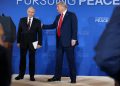
The USS Boxer (11th MEU, ~2,200 Marines) departed San Diego three weeks ahead of schedule on March 19, joining the USS Tripoli (31st MEU, ~2,000 Marines) already transiting the Indian Ocean. Together with the USS Arlington and accompanying warships, the deployment adds approximately 4,000 additional Marines to the Gulf theater. Both MEUs were drawn from Pacific deployments — the 31st MEU from Okinawa, Japan; the 11th MEU from San Diego’s West Coast fleet. Satellite imagery confirmed the Tripoli transiting Singapore’s Malacca Strait on March 17. Japan’s Prime Minister Sanae Takaichi met Trump in the Oval Office on March 19, with Trump noting Japan’s supportive posture “unlike NATO.”
This is the second consecutive drawdown from the Pacific-designed force posture since the Iran campaign began. The PLA published an analysis of five strategic lessons from Operation Epic Fury in March 18’s coverage — a formal intelligence signal that Beijing is processing the conflict for Taiwan contingency planning. With two MEUs now redeployed from the Pacific and the USS Gerald R. Ford in Crete for fire repairs, the Indo-Pacific deterrence architecture that these forces underpin is materially degraded for at least the duration of their Gulf deployment. This creates the structural window that prior briefs flagged as the conflict’s most consequential secondary effect.
Under the Radar
The IRGC’s Friday warning that “parks, recreational areas and tourist destinations” worldwide would not be safe for its enemies is being treated by wire services as propaganda — a defiance posture in the face of military degradation. The analytical read is different. Iran has an established record of activating global terrorist and sabotage networks under operational stress: the AMIA bombing in Argentina (1994), the assassination attempt on a Saudi diplomat in Washington (2011), and multiple European plots since 2019 documented by EU security services. What is new on Day 21 is the explicit, public targeting designation of civilian leisure infrastructure — a category with no military justification, designed to impose costs on Western publics in ways that generate domestic political pressure on governments. The 2026 FIFA World Cup begins in June in the United States, with Iran’s national team scheduled for group-stage matches in Los Angeles and Seattle. Iran’s Sports Minister said Wednesday that Iran would not participate following airstrikes — but the IRGC’s warning about US territory and recreational facilities raises a distinct threat category that event security planners cannot now ignore. In 2–4 weeks, Western security services will be operating under a credible IRGC terrorist designation for civilian leisure venues — a category of threat that has not formally existed at this scale since the late 1980s.
Wire coverage of the Iran war treats internal dissent as background context. The Chaharshanbe Suri festivities on March 17 — a pre-Nowruz Persian fire festival — produced documented footage of civilians in Tehran’s Chitgar neighbourhood celebrating news of senior official deaths, with security forces deploying in large convoys to suppress them. Nationwide business strikes coincided with Nowruz preparations across multiple provinces. Residents of Tehran’s Saadat Abad neighbourhood were documented chanting anti-IRGC and anti-Islamic Republic slogans on March 15. The Basij is manning five to six new checkpoints per neighbourhood across Tehran, searching vehicles and phones — an operational response to a population the regime no longer trusts not to signal strike locations to Israel. This is not the same population that tolerated the 2022 Mahsa Amini protests: it is a population that has lived through January’s protests (estimated 12,000–20,000 killed per CBS News), a 2022-era economic collapse, and now three weeks of airstrikes and energy disruption simultaneously. The regime’s internal security architecture is being stretched to manage two threats at once — external decapitation strikes and internal civilian non-compliance. No government or major outlet has explicitly assessed what happens to Iran’s governance capacity if both pressures intensify through April.
This story has been reported in fragments — oil price spike, Russia benefits — but the specific financial mechanism is being undercovered. The Centre for Research on Energy and Clean Air confirmed that Russia’s daily oil and LNG revenue is running approximately 14 percent above its February baseline since the Iran war began, generating roughly $588 million per day. This comes as Russia’s 2025 federal budget devoted 40 percent of total spending to security and defence. The Iran-war windfall is not abstract: it is arriving precisely as Russia amasses assets for what analysts assess is an upcoming spring offensive, at the exact moment Ukraine’s Patriot interceptor stocks are being drawn down by the Gulf campaign’s demand. The structural connection — Iran’s Hormuz closure → Brent above $107 → Russian oil revenue surge → Russian spring offensive financing — is the war’s most consequential supply chain for outcomes in Europe, and it is receiving almost no dedicated analytical coverage. The OFAC temporary licence issued by the US Treasury in mid-March allowing purchases of stranded sanctioned Russian oil compounds this: Washington is, involuntarily, both financing Russia’s war in Ukraine and depleting the interceptors Ukraine needs to defend against it.
By the Numbers
| ~$107/bbl | Brent crude price in morning trading Friday — up more than 47% since the war began on February 28. Markets remain elevated despite retreating from the $119 Day 20 intraday high; the sustained $100+ baseline is now in its eleventh consecutive trading day (AP/Reuters). |
| 4,000+ | US Marines and sailors now en route to the Middle East via the USS Boxer (11th MEU, ~2,200) and USS Tripoli (31st MEU, ~2,000), plus the USS Arlington — three amphibious vessels equipped for land assault operations. Both MEUs redeployed from Pacific assignments (Reuters/AP/Newsmax). |
| 800 | Patriot interceptor missiles expended by Gulf states in the first three days of the Iran war, per Zelenskyy — more than the total supplied to Ukraine across four years of full-scale war. Lockheed Martin’s record 2025 production was 600 PAC-3 MSEs for the full year (Al Jazeera/Fortune). |
| 1,300+ | People killed in Iran since hostilities began February 28, per AP war casualty count as of Friday. Lebanon death toll exceeds 1,000; 15 killed in Israel; 13 US service members killed; at least 4 killed in the occupied West Bank by Iranian missile strike (AP/PBS). |
| $588M/day | Russia’s current daily oil and LNG export revenue during the Iran war — approximately 14% above February baseline, as Brent crude remains elevated. The windfall directly finances Russian military operations in Ukraine as Moscow prepares a spring offensive (CREA/Washington Times/AP). |
| 21 days | Duration of the Hormuz crisis as of March 20 — the Strait has been effectively closed to allied commercial tanker traffic for three full weeks, equalling the 1973–74 Arab oil embargo in duration. No diplomatic framework for reopening is operational; Iran explicitly states it will not return to pre-war conditions (Britannica/2026 Iran War Wikipedia). |
What We’re Watching
- Mojtaba Khamenei Public Appearance — PARTIALLY RESOLVED. Undated video released on March 20 showing Khamenei in indoor religious instruction setting; second written Nowruz statement delivered via state TV. No verified live public appearance. The undated video does not resolve command authority ambiguity — it may be days or weeks old.
- Qatar Article 51 / UNSC Session — STILL PENDING. No formal Article 51 invocation or UNSC emergency session filed as of March 20. Qatar’s diplomatic posture remains elevated after Iranian attaché expulsion but has not escalated to multilateral legal action.
- Yanbu Export Continuity — ESCALATING. While Yanbu was not the target Friday, Kuwait’s Mina Al-Ahmadi was struck for the second consecutive day, degrading refinery capacity further. Saudi Arabia intercepted multiple drones targeting the Eastern Province. Iran’s Gulf energy targeting architecture remains active.
- Pentagon Supplemental Congressional Response — PENDING. No formal Congressional vote or blocking coalition signal confirmed as of March 20. The national debt hitting $39 trillion and the war entering its fourth week increases fiscal scrutiny pressure.
- Kharg Island or Hormuz Escort Order — Watch for any formal Pentagon operational order to either the Hormuz corridor or Kharg Island mission. The arrival of USS Tripoli in the Gulf region (expected next week) and Boxer (10–14 days out) creates the decision window. Any change in US Rules of Engagement for the MEUs is the leading signal.
- Switzerland Arms Export Follow-On — Whether Germany, the Netherlands, or other European dual-use equipment suppliers issue similar non-exportation declarations. Switzerland’s Friday announcement established the legal framework; if other countries follow, the coalition’s logistics chain faces a structural constraint that US planners have not publicly addressed.
- Russia’s Ukraine Offensive Posture — Monitor Russian drone and ballistic missile pauses against Ukrainian cities — Moscow’s established pattern before mass raid launches. A pause now, combined with amassing activity at known staging areas, would signal a spring offensive timeline converging with the Gulf campaign’s peak resource draw.
- Iran FIFA World Cup Decision — Whether Iran’s Sports Ministry formally confirms withdrawal from the 2026 FIFA World Cup (scheduled group matches in Los Angeles and Seattle). IRGC’s simultaneous threat against US recreational facilities makes this a converging security and diplomatic question that event planners cannot defer past early April.
- Mojtaba Khamenei Video Authentication — Whether any independent analysis of Friday’s undated IRIB video can establish a production date. The IDF has said Khamenei was injured; Hegseth assessed him “likely disfigured.” An authenticated post-war date would resolve the command authority question; absence of authentication maintains the ambiguity that is blocking diplomatic engagement.