Top Story
Mojtaba Khamenei Breaks His Silence — And Overrules Pezeshkian in a Single Statement
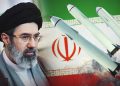
Fourteen days into Operation Epic Fury, Iran’s new Supreme Leader Mojtaba Khamenei issued his first public communication — a written statement read aloud on state television while a still photograph was displayed on screen. He did not appear in person. No audio. No video. The format is itself an intelligence signal: Khamenei is either incapacitated below the level publicly admitted, in a secure location that cannot be broadcast, or both. An Iranian official confirmed this week he was wounded in the February 28 strike; Defense Secretary Hegseth said Friday morning he is “likely disfigured.”
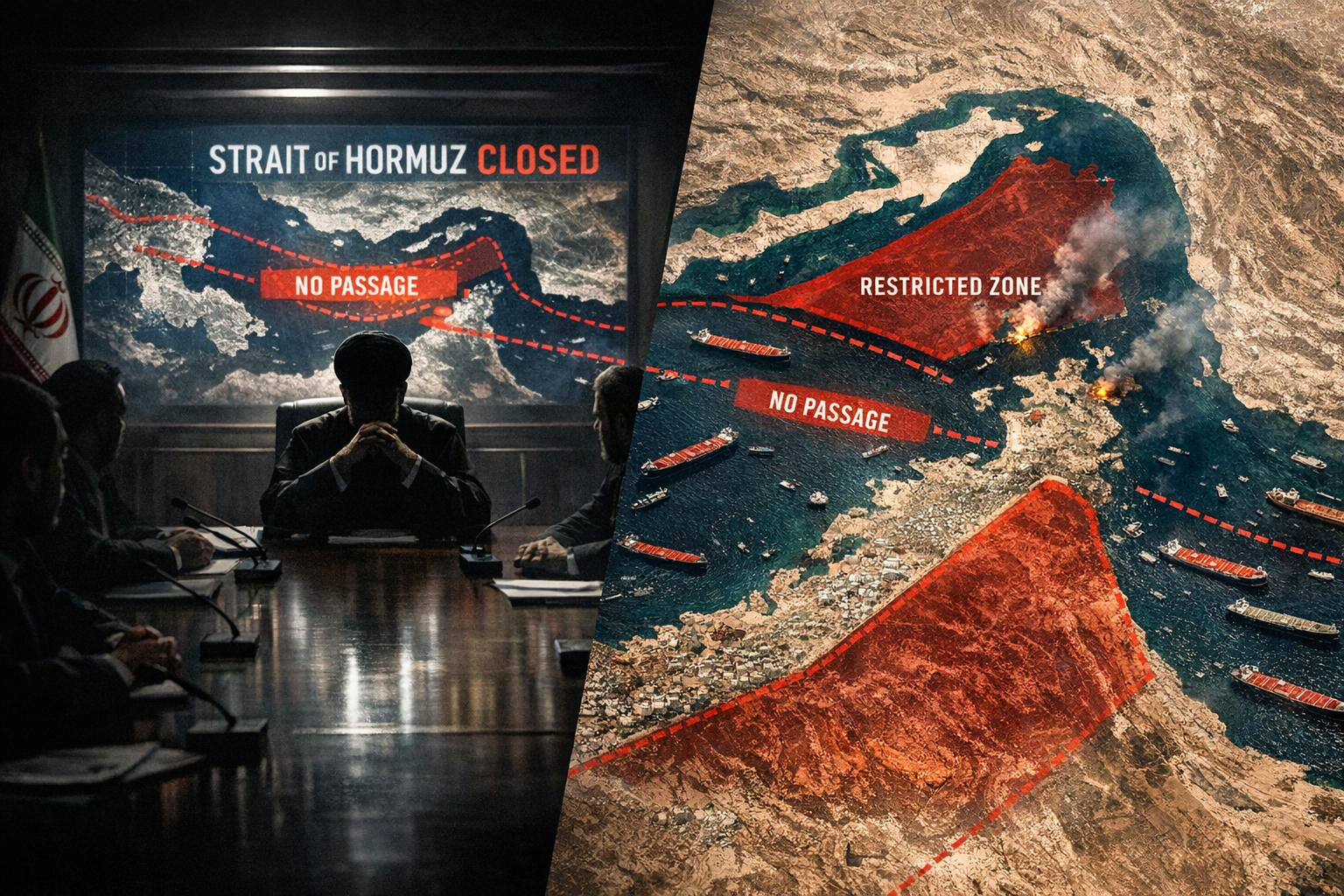
The statement settles the central question this brief tracked since Day 13: does Iran’s ceasefire framework have IRGC backing, or is Pezeshkian’s conditional engagement a civilian trial balloon? Khamenei answers definitively. He vowed to keep the Strait of Hormuz closed — “the lever of blocking the Strait of Hormuz must definitely continue to be used.” He pledged attacks on US military bases would continue and called on Gulf states to close those bases immediately. He threatened “new fronts” where “the enemy has little experience and is highly vulnerable,” explicitly naming the Houthis, Hezbollah, and Iraqi militia as planned contingency partners. He demanded revenge for all Iranian dead and declared the “revenge file will remain open.” He said nothing about ceasefire conditions, negotiating frameworks, or off-ramps.
The analytical significance is not that Khamenei is hardline — that was expected. It is that his statement is structurally incompatible with Pezeshkian’s Day 13 framework. The diplomatic space is closed not because Washington rejected the conditions, but because the supreme leader preempted any need to respond. The gap is no longer merely wide — it is institutionally bifurcated. Two different actors in Tehran are publicly signalling different trajectories, and the regime’s internal politics now matter more to the war’s exit path than the conditions list. The statement was simultaneously released via a new Telegram channel from Khamenei’s office; IRGC-linked Tasnim News Agency published an English version immediately, confirming full IRGC endorsement.
Whether Pezeshkian or Araghchi publicly reconcile their Day 13 ceasefire signalling with Khamenei’s statement — or go quiet. Any Houthi activation following Khamenei’s explicit “new fronts” signal. IRNA/PressTV editorial line at 0600 Tehran Friday prayers — whether the narrative holds both tracks open or fully reverts to resistance framing.
Regional Roundup
Middle East · Military
Quds Day Strikes Hit Tehran Demonstration Zone — Judiciary Head Narrowly Avoids
Large explosions struck central Tehran on Friday morning during annual Quds Day rallies — the last Friday of Ramadan — with Iranian state television confirming strikes near Ferdowsi Square in areas filled with demonstrators. The head of Iran’s judiciary, Gholamhossein Mohseni Ejehi, was giving a live interview to state television when the strike hit nearby; his bodyguards encircled him and on camera he raised his fist declaring Iran would “never withdraw.” Israel issued advance warnings in Farsi directing civilians to evacuate areas along Enghelab Street near Tehran University, where Friday prayers were scheduled. The targeting is politically complex: Khamenei’s statement last night explicitly called on Iranians to attend rallies; those rallies were struck this morning.
Middle East · Energy
Yanbu Exports Surge 330% — Fourth Red Sea Tender Open, Indian Tanker Delivery Confirmed
Windward vessel-tracking data confirms Saudi Arabia has pushed Yanbu exports to approximately 2.47 million barrels per day — a 330% surge versus pre-war levels. Saudi Aramco opened its fourth consecutive Yanbu tender this month, offering 2 million barrels of Arab Light grade. A tanker loaded at Yanbu earlier this month has reached India successfully. Iran has confirmed it is allowing Indian oil tankers to transit Hormuz following negotiations between the two countries’ foreign ministers. This is a selective closure architecture: Iran is using Hormuz as a discriminatory instrument, granting passage to countries it needs. Combined with the Yanbu surge, Iran’s chokepoint strategy now has a political ceiling as well as a physical one.
Middle East · Naval
US Fires Hellfire Missiles at Iranian Vessel That Approached USS Abraham Lincoln
The recurring IRGC claim to have struck the Abraham Lincoln — denied by CENTCOM each time — has obscured a real incident. Two US officials told CBS News an Iranian vessel sailed too close to the carrier. A US Navy destroyer attempted to fire on the Iranian ship using its deck gun, missing multiple times; a helicopter was then launched and struck the Iranian vessel with two Hellfire missiles. CENTCOM has not publicly commented on this specific incident. The Abraham Lincoln remains operational in the Arabian Sea, accompanied by destroyers USS Spruance and USS Michael Murphy. Iran is probing carrier strike group thresholds at progressively closer range.
Iraq · Military
KC-135 Crash Kills Four US Crew — CENTCOM Rules Out Hostile or Friendly Fire
A US Air Force KC-135 aerial refuelling tanker went down in western Iraq on March 12; CENTCOM confirmed four of six crew members killed. Loss was “not due to hostile fire or friendly fire” per CENTCOM; circumstances remain under investigation. A second KC-135 was damaged but landed safely in Israel. This is the fourth US aircraft lost during Operation Epic Fury. French President Macron separately confirmed one French soldier killed and six wounded in a drone strike at a base in northern Iraqi Kurdistan.
Global · Energy / Markets
Brent Above $100 After Khamenei Statement — IEA Confirms Largest Supply Disruption in Its History
Brent crude rose above $100 per barrel on Friday following Khamenei’s statement. The IEA’s March 2026 Oil Market Report confirmed global supply is projected to fall by 8 million barrels per day in March — the largest disruption in the agency’s history. Prices peaked near $120 in the conflict’s first week before retreating to $92–$94; Khamenei’s statement drove the renewed climb. Goldman Sachs’s $120 scenario remains active. Trump said Friday he has “plenty of time,” a remark that accelerated a Wall Street selloff. UBS noted there is no coherent US strategy to reopen Hormuz, making Iranian actions the primary market driver.
Under the Radar
Khamenei’s statement contained a passage receiving little wire attention but potentially the week’s most consequential strategic signal. He stated explicitly that “studies have been conducted on opening other fronts in which the enemy has little experience and will be extremely vulnerable in them, and their activation will be carried out if the war continues.” He named the Houthis, Hezbollah, and Iraqi militia. This is not rhetorical posturing — it is a public announcement, from the supreme leader, of a contingency that has been operationally planned. Reuters, Al-Monitor, and Al Jazeera all published Houthi explainers today; the consensus is that the group is waiting for maximum strategic leverage. The most impactful moment is when Saudi Arabia’s Red Sea bypass runs at full capacity — Houthi activation targeting those lanes would simultaneously strike the Yanbu corridor. Khamenei’s statement, read alongside today’s Yanbu surge confirmation, suggests Tehran understands this geometry precisely.
The Weekly Brief forecast a 5–8 week Bahrain Shia mobilisation risk window beginning March 1. This is Day 14. Peninsula Shield Force troops — the GCC mechanism last deployed in 2011 to suppress Bahrain’s Shia uprising — have crossed the King Fahd Causeway from Saudi Arabia for the first time since that event. Over 65 people have been arrested, including individuals who shared footage of Iranian strikes on social media. Protests continue in Shia-majority areas. Bahrain hosts the US Fifth Fleet (over 9,000 US personnel) and normalised relations with Israel under the Abraham Accords — both facts viewed through the lens of the current war by its Shia majority. A former British diplomat quoted by House of Saud analysis stated the greatest threat is the possibility that a significant portion of the population sees incoming fire as liberation. Peninsula Shield deployment confirms Manama’s government shares this assessment. No Tier 1 outlet has led with this story.
UAE Def. Min. only
The UAE Defense Ministry confirmed its air defenses have engaged 285 ballistic missiles, 15 cruise missiles, and 1,567 drones since the conflict began — approximately 133 engagements per day. Published as a demonstration of capability, the figure carries a secondary implication no outlet has assembled: at that daily engagement rate, interceptor stockpile depletion becomes an operational concern within weeks, not months. Both the UAE and Qatar publicly denied reports their stockpiles are running low — but the denial is the signal. Countries with comfortable stockpiles do not issue denials. This is a structural vulnerability that will determine the conflict’s military calculus if it extends to weeks four through six. Note: UAE Defense Ministry statement only — not independently corroborated.
By the Numbers
| 2.47M bpd | Saudi Yanbu exports — a 330% surge versus pre-war levels per Windward vessel tracking. Saudi Arabia’s fourth consecutive Yanbu tender was opened Friday. |
| 8 mb/d | Projected March global oil supply loss confirmed by the IEA March 2026 Oil Market Report — the largest supply disruption in the agency’s history. Brent back above $100. |
| 1,867 | Ballistic missiles, cruise missiles, and drones UAE air defenses have engaged since Day 1 (UAE Defense Ministry). Approximately 133 per day — stockpile depletion is now a live operational concern. |
| 3.2M | Iranians displaced since February 28, per UNHCR preliminary assessment. “This figure is likely to continue rising as hostilities persist.” |
| 14 | Days since Operation Epic Fury began. First communication from Iran’s supreme leader — written statement, read by a state TV anchor, no in-person appearance and no audio or video of Khamenei himself. |
| 4 | US aircraft lost during Operation Epic Fury to date. KC-135 crash in western Iraq on March 12 (four crew killed) was the fourth — CENTCOM ruled out hostile and friendly fire. |
What We’re Watching
- Mojtaba Khamenei First Statement → RESOLVED. Written statement via state TV, Day 14. Vows Hormuz closed, US base attacks continue, new fronts in preparation. No in-person appearance. Health: confirmed injured (Iranian official); Hegseth says “likely disfigured.”
- US/Israeli Response to Iran’s Three Conditions → SUPERSEDED. Khamenei’s Day 14 statement renders Pezeshkian’s Day 13 framework operationally moot. Watch whether civilian government reconciles or goes quiet — the two-track leadership problem is now public.
- Yanbu Throughput → CONFIRMED AND ESCALATING. 2.47M bpd at 330% surge confirmed (Windward). Indian tanker delivery confirmed. Iran’s selective exemption for Indian tankers adds political dimension to the bypass corridor story.
- Houthi Posture → STATUS ELEVATED TO ESCALATING. Khamenei named Houthis as an explicitly planned contingency front. “Activation will be carried out if the war continues” is operational language from the supreme leader — not rhetorical solidarity from Houthi leadership.
- Bahrain Mobilisation → ESCALATING. Peninsula Shield deployed, first time since 2011. Over 65 arrested. Threshold to watch: scale approaching 2011 levels, or any incident involving US military personnel and protesters.
- Fertilizer Supply Shock → ESCALATING. Day 14 of 6–10 week forecast window. FAO preliminary warning issued; Egypt urea +22%, Nigeria DAP +18%.
- Pezeshkian / Araghchi positioning — any public reconciliation of the civilian ceasefire track with the supreme leader’s defiance posture, or conspicuous silence.
- Houthi activation / Bab-el-Mandeb AIS — any Houthi strike on Red Sea shipping lanes or supertankers inbound to Yanbu would confirm Khamenei’s “new fronts” signal and directly undercut the Saudi bypass corridor.
- IRNA / PressTV 0600 Friday prayers editorial line — whether state media attempts to hold the ceasefire narrative alongside Khamenei’s defiance or closes it entirely.
- GCC interceptor emergency resupply — any US announcement of Patriot redeployment or munitions transfer to Gulf partners in response to the UAE’s 1,867-engagement pace.
- Quds Day strike casualties and Iranian domestic response — strikes on a regime-organised demonstration carry significant internal political implications; watch for any change in Iranian authorities’ public-gathering guidance.