Wednesday, March 11, 2026
Top Story
Iran Threatens Gulf Financial System as Dubai Airport Takes Drone Fire
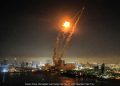
Two Iranian drones struck near Dubai International Airport on Wednesday — wounding four people but leaving flights operational — as Iran’s joint military command simultaneously declared banks and financial institutions across the Middle East to be legitimate targets. The announcement, unspecific on timing and method, follows separate attacks on at least two commercial vessels in the Persian Gulf, drone interceptions over Kuwait and Saudi Arabia’s Shaybah oil field, and Israeli airstrikes resuming on Beirut’s residential neighborhoods beyond the Hezbollah-controlled southern suburbs.
The pivot to financial infrastructure is a structural escalation that has not been seen in previous Iran-Gulf confrontations. Dubai functions as the region’s principal financial hub and home to extensive international banking operations; Bahrain hosts the US Fifth Fleet’s financial support apparatus alongside its own financial center; Saudi Arabia’s SAMA-regulated institutions underpin the kingdom’s petrodollar recycling system. Iran’s command did not clarify whether the threat encompasses kinetic strikes, cyber operations, or both — but the ambiguity itself is the signal. It is designed to produce capital flight, insurance withdrawal, and operational disruption without Iran having to fire a single round at a bank vault.
This escalation logic mirrors the Hormuz closure playbook: Iran does not need to fully execute a threat to generate its economic effect. The announcement alone is likely sufficient to accelerate the exodus of foreign nationals already underway — over 45,000 UK citizens and 40,000 Americans have departed the Gulf since February 28 — and to harden risk pricing for regional financial operations. Meanwhile, Mojtaba Khamenei, Iran’s newly appointed supreme leader, has not been seen publicly since his selection on March 8 and was confirmed by Iranian officials to be lightly injured, sheltering in a secured location. The absence of a visible head of state from a regime under existential military pressure creates its own command-and-control ambiguity — one that both complicates US targeting logic and raises questions about who is actually directing Iranian strategy.
Whether Iran follows the financial targeting threat with a kinetic or cyber action within 48 hours — a strike on any SWIFT-connected institution in the UAE or Bahrain would represent a qualitative escalation requiring an immediate Western financial-sector response. Separately, watch for any public appearance or authenticated statement from Mojtaba Khamenei; his continued invisibility is feeding credible speculation that a shadow command structure has taken operational authority within the IRGC.
Regional Roundup
IEA Members Vote Today on Record Reserve Release as Oil Swings Near $90
Brent crude is holding near $90 per barrel after touching nearly $120 on Monday and crashing back following contradictory signals from Washington — including US Energy Secretary Chris Wright’s deleted post falsely claiming the Navy had escorted a tanker through the Strait of Hormuz, which triggered a 17% intraday price swing before the post was retracted. The IEA’s 32 member nations vote Wednesday on an emergency reserve release reportedly exceeding the 182 million barrels deployed after Russia’s 2022 Ukraine invasion. The US is pushing for a joint G7 release of 300–400 million barrels. Japan has already moved unilaterally, with Prime Minister Takaichi announcing a reserve draw beginning March 16, making Japan the first G7 nation to act. India declined to join the IEA action, citing its non-membership. Wood Mackenzie has put $200 per barrel on the table as a realistic scenario if the conflict extends into months, not weeks, noting that 15 million barrels per day have been removed from the global market — a disruption without historical precedent.
The reserve release calculus carries a built-in problem: strategic stocks are calibrated for weeks-long disruptions. CENTCOM’s stated objectives — destroying Iran’s missile and drone capability, its navy, and its broader military-industrial base — have no defined timeline, and neither Trump’s off-message “very complete” CBS remark nor Hegseth’s “totally and decisively defeated” counter-statement provides any clarity on war termination. If the conflict runs for months, even a coordinated 400-million-barrel release buys roughly 26 days of cover against a 15 million bpd shortfall.
Mojtaba Khamenei Confirmed Injured and in Hiding — Shadow Command Questions Mount
The New York Times, citing three Iranian officials, reported Wednesday that Mojtaba Khamenei sustained leg injuries on the opening day of Operation Epic Fury and is sheltering at a high-security location with limited communications. Iranian state television referenced him as a “wounded veteran of the Ramadan war” without specifics. The son of President Pezeshkian confirmed via Telegram he is “safe and sound,” while IRGC-aligned outlets have been notably quiet on the new leader’s operational role. No photograph, video, or authenticated statement from Mojtaba has emerged since his appointment March 8.
This matters beyond symbolism. The IRGC commanders who pressured the Assembly of Experts to accelerate his selection under wartime conditions now appear to be the effective operators of Iran’s military campaign. Critics within the Iranian opposition contend that another senior regime figure may be exercising real authority while Mojtaba functions as a figurehead. The Israeli military has already declared him a target, and Trump — who called his appointment “a big mistake” — has refused to rule out further leadership targeting. A leadership vacuum or a proxy command structure within an already-decapitated regime represents a genuine intelligence gap for coalition planners.
Moscow Sharing Satellite Targeting Intelligence with Tehran for US Military Assets
US intelligence confirms Russia has been providing Iran with satellite imagery tracking the locations and movements of American warships, aircraft, and radar systems since the war began February 28. Multiple officials described the assistance as a “pretty comprehensive effort,” noting that Moscow’s constellation fills a critical gap for Iran, which lacks indigenous satellite targeting capability for mobile US assets. The intelligence sharing does not appear to constitute Russian direction of Iranian strikes, but several Iranian drone attacks in the weeks since have hit locations where US troops were present — including a strike on a makeshift troop facility in Kuwait that killed six US service members. The White House has publicly downplayed the reports while declining to deny them.
Separately, US intelligence indicates China may be preparing to provide financial assistance, spare parts, and missile components to Iran, though Beijing has so far stayed on the sidelines. China’s calculus is not ideological — it is commercial. Iran has continued shipping approximately 1.22 million barrels per day of crude to China through the Strait even as the waterway is closed to other traffic, using Iranian-flagged vessels and the Jask terminal south of the strait. China wants the war to end precisely because it threatens the energy supply chain Beijing has spent years building. Russian satellite assistance to Iran thus sits inside a broader coalition of passive adversarial support that the US has not yet formally responded to.
Israel Strikes Central Beirut Apartments as IDF Signals No Time Limit on Campaign
Israeli airstrikes hit an apartment block in Beirut’s Aicha Bakkar neighborhood on Wednesday, widening the target set beyond Hezbollah’s Dahiyeh stronghold to central civilian residential areas. The IDF also struck the southern suburbs and issued advance warnings to residents south of the Litani River. The UAE’s air defenses intercepted eight missiles and 26 drones Wednesday, the third consecutive day of significant intercept activity. Israeli Defense Minister Katz stated the joint operation against Iran will continue “without any time limit, as long as necessary.” More than 570 people have been killed in Lebanon since the war expanded.
The Lebanese government formally banned Hezbollah’s military activities and ordered security forces to prevent attacks from Lebanese territory — a significant domestic political statement, though its practical effect on Hezbollah’s operational behavior is limited. The IDF killed the head of Hezbollah’s intelligence headquarters, Hussein Makled, in recent strikes. Lebanon’s position — caught between a government attempting to reassert sovereignty and a paramilitary force under existential pressure — is precisely the kind of institutional fragility that tends to produce unintended escalation cycles when Israeli ground operations expand into southern Lebanon, as Katz has threatened.
CENTCOM Destroys 16 Iranian Minelayers; IRGC Says Ships Need Permission to Pass
US Central Command announced Tuesday it had destroyed 16 Iranian minelaying vessels near the Strait of Hormuz after intelligence confirmed Iran had begun laying mines in the waterway — with a few dozen placed in recent days and Iran retaining 80–90% of its mine-laying capacity intact. Trump simultaneously denied that Iran had successfully mined the strait, creating a public contradiction with CENTCOM’s own operational messaging. IRGC Naval Commander Adm. Alireza Tangsiri posted Wednesday that “every vessel intending to pass must obtain permission from Iran.” About 3,200 ships remain idle in the Gulf, and insurance protection and indemnity coverage for strait transits was revoked on March 5, making the economic risk of transit prohibitive regardless of military escort availability.
The USS Gerald R. Ford carrier strike group has repositioned south in the Red Sea toward the theater, while Trump has promised naval escorts for tankers “as soon as possible.” The legal and financial barriers to resuming commercial transit remain higher than the military ones: shipping companies cite crew safety and vessel insurance, not just military risk, as the limiting factors. IRGC control of the strait’s permission framework — even a non-functional one — effectively transfers the power to reopen global energy flows from Washington to Tehran, inverting the strategic initiative in ways that pure military dominance cannot resolve.
Under the Radar
Under-reported
The story being overlooked in Western coverage: 90% of India’s LPG imports — cooking fuel for 330 million households — transit the Strait of Hormuz. Commercial supply to restaurants, hotels, and industrial users has been cut by government order under the Essential Commodities Act as India prioritizes domestic household cylinders. Approximately 20% of restaurants in Mumbai have already shuttered; Tamil Nadu’s hospitality association reports tens of thousands of closures statewide. The Indian Railways catering arm has ordered kitchens to switch to induction and microwave. Punjab’s wedding season — with over 10,000 events scheduled — faces cooking gas shortages. The Modi government has invoked emergency rationing law and ordered refineries to maximize LPG output, but refineries can only do so if crude supply is available — itself constrained by the same blockage. With five Indian state elections scheduled in the first half of 2026, a sustained cooking gas crisis affecting hundreds of millions of households has the potential to reshape Indian domestic politics in ways that will alter New Delhi’s posture toward both the US-led coalition and Iran for years.
Not in wire coverage
TankerTrackers satellite monitoring has confirmed Iran is loading crude at the Jask oil terminal on the Gulf of Oman — only its fifth such loading in the past five years. Jask is Iran’s only export outlet that bypasses the Strait of Hormuz entirely, and its activation signals Tehran is developing an internal workaround to its own blockade for continued China exports. This matters strategically for two reasons: first, it demonstrates that Iran’s closure of Hormuz is selectively enforced, not absolute — a legal and operational distinction that will be exploited as the conflict continues. Second, it reveals that Iran’s economic warfare theory is asymmetric by design: deny the world’s energy while maintaining China’s supply in order to prevent Beijing from applying pressure for de-escalation. Watch for Jask loading volumes to increase; if they scale to meaningful throughput, Iran will have secured a durable revenue stream that extends its war endurance considerably beyond what Western analysts are currently pricing in.
Under-reported
The UN Security Council is set to vote Wednesday on a GCC-sponsored resolution demanding Iran cease attacks on Arab Gulf states. This is historically significant: Iran has struck all six GCC member states simultaneously — the first time in modern history this has occurred. For decades, Gulf monarchies relied on strategic ambiguity toward Tehran to maintain trading relationships, especially the UAE’s role as Iran’s principal re-export hub. That architecture is now being openly dismantled. Saudi Arabia, Bahrain, Kuwait, and the UAE have each issued military statements on Iranian attacks and requested formal UN action — a level of institutional coordination against Tehran that no previous episode produced. If the GCC resolution fails due to Russian and Chinese vetoes (as expected), watch whether the GCC escalates to formal diplomatic severance or financial sanctions against Iran — moves that would fundamentally restructure Gulf-Iran commercial infrastructure that has persisted through every previous crisis.
By the Numbers
| 15M | Barrels per day removed from the global oil market by the Hormuz closure — a supply shock with no historical precedent, exceeding the 1973 oil embargo in volume terms. |
| $3.7B | CSIS-estimated cost of the first 100 hours of Operation Epic Fury, with 95% of that figure unbudgeted in FY2026 appropriations. |
| 11.7M | Barrels of Iranian crude shipped to China through the Strait since the war began February 28, per TankerTrackers satellite monitoring — all destined for Beijing, demonstrating Iran’s selective enforcement of its own blockade. |
| ~400M | Barrels the US is proposing for a coordinated G7 strategic reserve release — enough to cover roughly 26 days of the current supply shortfall if the strait remains closed. |
| 3,200 | Ships idled in or near the Persian Gulf, per Clarksons Research, representing approximately 4% of global ship tonnage effectively stranded. |
| 90% | Share of India’s LPG imports that pass through the Strait of Hormuz — the supply chain binding 330 million Indian households to the outcome of this war. |
| 570+ | People killed in Lebanon since Israel expanded its campaign following Iran’s retaliation for the killing of Ali Khamenei, with Israeli airstrikes now targeting central Beirut neighborhoods beyond Hezbollah areas. |
What We’re Watching
- IEA Emergency Reserve Vote — Member states are deciding on a release exceeding 182 million barrels. A decisive coordinated release covering 300M+ barrels signals G7 unity and would immediately cap near-term price volatility; a stalled or partial result signals fractures in the coalition’s economic management of the crisis.
- UN Security Council GCC Resolution — The vote demanding Iran halt attacks on Arab Gulf states will almost certainly fail via Russian/Chinese veto, but the roll call matters: any P5 abstention (including China, which wants the war to end) would be a significant geopolitical signal worth tracking.
- Iran Financial Sector Targeting — Watch for any kinetic or cyber action against Gulf banking infrastructure following the joint military command’s declaration. A confirmed strike on a DIFC institution or Saudi bank would be an unambiguous escalation requiring a formal Western financial-system response.
- CENTCOM Day 12 Strike Package — The US pledged Wednesday would be the “most intense day of strikes.” Post-BDA satellite imagery from Planet Labs and Maxar will be the primary open-source verification mechanism for any claim of material degradation to Iran’s residual missile or mine-laying capability.
- Mojtaba Khamenei Public Appearance — Every additional day without a visible, authenticated statement from Iran’s new supreme leader deepens the command ambiguity that currently defines the conflict’s political endgame. A first public address would reestablish the regime’s legitimacy architecture; continued silence will accelerate internal speculation about who is actually directing operations.
- USS Gerald R. Ford Positioning — The carrier strike group’s southward movement in the Red Sea toward Bab el-Mandeb suggests a potential transit into the Gulf of Oman. If the Ford moves into Hormuz strike range, it materially changes the US Navy’s offensive options and will likely trigger a sharp Iranian response.
- Japan’s SPR Release (March 16) — The first G7 nation to activate emergency reserves. Whether other IEA members follow within days will determine whether coordinated reserve release meaningfully arrests price escalation or functions as a symbolic gesture that markets quickly price through.
- Houthi Posture Monitoring — The Houthis have maintained an unusually disciplined restraint since the war began, consistent with their 2025 US ceasefire obligations. Abdul-Malik al-Houthi’s “hands on the trigger” statement on March 5 is still the benchmark for their threshold to re-enter the conflict. Any Houthi strike on a US naval asset or Red Sea shipping would open a second maritime front simultaneous to Hormuz.
- Russia-US Back-Channel Activity — The White House has not confirmed whether Trump has spoken to Putin about the satellite intelligence sharing. Any direct Trump-Putin communication on the Iran conflict, or any Russian statement conditioning continued intelligence assistance on US diplomatic concessions, represents a potential war termination lever that Western publics are not currently factoring into their analysis.