The Hopper Daily Brief · Monday, March 2, 2026 · Curated by H. Reeves
01 Top Story
Operation Epic Fury Enters Day Two: Khamenei Killed, Hormuz Shut, Regional War Underway
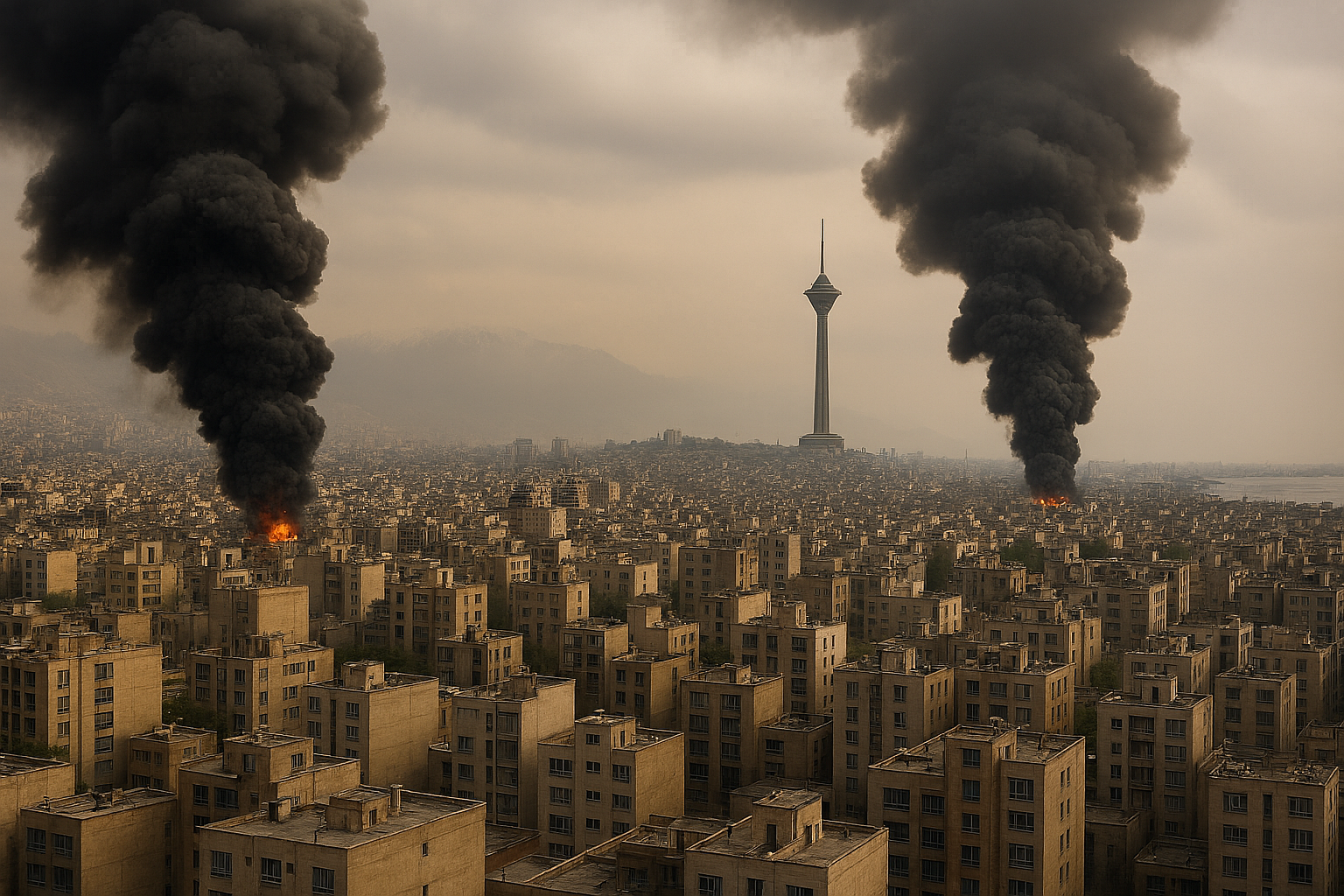
U.S. and Israeli forces launched coordinated strikes against Iran on Saturday, February 28, under Operation Epic Fury, targeting military facilities, nuclear infrastructure, and senior leadership. Iranian Supreme Leader Ayatollah Ali Khamenei, 86, was confirmed killed in strikes on his Tehran compound — Iranian state broadcasters delivered the news in tears. President Trump announced the operation via Truth Social, declaring the objective was to eliminate “imminent threats from the Iranian regime.” (AP; NPR)
By day two, Iran had launched retaliatory ballistic missiles and drone barrages across the Persian Gulf, targeting Israel, the UAE, Qatar, Kuwait, Bahrain, Jordan, Saudi Arabia, and U.S. military installations across the region. Three U.S. service members have been killed and at least five seriously wounded. Kuwait mistakenly downed three American jets during Iranian attacks — all crew safely ejected. Israel declared a nationwide state of emergency, closing schools and canceling public gatherings. (Reuters; NPR; PBS NewsHour)
The stated justification has already been challenged from within. Pentagon briefers acknowledged to congressional staff that Iran was not planning preemptive strikes on U.S. forces unless Israel attacked first — directly undercutting the administration’s “imminent threat” framing. Senate Intelligence Vice Chair Mark Warner stated publicly he had seen no supporting intelligence. Critically, Oman’s Foreign Minister — actively mediating nuclear talks — confirmed the strikes came just hours after he expressed optimism that “peace is within our reach.” (CNN; Security Council Report S/2026/106)
The strategic consequences are compounding rapidly. The IRGC issued VHF radio warnings prohibiting vessel passage through the Strait of Hormuz, backed by drone and missile attacks on transiting tankers. Traffic through the waterway has fallen approximately 70%, with over 150 ships anchored outside the strait. Maersk, MSC, Hapag-Lloyd, and CMA CGM have all suspended Hormuz transits and are rerouting vessels around Africa’s Cape of Good Hope — adding weeks to delivery times. Brent crude surged 6.7% to settle near $78/barrel on Sunday, the largest single-session gain since June 2025; UBS analysts have warned of a potential breach of $120/barrel if disruptions persist. A frequently overlooked dependency: one-third of global fertilizer trade also transits Hormuz, extending this supply shock well beyond energy markets. (Bloomberg; Reuters; Rystad Energy; CNBC; Hanken School of Economics)
▸ What to Watch
Whether Iran’s Supreme National Security Council formally ratifies the Hormuz closure (required by Iranian law — converting an effective blockade into a declared one with significant escalation implications); IEA strategic petroleum reserve release coordination; Gulf state decisions on formal overflight and basing rights for U.S. forces; and any direct Trump–Iran leadership contact signaling an off-ramp.
02 Regional Roundup
Europe / Global Diplomacy — Security Council Paralyzed as Western Alliance Fractures Over Strike Authorization
China and Russia convened an emergency UN Security Council session, calling the strikes “unprovoked and reckless military aggression against a sovereign state” and demanding an immediate ceasefire. The U.S. veto renders any binding resolution moot. France, Germany, and the UK issued a joint statement condemning Iranian retaliatory attacks on Gulf states and calling for resumed nuclear negotiations — stopping short of endorsing the original military action. The E3 position is visibly bifurcated: criticizing Iranian retaliation without legitimizing the legal basis for the strikes, reflecting deep concern about UN Charter authorization and uncontrolled regional spillover. (Security Council Report; Reuters; Time)
The General Assembly emergency session is the next viable diplomatic arena. No mechanism currently exists to impose a ceasefire over U.S. objection.
Asia-Pacific — China and India Activate Emergency Energy Protocols as Hormuz Closure Threatens Asian Supply Chains
China’s Foreign Ministry confirmed the evacuation of over 3,000 nationals from Iran as of March 2, with diplomatic working groups deployed to border crossings in neighboring states. Foreign Minister Wang Yi called the strikes “unacceptable” and condemned “the blatant killing of a sovereign leader,” but analysts at advisory firm Teneo assess Beijing will not take concrete action: “preserving détente with the U.S. remains a strategic priority” — with a Trump visit to China anticipated later this month. (Chinese MFA; CNBC)
The economic exposure is acute. China, India, Japan, and South Korea collectively account for 69% of all crude oil flowing through Hormuz. India, which imports approximately half its total crude through the strait, has confirmed emergency contingency planning is underway. A sustained closure would constitute a simultaneous, severe energy security shock to all four economies. (Al Jazeera; EIA data)
Levant — Hezbollah Enters the Fight; Lebanon Campaign Widens as Axis of Resistance Mobilizes
Hezbollah launched rockets and drones toward northern Israel overnight, prompting Israeli strikes on Beirut and southern Lebanon targeting senior operatives and militant infrastructure. Israel’s Northern Command ordered evacuations across 52 Lebanese villages and pledged to intensify operations. An Iranian missile struck a synagogue in Beit Shemesh near Jerusalem, killing 9 and wounding 51. An Iraqi Shia militia drone struck near Baghdad International Airport; Kataib Hezbollah has threatened imminent attacks on additional U.S. bases. (CNN; PBS NewsHour; Reuters)
Yemen’s Houthis — who retained significant strike capability despite sustained U.S. and Israeli operations in 2024–25 — have formally announced resumed Red Sea attacks. A simultaneous Hormuz and Bab el-Mandeb closure would represent a historically unprecedented dual-chokepoint scenario, disrupting approximately one-third of global seaborne trade. (PBS NewsHour; Wikipedia conflict tracker)
03 Under the Radar
Developments most outlets missed — but that matter for strategic forecasting.
OPEC+ Emergency Pledge Is Political Signaling, Not a Solution. OPEC+ has pledged an emergency production increase of 206,000 barrels per day to offset Hormuz disruption. The figure is analytically insufficient: Saudi Arabia, the UAE, Iraq, and Kuwait — the primary OPEC+ producers capable of increasing output — themselves export through Hormuz and cannot move product while the strait is closed. The pledge is diplomatic positioning. Watch for coordinated IEA strategic petroleum reserve release announcements within 48 hours; that is the only near-term supply-side tool available. (Wikipedia Hormuz crisis entry; Reuters)
Insurance Markets Are Pricing Weeks of Disruption, Not Days. Marine hull war insurance premiums for Hormuz transit have surged 25–50% according to Marsh broker estimates — a data point largely absent from political coverage. Insurance pricing is a real-money signal of expected disruption duration. During the 2019 Houthi attack on Saudi Aramco, premiums normalized within 10 days. Sustained elevation beyond that threshold historically correlates with structural rather than episodic disruption. Current pricing implies the market expects measured disruption in weeks. (CNBC / Marsh)
The Fertilizer Dependency Nobody Is Covering. Approximately one-third of global fertilizer trade transits the Strait of Hormuz, according to analysis from Hanken School of Economics. With Northern Hemisphere planting season approaching, a prolonged closure would create a severe agricultural supply shock — with a 60–90 day lag before prices feed into food systems. This dependency has received near-zero coverage in Western media, which has focused almost entirely on crude oil pricing. The downstream food inflation risk is a second-order consequence that will arrive quietly and late. (The Conversation / Hanken School of Economics)
04 By the Numbers
- $78 — Brent crude per barrel (Sunday settlement), up 6.7% — largest single-session gain since June 2025. UBS projects potential breach of $120/barrel if disruptions persist. (Bloomberg; UBS)
- 70% — Approximate decline in tanker traffic through the Strait of Hormuz; 150+ vessels anchored outside the waterway. (Rystad Energy)
- 555 — Confirmed deaths inside Iran from strikes on 131 cities as of March 2. (Iranian Red Crescent Society)
- 3,000+ — Chinese nationals evacuated from Iran as of March 2, with working groups at border crossings. (Chinese Foreign Ministry)
- 1,579 — Middle East flights canceled Sunday alone; 70% of scheduled flights canceled at Dubai, Israeli, and Qatari airports. Dubai International most affected. (Cirium)
- 25–50% — Surge in marine hull war insurance premiums for Hormuz transit — a real-money signal of expected disruption duration. (Marsh)
05 What We’re Watching
Next 24 Hours
- Iran’s Supreme National Security Council decision on formal Hormuz blockade ratification — the legal trigger converting an effective closure into a declared one, with significant implications under international law
- U.S. and IEA strategic petroleum reserve release announcement; coordinated member-state call expected — watch for specific volumes and duration commitments
- Iraqi Shia militia attacks on U.S. bases at Baghdad and Ain al-Asad; Pentagon force protection posture and any retaliatory U.S. strikes in Iraq
- Saudi Arabia’s Ras Tanura refinery: operational assessment following drone attack Monday — one of the world’s largest refining complexes
Next 48–72 Hours
- White House confirmed Trump is “eventually” willing to speak with Iran’s “new potential leadership” — monitor for direct contact or Omani intermediary re-engagement; the first credible off-ramp signal
- First confirmed Houthi Red Sea attack post-resumption; whether Bab el-Mandeb effectively closes simultaneously with Hormuz — a dual-chokepoint scenario with no modern precedent
- EU emergency energy council session and member state strategic reserve activation timelines; France and Germany face acute LNG re-routing exposure
- India’s formal crude import contingency announcement; whether Beijing formally requests a U.S. diplomatic channel on Hormuz transit — China’s economic exposure creates potential leverage for a back-channel
Methodology: This Brief synthesizes open-source intelligence from: NPR, Reuters, AP, PBS NewsHour, CNN, CNBC, Al Jazeera, Bloomberg, CSIS, Chatham House, Security Council Report, Chinese Foreign Ministry (MFA), UN Security Council filings (S/2026/106), and energy and shipping market data from Rystad Energy, UBS, Marsh, and Cirium. Minimum two independent Tier 1 or Tier 2 sources per factual claim. Analysis is clearly distinguished from factual reporting throughout. State media not used as sole source.
Spotted something we missed? brief@thehopper.news · Archive: /brief/