The Finding
Trump’s energy dominance doctrine produced concrete geopolitical leverage before Operation Epic Fury began — not because of master planning, but because a doctrine built to insulate America from energy-market shocks was already reshaping alliance obligations. Europe entered the Hormuz crisis having pre-committed to $750 billion in US energy purchases. That commitment is now existential, not negotiated. The leverage is structural.
What Happened: Three Moves, Eight Months
In the pre-dawn hours of January 3, 2026, US Delta Force units captured Venezuelan President Nicolás Maduro in Caracas. Within 72 hours, the Trump administration had announced it would control Venezuelan oil sales “indefinitely,” directing proceeds into US-supervised accounts and beginning to market Venezuelan crude internationally. The CIA had been tracking Maduro’s movements for months using a source inside his inner circle, and Delta Force units rehearsed the operation on a mockup of his compound before deployment.
Nine weeks later, on February 28, 2026, US and Israeli forces launched Operation Epic Fury against Iran — a joint campaign targeting Iran’s command structure, missile arsenals, naval forces, and senior leadership. Supreme Leader Ali Khamenei was killed in the operation’s opening hours. General Dan Caine, Chairman of the Joint Chiefs, described the military objectives as the product of “months and, in some cases, years of deliberate planning and refinement.” Iran’s retaliatory strikes on Gulf infrastructure triggered an effective closure of the Strait of Hormuz, with Iranian drone attacks subsequently taking out a Qatari LNG production facility on March 3.
These were not the administration’s first moves against Iran. In June 2025, the US joined an Israeli strike campaign that destroyed Fordow, Natanz and Isfahan — Iran’s primary nuclear enrichment sites. And on January 12, 2026 — just nine days after the Maduro capture — Trump imposed a 25-percent secondary tariff on any country purchasing Iranian oil. The sequence is legible: secure Western Hemisphere oil supply, choke Iranian revenue, eliminate Iranian hard power, control the downstream consequences from a position of surplus.
How the Hormuz Closure Converts Europe’s Gas Deficit Into US Leverage
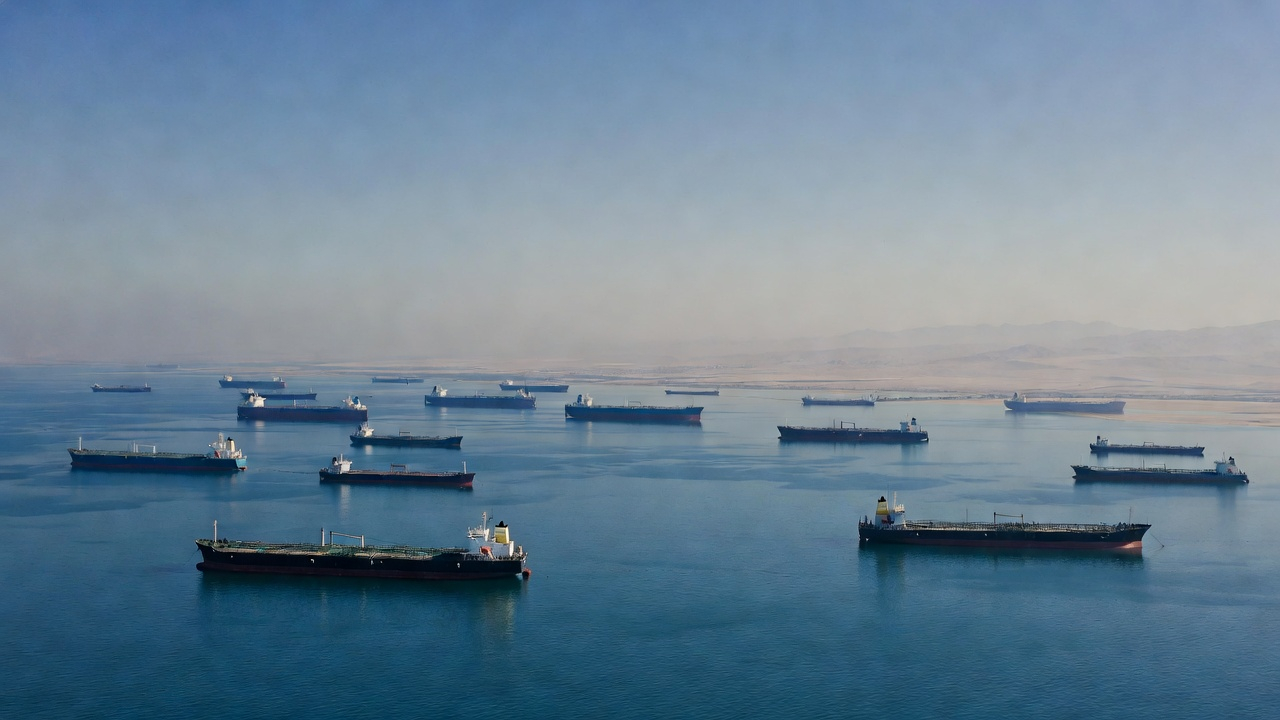
The strategic significance of the Strait of Hormuz crisis is not symmetrical. Approximately 20 million barrels of oil and the equivalent of 20 percent of global LNG trade transit the Strait daily. For Asia, the closure disrupts crude supply chains with limited short-term alternatives. For Europe, the damage runs deeper — it compounds a pre-existing structural vulnerability at the worst possible moment, and one actor is positioned to offer meaningful relief.
Europe entered March 2026 with gas storage at approximately 30 percent across the continent, with Germany — its largest economy — reporting reserves as low as 21.6 percent. This was the lowest seasonal level in years, against 60 billion cubic metres held at the same point in 2025 and 77 billion in 2024. The Hormuz closure arrived precisely as seasonal refilling operations should have been beginning. Dutch TTF natural gas futures, Europe’s benchmark price, reached €50 per megawatt-hour within days of the strikes — a 60 percent rise from pre-conflict levels — before Qatar’s LNG production halt pushed them past €65. Oxford Economics warned that Asian state buyers would compete aggressively with Europe for remaining spot cargoes, creating a bidding war European utilities cannot win on price alone.
The fertiliser dimension is the story that most mainstream coverage has underweighted, and it matters specifically to European food security. Approximately a third of globally traded urea transits the Strait of Hormuz. Qatar, Saudi Arabia, Bahrain and the UAE are dominant exporters of nitrogen-based fertilisers, and the gas feedstock powering fertiliser production elsewhere also transits the Strait. A sustained closure does not merely reprice crude oil — it threatens the nitrogen supply chain for the Northern Hemisphere spring planting season. Without synthetic nitrogen, modern crop yields collapse within a single growing cycle. Europe imports significant volumes of urea and ammonia, and both supply and forward visibility have now been severed simultaneously.
The financial dimension is self-reinforcing. Goldman Sachs analysts estimated oil could reach $100 per barrel if Hormuz shipping remains suppressed for five weeks. Qatar’s energy minister warned of $150 per barrel if production halts spread further. The IMF estimates global GDP growth falls by approximately 0.15 percent for every 10 percent rise in oil prices. For European economies already carrying below-consensus 2026 GDP forecasts, the margin for absorbing a shock of this duration is narrow. The ECB, which had only recently stabilised its rate path, faces pressure from analysts to hike twice in the second half of 2026 under a severe scenario — unwinding eighteen months of disinflation work.
The United States faces a materially different picture. US domestic production now exceeds 24.2 million barrels of oil equivalent per day — more than Saudi Arabia and Russia combined — and LNG exports grew more than 20 percent in 2025. Energy Secretary Chris Wright stated explicitly, before the Iran strikes began, that this position gives Trump “more leverage in his geopolitical actions” because the administration does not need to “worry about a crazy spike in oil prices.” American energy prices have risen, but the structural insulation is real: the US is a net exporter absorbing a global shock that punishes importers.
The Policy Architecture That Made This Position Real Before the Crisis Began
The argument that Trump’s current leverage was “planned” requires precision. There is no public evidence of a single integrated strategy document linking Venezuela, the June 2025 Iran nuclear strikes, the Maduro capture, Operation Epic Fury and the Hormuz crisis as a sequential master plan. That is not the right question. The right question is whether the administration constructed a structural position — using public doctrine — that conferred geopolitical leverage regardless of how precisely the sequence unfolded. The answer is yes, and the evidence is in plain sight.
The Energy Dominance doctrine, formalised through the National Energy Dominance Council in Trump’s second term, had two stated objectives: suppress global energy prices to constrain the fiscal freedom of adversarial states, and insulate the US from energy-market retaliation so that military and diplomatic pressure could be applied without domestic economic blowback. Secretary of State Rubio made the second objective explicit at the Munich Security Conference in early 2026, framing the global shift toward renewables as leverage Washington needed to counter. This was not classified strategy. It was published policy, broadcast to allies and adversaries alike.
Critically, the bilateral trade deal architecture was built on top of this doctrine before any of the major military moves. In August 2025 — four months before the Maduro capture — the US reached a preliminary trade framework with the European Union that included an EU commitment to purchase $750 billion in US energy over three years: $250 billion per year in oil, gas and nuclear fuels. Japan, Indonesia and Malaysia made parallel LNG purchase commitments as conditions of their own tariff agreements during the same period. Bangladesh and India followed in early 2026. These were not aspirational statements — they were contractual obligations extracted in exchange for tariff relief.
The January 12 Iranian oil tariff is the clearest evidence of deliberate sequencing. Nine days after the Maduro capture — while the administration was publicly framing Venezuela as a drug-trafficking operation — Trump announced a 25-percent secondary tariff on any country purchasing Iranian oil. This measure did not respond to the Iran strikes. It preceded them by nearly seven weeks. Its purpose was to accelerate Iran’s fiscal deterioration and foreclose the revenue substitution that might have extended Tehran’s negotiating runway.
When domestic energy prices began rising after the strikes launched, press secretary Karoline Leavitt confirmed in a public post on X that “President Trump’s entire energy team, from the White House to the National Energy Dominance Council to Secretaries Wright and Bessent, have been planning for this.” That is an administration official on record confirming that energy-market consequences were anticipated and planned for — not an improvised response to an unforeseen disruption.
The China and Russia dimensions complete the structural picture. China had been the primary buyer of Venezuelan crude and held major upstream investments through joint ventures the Maduro regime had extended into 2040. The US capture severed that preferential flow. China simultaneously absorbed the closure of Iranian crude — Beijing had been one of the few buyers willing to purchase discounted Iranian oil despite US sanctions. Removing both cheap Venezuelan and Iranian supply does not merely raise China’s energy costs: it eliminates Beijing’s capacity to absorb the cost of Western sanctions on the regimes it underwrites. Russia loses Iran as a proxy instrument for applying energy pressure on Europe — a mechanism Moscow had used with precision since 2022. Washington has not merely insulated itself. It has systematically degraded the energy leverage of all three of its principal adversaries within a single eight-month arc.
The honest stress-test of this thesis requires acknowledging the structural limits. US LNG export infrastructure was operating near capacity before Epic Fury began and cannot physically replace Qatari volumes in the short term. Venezuela’s oil sector requires five to ten years of sustained investment before it contributes meaningfully to global supply. The Supreme Court’s February 20 ruling striking down IEEPA-based tariffs removed some of the trade leverage that had made Europe’s $750 billion energy commitment feel binding rather than optional. And European policymakers are not passive: a genuine diversification agenda is underway, including accelerated LNG re-gasification terminal construction, renewables deployment and nuclear investment that does not require American permission. Chatham House’s observation that “the opposite of energy dominance is not submission, but diversification” remains the most credible long-run counter-argument.
But these constraints speak to the completeness of the leverage, not its existence. The medium-term supply picture — three to seven years, as Venezuelan infrastructure is rebuilt and new US LNG export capacity comes online — favours the United States decisively. Europe’s $750 billion commitment was made when alternatives existed. It is being executed during a supply shock that has made American LNG the only credible volume source for incremental European supply. The difference between a negotiated commitment and a structural dependency is a Hormuz closure and a Qatari LNG facility on fire. The Trump administration did not manufacture Iranian retaliation. But it built the architecture that determined who would be hurt most by it — and who would be positioned to offer relief.
Key Players
The inter-agency body that explicitly pre-planned US energy-market responses to Operation Epic Fury, per Leavitt’s public confirmation. Wright pre-framed energy dominance as the basis for geopolitical freedom of action. Bessent holds authority over sanctions architecture and financial pressure. Rubio framed LNG exports as a diplomatic instrument at Munich in February 2026.
Bound by the August 2025 preliminary EU-US trade framework to $750 billion in US energy purchases over three years. Entering the Hormuz crisis with gas inventories at historic seasonal lows and a political mandate not to return to Russian dependence. The Commission’s negotiating leverage with Washington has diminished precisely as its energy need has become acute.
Simultaneously losing preferential access to Venezuelan crude and Iranian supply. China’s crude imports hit a record 11.6 million barrels per day in 2025 — a stockpiling response to anticipated supply disruption that reveals Beijing had been preparing for exactly this scenario. The stockpile buys time; it does not resolve the structural supply problem.
Both a victim and a critical variable. The Iranian drone strike on its LNG facility on March 3 removed approximately 20 percent of global LNG supply from the market. Qatar is not a party to the conflict but has become its most consequential energy casualty. Its recovery timeline will determine how long Europe remains in genuine supply distress — and how long the US retains maximum leverage.
Scenarios & Probabilities
55% confidence
Managed Leverage, Durable Dependency — The Hormuz crisis resolves within four to six weeks as Iran’s military capacity degrades and Gulf states broker a de-escalation framework. Shipping resumes. Oil prices retreat from peak but remain elevated at $85–95 per barrel through mid-2026. Europe deepens its formal LNG purchase commitments with the US as a supply security measure — not under acute duress, but with no credible alternative at volume. The $750 billion framework becomes an operational agreement with binding delivery schedules. US leverage is structural and durable, not merely acute.
Key trigger: Iran accepting a ceasefire framework brokered by Oman, Qatar or Turkey within the next 21 days. Watch Kpler vessel-tracking data for renewed tanker AIS signals through Hormuz.
30% confidence
European Diversification Limits US Leverage — The Hormuz disruption accelerates European investment in renewables, nuclear and non-Gulf LNG supply chains — Norwegian pipeline expansion, East African LNG development, accelerated domestic nuclear permitting — at a pace that materially reduces US dependence within three to four years. The $750 billion energy commitment is met primarily through spot purchases and nuclear technology deals rather than long-term LNG delivery contracts, limiting the strategic depth of US leverage. Chatham House’s observation that “the opposite of energy dominance is not submission, but diversification” proves more prescient than the administration anticipated.
Key trigger: European Commission announcing emergency funding for non-US LNG infrastructure, or accelerated permitting of Norwegian and Tanzanian LNG export capacity, before Q3 2026.
15% confidence
Prolonged Hormuz Closure Triggers Fertiliser and Food Shock — The Strait remains effectively closed beyond eight weeks. Nitrogen fertiliser exports from the Gulf — approximately a third of global urea trade — are disrupted through the Northern Hemisphere spring planting window. Crop yield expectations for late 2026 are revised downward across South Asia and Europe. Food price inflation compounds energy inflation, driving political instability in import-dependent emerging markets. Central banks face simultaneous energy and food inflation with no orthodox policy response. At this threshold, US leverage becomes difficult to exercise cleanly: a destabilised global food system is not a negotiating table.
Key trigger: IFPRI or FAO global food price indices rising 15%+ from the February 2026 baseline, or major grain-importing sovereign defaults in South Asia within 90 days.
What to Watch
- EU-US Energy Framework Formalisation: Whether the European Commission moves to convert the preliminary August 2025 $750 billion energy commitment into binding long-term LNG delivery contracts. Any EU energy commissioner statement about emergency supply agreements or LNG contract negotiations with US counterparts before April 2026 would confirm the leverage is being actively exercised.
- Kpler and TankerTrackers — Hormuz Transit Volume: Watch for renewed AIS vessel activity through the Strait in the next 14–21 days. Recovery to 30 percent of pre-conflict transit volumes signals de-escalation. Continued near-zero traffic beyond March 21 substantially increases the probability of the fertiliser shock scenario.
- QatarEnergy LNG Facility Restart Timeline: Qatar’s energy minister has declined to give a public restart date. Any announcement — or its notable absence — by March 15 will determine whether European gas prices stabilise or push toward the €80/MWh threshold that forces EU emergency demand-reduction protocols.
- Venezuela Crude Production — Kpler Monthly Data: If Venezuelan output remains below 1 million barrels per day through Q2 2026 — the likely outcome given the scale of infrastructure deterioration — the administration’s claim that Venezuelan oil offsets Hormuz disruption will be analytically indefensible, placing the Energy Dominance doctrine’s credibility as an immediate supply buffer under domestic pressure.
Sources & Further Reading
Wire Services & Breaking Coverage
- NPR — “Iran’s supreme leader, Ayatollah Ali Khamenei, has been killed,” February 2026
- NPR — Trump defends Iran strikes; Gen. Caine confirms “years of deliberate planning,” March 2026
- PBS NewsHour — Fact-check: Trump statements justifying US strikes on Iran, March 2026
Broadcast + Digital
- Axios — “Trump campaign peace promises loom large over Iran war,” March 2026
- CNN Business — “Trump says US is taking control of Venezuela’s oil reserves,” January 2026
- Euronews — “Iran war: How exposed are European economies?” March 2026
- The Hill — “Spike in gas prices over Iran strikes puts Trump on defense,” March 2026
Financial + Energy Data
- Kpler — Strait of Hormuz crisis: vessel tracking and supply disruption analysis, March 2026
- Janes — Hormuz disruption: energy and food production risk assessment, March 2026
- US Department of Energy — Venezuela oil deal fact sheet, January 2026
Policy + Analysis
- Chatham House — “Trump wants US energy dominance. Global markets may not agree,” February 2026
- Columbia CGEP — “Trump Bets That ‘Energy Dominance’ Will Make War in Iran Less Costly,” March 2026
- CSIS — Venezuela oil aspirations: political stability prerequisites, January 2026
- The Conversation / UN University — The Iran war fertiliser shock risk, March 2026
- Bruegel — European energy market exposure to the Iran conflict, March 2026
- IER — EU-US preliminary trade deal: $750 billion energy purchase commitment, August 2025
- Council on Foreign Relations — Oil, power and climate stakes of the US move in Venezuela, January 2026