Four astronauts return from humanity’s first voyage around the Moon in more than 50 years
NASA’s Artemis II astronauts have safely returned to Earth, splashing down in the Pacific Ocean off the coast of Southern California and closing out humanity’s first crewed journey around the Moon in more than half a century.
The mission marks NASA’s first crewed Artemis flight and the first time people had traveled beyond low Earth orbit since Apollo 17 in 1972.
Aboard the Orion spacecraft are Commander Reid Wiseman, Pilot Victor Glover, Mission Specialist Christina Koch, and Canadian Space Agency astronaut Jeremy Hansen. Launched from Kennedy Space Center in Florida on April 1, the four-person crew spent about 10 days testing the spacecraft and its systems on a lunar flyby designed to help pave the way for future missions deeper into the Artemis program.
During the mission, Artemis II set a new distance record for human spaceflight, with NASA saying the crew surpassed the mark set by Apollo 13.
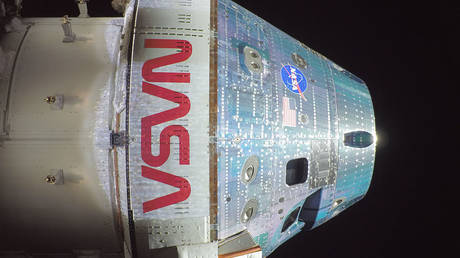
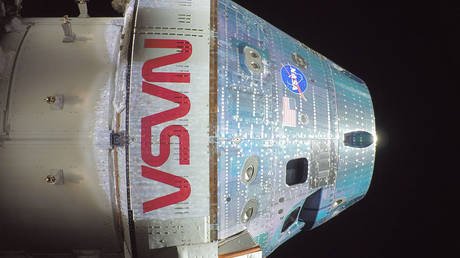
The astronauts also carried out a high-profile flyby of the Moon’s far side and captured dramatic images of the Moon and Earth during the return leg.
The crew module on Orion has separated from its service module. After traveling around the Moon, seeing its far side, and experiencing a solar eclipse, the Artemis II astronauts are on the last leg of their trip home. pic.twitter.com/j9u5j1Noi9
The final descent was among the most critical phases of the flight. Orion hit Earth’s atmosphere at hypersonic speed, endured extreme heating during reentry, then slowed under parachutes before splashing down. NASA and US Navy recovery teams were positioned to retrieve the spacecraft and crew after landing.
After a journey of more than 690,000 miles, the crew is nearly home.
The Artemis II crew will splash down off the coast of San Diego later today and, though it won’t be visible from land, you can still wave in their general direction to welcome them back to Earth! 👋 pic.twitter.com/ZZX23QCTpb
Artemis II did not land on the Moon, but NASA has described it as a crucial test of the systems needed to send astronauts farther into deep space and eventually back to the lunar surface.
Like most test flights, Artemis II was not entirely trouble-free. Early in the mission, the crew and flight controllers had to troubleshoot Orion’s toilet after a fault light appeared, and later dealt with additional hygiene-system issues, including a urine-venting problem and an odd burning smell near the toilet bay. NASA said the glitches were manageable and did not threaten the mission.
The mission’s results are expected to shape the next steps in the Artemis campaign, including future crewed lunar operations.