Despite saving its pilot, Washington paid a steep price – and revealed the risks of deeper escalation
For nearly two days, somewhere in the mountains south of Isfahan in Iran, a US weapons officer was missing. Around him, a complex rescue operation unfolded under fire, with helicopters landing on makeshift runways and aircraft taking heavy losses. When the dust settled, the US had recovered its man – but at a cost that may reshape its entire approach to Iran.
RT explores why this operation could fundamentally alter the US strategy in Iran.
Isfahan, or there and back again
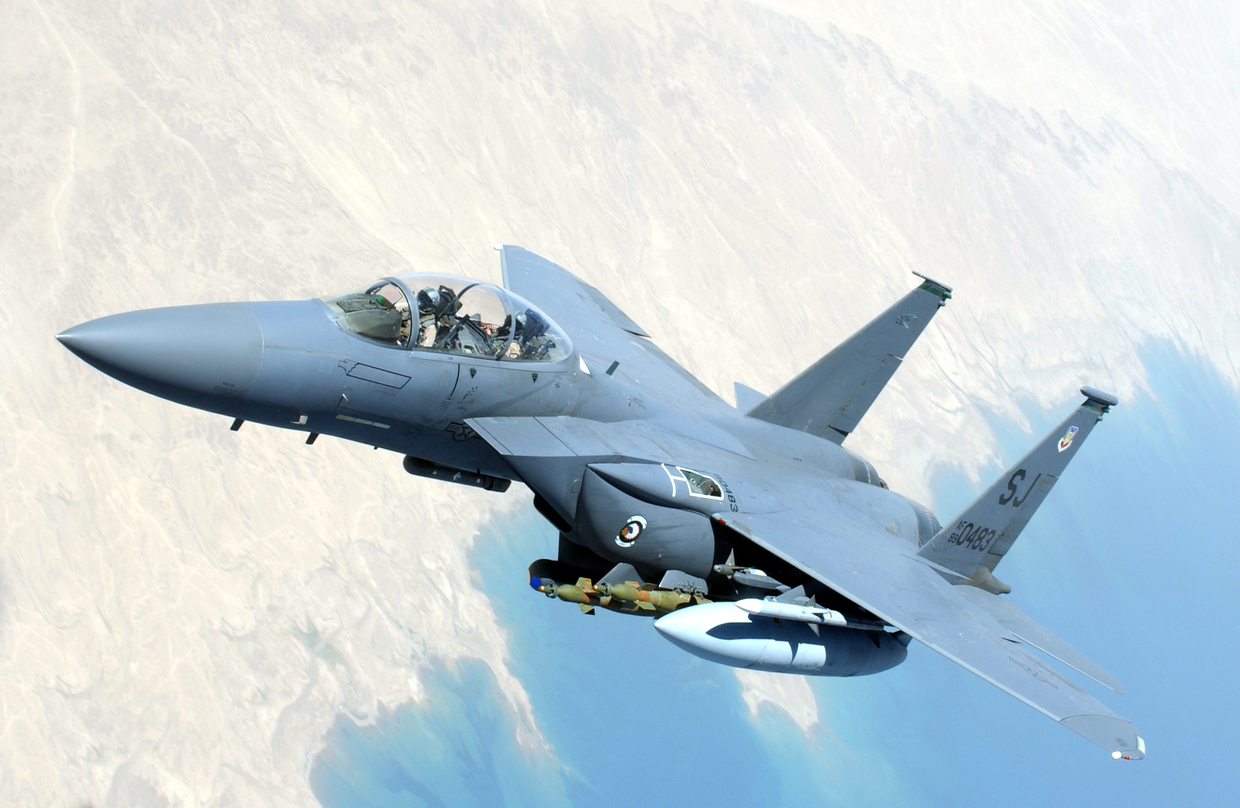
On April 3, a US F-15E Strike Eagle fighter jet was shot down over Iran by a surface-to-air missile defense system. Both crew members successfully ejected. The pilot was rescued a few hours later, but it took nearly two days to locate the weapons system officer. Finally, on Sunday, April 5, US President Donald Trump announced his successful rescue.
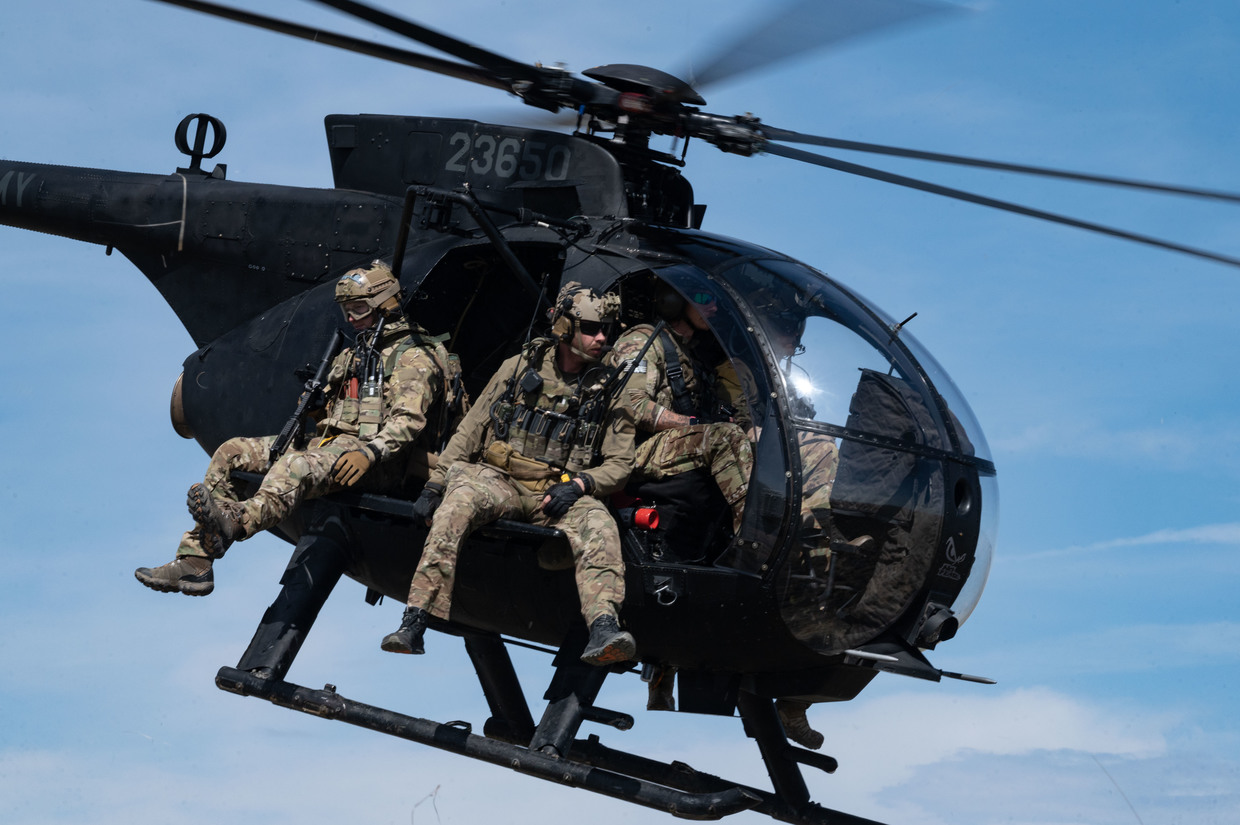
According to the official narrative, the fighter jet crashed about 20 km south of Isfahan, Iran’s third-largest city. A rescue operation was launched to evacuate the second crew member. Two MC-130J Commando II transport aircraft carrying special forces and four MH-6M Little Bird helicopters landed at an abandoned agricultural airstrip approximately 25 km south of the crash site. The MH-6M Little Bird is a lightweight, egg-shaped helicopter, a descendant of the Hughes OH-6 Cayuse widely used during the Vietnam War and familiar to many people from the movie ‘Apocalypse Now’.
US 123rd Special Tactics Squadron operators load onto an MH-6 Little Bird during Exercise Agile Chariot, May 2, 2023.
The ejected pilot took refuge in the mountains about 8 km northwest of the makeshift airstrip; US aviation provided air cover by striking approaching IRGC units with multiple bombs and missiles.
Meanwhile, one of the helicopters managed to pick up the pilot and transport him back to the airstrip. However, according to reports, both transport planes became stuck in the mud and couldn’t take off. Eventually, three Bombardier Dash-8 turboprop aircraft arrived to evacuate the rescued pilot and around 100 personnel involved in the operation.
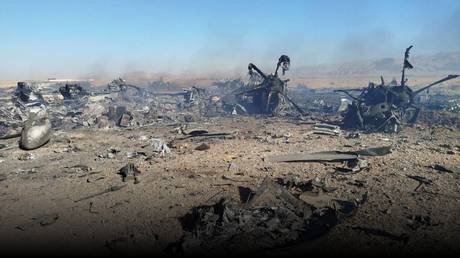
The US side reported that it destroyed the abandoned equipment (two MC-130J Commando II transport aircraft and four Little Bird helicopters). Additionally, during the operation, an A-10C Thunderbolt II attack aircraft was shot down (the pilot ejected over friendly territory) along with two MQ-9 Reaper drones; two UH-60 Black Hawk helicopters were damaged but managed to return to base. Official reports did not mention any casualties.
A well-planned improvisation
The scant and contradictory official information instantly gave rise to different theories. For example, some claimed that the F-15E didn’t crash anywhere near Isfahan and that the entire operation was an ill-fated attempt to extract Iranian weapons-grade uranium from a local nuclear facility located about 35 km from the landing zone.
This theory is rather dubious – the resources required for such an operation clearly outweigh those deployed in this case; moreover, the recovery of downed pilots is a standard, well-practiced procedure in the US.
In 2023, during Exercise Agile Chariot, a similar scenario was simulated. The training exercises involved two special operations forces – US Air Force Combat Controllers (CCTs) and US Air Force Pararescuemen (PJs) from the 123rd Special Tactics Squadron.
In Wyoming’s mountainous terrain, a field airstrip was set up where an MC-130J Commando II landed, delivering MH-6M Little Bird helicopters operated by the 160th Special Operations Aviation Regiment. The helicopters were unloaded and prepared for takeoff within minutes, after which PJs moved to the location of the downed pilot to rescue him.
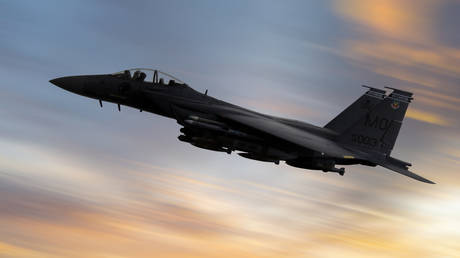
A US F-15 Strike Eagle flies over Southwest Asia during combat operations in support of Operation Iraqi Freedom, July 6, 2004.
During the exercises, troops also practiced refueling MQ-9 Reaper drones and A-10 Thunderbolt II aircraft from an MC-130J Commando II in a field environment.
Operation Eagle Claw remake
Naturally, one can’t help but recall the failed Operation Eagle Claw that took place in Iran on April 24, 1980. During that mission, US special forces attempted to rescue 53 hostages taken from the US Embassy in Tehran five and a half months earlier.
The plan of the operation looked similar: an American special forces team, supported by transport helicopters, was tasked with capturing an abandoned airfield, conducting a rescue raid, returning to the spot, and evacuating to Egypt.
However, things went awry from the start: one of the eight helicopters crashed, another turned back due to a dust storm, and the landing site was too close to a busy highway, which compromised the mission. During refueling, one helicopter collided with the tanker aircraft resulting in a fire that claimed the lives of eight US service members. The operation was ultimately aborted, and US equipment and documents were abandoned in the desert and later fell into Iranian hands.
If the raid on Isfahan last weekend targeted a nuclear facility or aimed to capture a high-ranking Iranian official, the outcome appears similar: the objectives were not achieved.
Black Hawk Down remake
However, for now we will refer to the official narrative – that the goal of the operation was to extract the downed pilot. From this perspective, despite the loss of equipment, the mission’s objectives were met. This situation inevitably brings to mind another chapter from American military history: the Battle of Mogadishu on October 3-4, 1993.
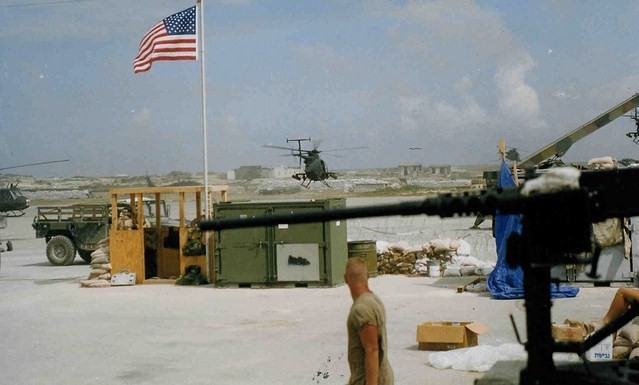
What began as an operation to capture Somali militia leaders escalated into a fierce urban battle. As a result, 18 Americans lost their lives, around 80 were wounded, and one pilot was captured. Two helicopters (including the famous Black Hawk Super 61) and several vehicles were lost.
A US helicopter taking off for a mission on October 3, 1993.
Formally, the operation was deemed successful, as it managed to capture and extract 24 members of the Somali resistance, including Omar Salad and Abdi Hassan Awale, ministers of the so-called “independent government” of General Mohamed Farah Aidid.
However, this success came at a heavy price – the Battle of Mogadishu became a turning point for American policy in Somalia, leading to the decision to withdraw US troops from the country.
The operation near Isfahan will also have far-reaching implications due to its high costs. Once again, Iran has demonstrated that it remains resilient when it comes to potential ground invasions.
Firstly, the US and Israeli air force will find it increasingly difficult to operate freely over Iran; if each downed aircraft costs the US a dozen more, even the US Air Force won’t be able to sustain the mission for long. Secondly, the success of any large-scale special operation deep within Iranian territory now seems highly questionable.
Trump faces a tough decision: he can either escalate military operations against Iran – “bombing them back to the Stone Age,” as he put it, and launching a comprehensive ground operation aimed at dismantling organized resistance – or, following former US President Bill Clinton’s example, he can scale back involvement and withdraw.
The latter option will undoubtedly strengthen Iran and significantly diminish America’s regional influence. And one of the lasting symbols of this defeat would be the charred remains of US military jets and helicopters in Isfahan.