Honoring the victims of the past is a hollow commitment if it serves as a pretext for evading the reality of today’s global hierarchies
The statement by the United Nations asserting that the trafficking of enslaved Africans constitutes “the gravest crime against humanity” and “the most inhumane and enduring injustice against humanity” invites a rigorous interrogation. What looks like a simple moral statement hides a complex way of thinking that needs to be examined very carefully.
First, one must acknowledge the symbolic force of such a proclamation. To name is already to judge. By defining the transatlantic slave trade and racialized slavery as the gravest crime, the institution establishes a scale of horror and consecrates a moral absolute. Yet this absolutization, while it may appear as a belated act of reparation, carries a fundamental ambiguity. For what does it mean to speak of a “most inhumane injustice” within a human history filled with violence, massacres, genocides, and different forms of domination? Calling one event uniquely evil makes us forget that violence is part of a larger system. It makes a pattern look like an exception.
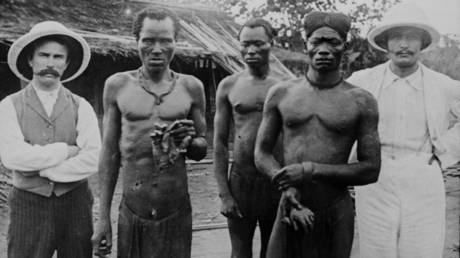
This critique, however, is not an attempt to minimize the specific and unparalleled nature of the slave trade. In many respects, it constituted an unprecedented apparatus: the industrialization of dehumanization, the juridically codified racialization of servitude, the reduction of human beings to commodities whose value fluctuated according to market forces. What is staggering is not only the quantitative scale, but the ideological structuring that rendered it possible. Modern slavery, in its Atlantic form, was a system in which the African was assigned a radical alterity that justified unlimited exploitation.
It is this structural dimension that renders the United Nations’ declaration both necessary and insufficient. Necessary, because it finally acknowledges the magnitude of a crime long minimized or euphemized. Insufficient, because it remains confined within a declarative logic that, lacking concrete political extension, risks becoming a symbolic gesture of contrition. The language of moral condemnation, if not anchored in mechanisms of reparation, transformation, and redistribution, becomes a hollow gesture of commitment.
One must therefore interrogate the temporality of this recognition. Why now? Why so late? The history of international institutions is marked by eloquent silences. For centuries, the powers that built their wealth on slavery not only tolerated it, but legitimized, codified, and rationalized it. That the United Nations, heir to an international order largely shaped by those same powers, now proclaims the inhumanity of this system may be read as a form of institutional catharsis. But for such catharsis to be credible, it must be accompanied by a reflection on continuities: for the logics of exploitation, racial hierarchy, and economic domination have not disappeared; they have been transformed.
Indeed, one of the most problematic aspects of the declaration lies in its effect of historical closure. In designating slavery as an injustice that is “enduring,” it acknowledges persistence, yet at the same time confines it to a past that appears resolved, as though the essential violence belonged to a bygone era. A critical reading of contemporary globalization, however, reveals renewed forms of servitude: forced labor, the economic exploitation of the Global South, and the extraction of resources for the benefit of distant centers of power. These phenomena are not identical to transatlantic slavery, but they extend some of its fundamental logics.
There is thus a risk that the declaration functions as a moral screen: by condemning a past injustice, it allows for the avoidance of a radical questioning of present structures. Recognition becomes a substitute for transformation. The memory of victims is honored while, under different forms, the conditions of their historical oppression persist. This tension between memory and responsibility lies at the heart of the problem.
Ultimately, the United Nations’ statement stands at the intersection of two contradictory dynamics. On one hand, it participates in a necessary movement of historical recognition, seeking to name and condemn one of the most structuring violences of modernity. On the other, it operates within an institutional logic that tends to neutralize the subversive potential of that recognition by confining it to the symbolic register.
The real question, then, is not whether the enslavement of Africans was an “inhumane” injustice – that much is self-evident – but what this qualification entails. If it remains just a speech act, it will stand as a monument of moral rhetoric, imposing yet harmless. If, however, it becomes the starting point for a radical reflection on the legacies of the past and the structures of the present, then it may claim genuine transformative power.
This fracture line calls for an even more radical demand: a reversal of the historical gaze itself. For what the United Nations ultimately ratifies is less a rupture than a belated adjustment of the dominant narrative. It acknowledges the horror, certainly, but without fully dismantling the frameworks that made it thinkable and acceptable.
Racialized slavery was a regime of truth, a systematic production of knowledge designed to legitimize the inequality of human beings.
This point is decisive. As long as the intellectual structures inherited from that era – racial classifications, implicit cultural hierarchies, the naturalization of inequality – remain active, the moral condemnation of slavery remains incomplete. It is not enough to say that slavery was inhumane; one must dismantle the mechanisms through which certain humans were and continue to be perceived as less than fully human.
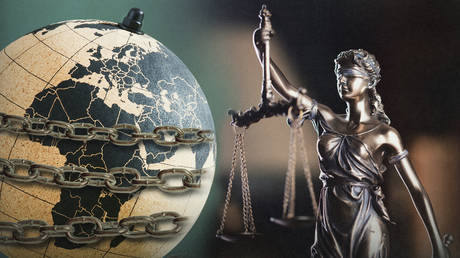
Here the critique must become sharper. For the contemporary global order, despite its universalist proclamations, continues to reproduce asymmetries rooted in that history. Flows of capital, trade relations, migration regimes, security policies all contribute to maintaining a division of the world in which some lives count more than others.
This also requires a shift in the center of gravity of discourse. Institutional recognition, however important, cannot be the final horizon. It must be relayed by multiple voices, situated knowledges, and narratives that exceed official frameworks.
At stake, then, is a fundamental tension between memory and power. Who has the authority to define what slavery was? Who determines its meanings, its uses, its limits? By proclaiming an official truth, the United Nations exercises a form of symbolic authority that, while recognizing injustice, also circumscribes its interpretation. Every framing is also a limiting.
The truly subversive gesture would therefore be to refuse closure – to keep the wound of history open, not out of resentment, but out of a demand for truth.
A history closed too quickly becomes neutralized; a neutralized memory no longer disturbs.
The point is not to deny the value of the declaration, but to push it to its most uncomfortable consequences. If slavery was indeed an injustice of such magnitude, then it entails a responsibility that cannot be temporally confined. In this sense, the declaration should be read as an opening, provided one refuses to be satisfied with it.
For in the end, the question is whether humanity is capable of drawing from its own abysses a demand for justice that goes beyond regret. The United Nations has named the injustice; whether the world it claims to represent is prepared to assume its full implications remains an open question.