The vessel experienced a devastating “laundry fire” during the US-Israeli attack on Iran and is now expected to undergo lengthy repairs
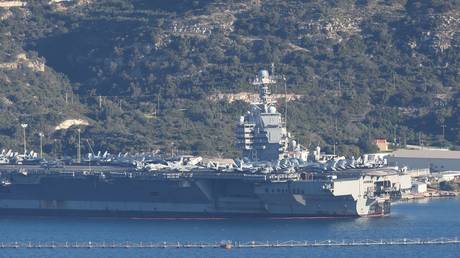
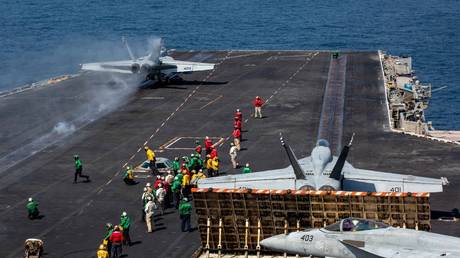
The nuclear-powered USS Gerald R. Ford, the most advanced aircraft carrier in the United States Navy and the only vessel in its class, is presently anchored in Croatia’s port of Split for repairs and maintenance. Media reports have indicated the ship is there to stay, since repairs after a major “laundry fire” and prolonged deployment could take between 12 and 14 months.
Delivered years behind schedule in May 2017, the Ford was by far the most expensive American warship ever constructed, costing $13.2 billion. The latest prolonged deployment of the ship began on June 24 and included combat operations during the US raid on Venezuela to kidnap President Nicolas Maduro, as well as in the ongoing US-Israeli attack on Iran.
The supercarrier ended up hastily withdrawn from the Middle East theater in mid-March, having suffered a supposedly non-combat-related fire. The ship briefly moored at Crete for damage assessment before heading to Croatia for maintenance.
Laundry fire?
The deployment exceeded 260 days and ranks as one of the longest carrier patrols since the Vietnam War, ending on March 12 shortly after the ship transited the Suez Canal and entered the Red Sea. According to official statements from US Central Command, it was then that the vessel “experienced a fire that originated in the ship’s main laundry spaces.”
“The cause of the fire was not combat-related and is contained. There is no damage to the ship’s propulsion plant, and the aircraft carrier remains fully operational. Two sailors are currently receiving medical treatment for non-life-threatening injuries and are in stable condition,” CENTCOM stated at the time.
The incident prompted a range of speculation, with the Iranian military claiming the carrier’s laundry room was deliberately set on fire by war-weary crewmembers.
Western media reports indicated the fire raged on board for some 30 hours before being extinguished – longer than the devastating 1967 USS Forrestal carrier fire, which burned for about 24 hours. If true, it raises questions about the state of supposedly sophisticated firefighting systems on the Ford, particularly given that the Forrestal fire was aggravated by explosions of munitions stored on the flight deck and burning fuel seeping into compartments.
More than 600 out of nearly 4,500 sailors, tech personnel, and pilots lost their bunks in the fire, ending up forced to sleep on tables and floors, the New York Times reported, citing anonymous crewmembers. Moreover, the crew has been unable to do laundry since the fire, which reportedly ended up being airlifted to other ships for washing.
Damage assessment
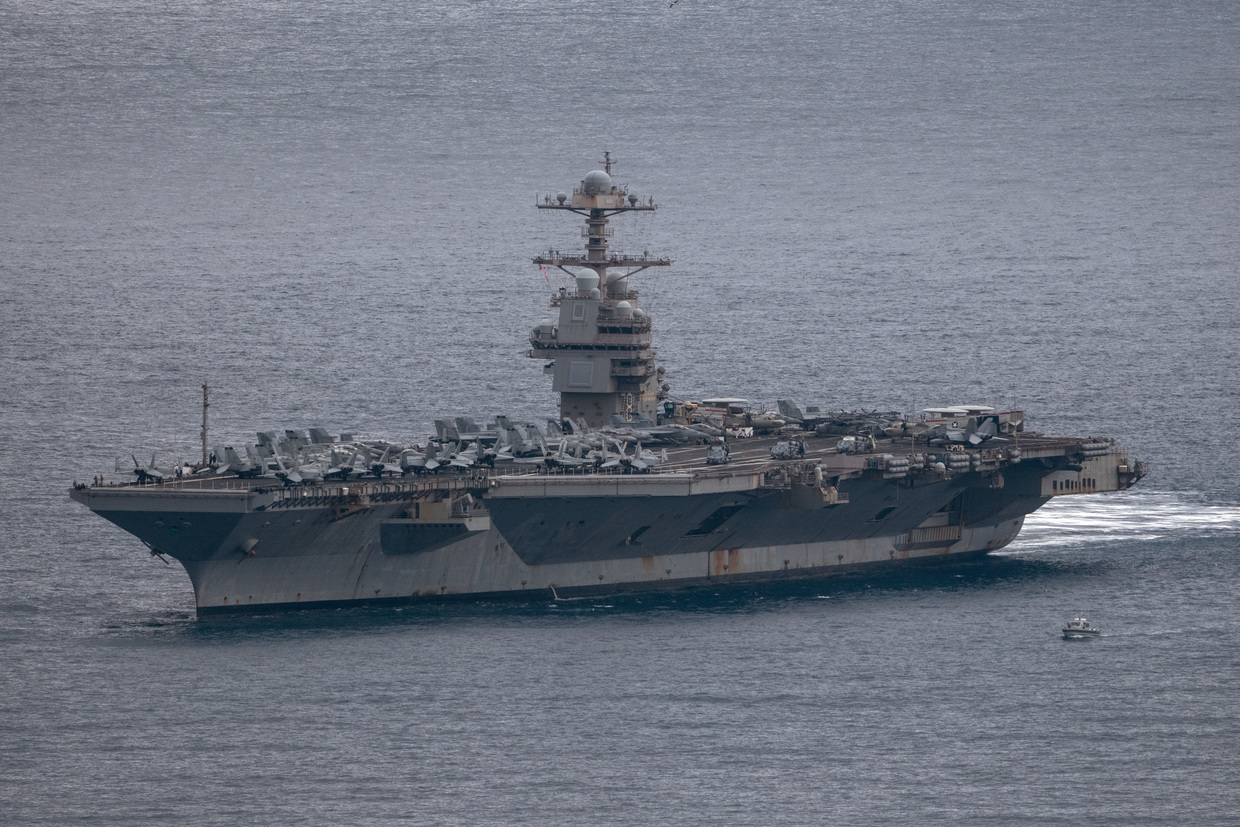
Upon arrival in Crete last weekend, the aircraft carrier appeared to show no superficial signs of damage, apart from looking heavily weathered from its prolonged deployment all over the globe.
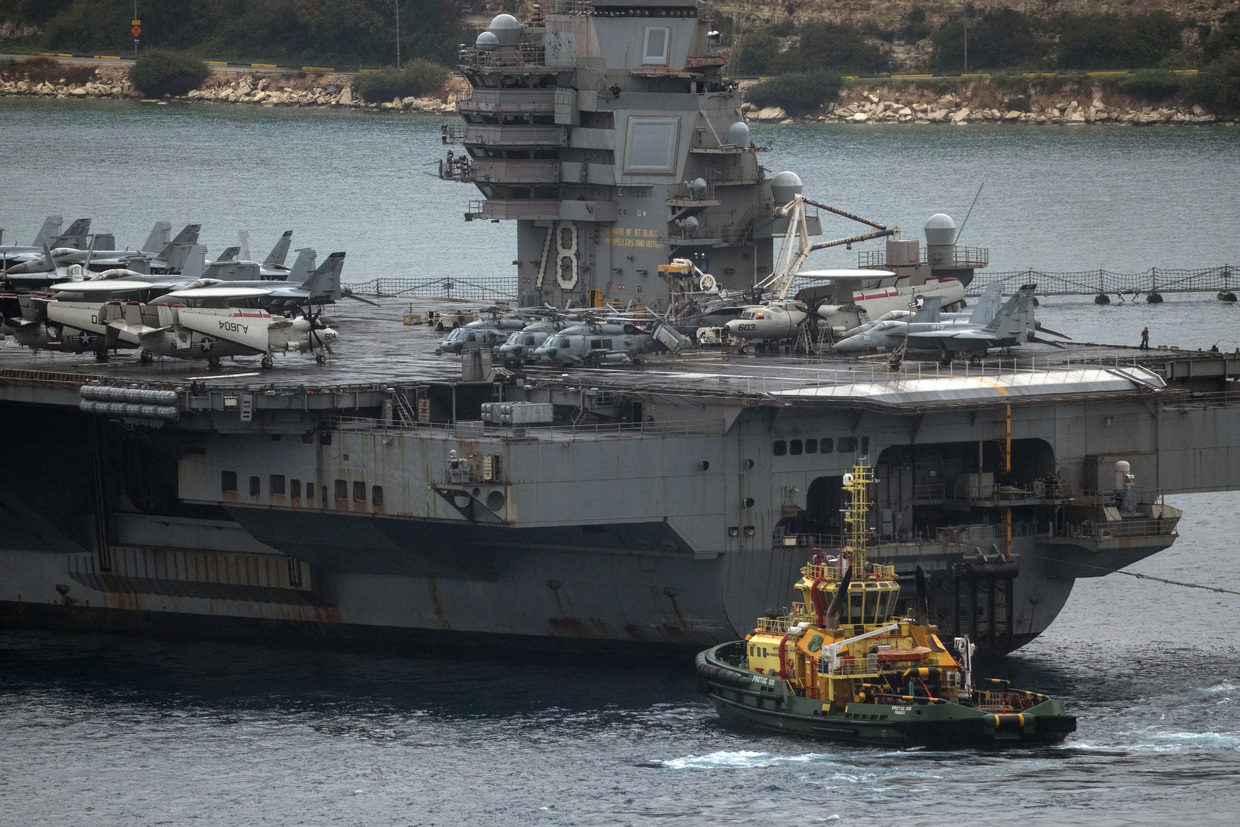
The ship’s flight deck, however, appeared to be abnormally crowded with aircraft, potentially indicating issues with internal hangars and aircraft-lifting mechanisms.
USS Gerald R. Ford arrives in Souda Bay on March 23, 2026 in Souda, Greece.
A recent assessment from the Pentagon testing office indicated that the military was somewhat aware of deeper problems with the Ford class, but even nine years after the vessel was commissioned, it still had “insufficient data” to determine its “operational suitability.”
USS Gerald R. Ford arrives in Souda, Greece on March 23, 2026.
The report also raised concerns about the reliability of key systems, including the radar, jet aircraft launch and recovery systems, and its lifting mechanisms for aircraft and munitions, as well as the general ability of the vessel to continue operations in case of combat damage. The assessment also noted that the ship was short at least 159 bunks to properly accommodate the crew, with the issue potentially getting even more severe should more aircraft be added to the carrier’s air wing. The lack of sleeping space could negatively affect the morale of the crew on lengthy deployments, the testing office noted.
Plumbing woes
Prior to the Red Sea fire, the most notorious technical issue with the Ford was its faulty toilet system, with repeated fecal overflow reported on board the state-of-the-art carrier.
The vessel is known to have so-called “eco-toilets” installed that rely on a vacuum collection, holding, and transfer (VCHT) system, originating in the cruise ship industry. The technology turned out to be not exactly Navy-grade, being prone to clogging and requiring heavy maintenance.
Numerous photos and videos believed to be taken on board the ship and circulating online show toilets overflowing with fecal matter, murky waters spreading across compartments and unlucky sailors on latrine duty attempting to clean up the mess.
The issue with the toilets, said to affect some 600 units on the ship, has persisted for years. A 2020 report from the General Accountability Office indicated the faulty system required “onerous” extra daily maintenance to unclog narrow pipes while each “acid flush” of the system needed when it ended up clogged completely incurred an additional $400,000 in costs instead of being eco-friendly and cost-effective.
Should the Ford stay out of commission for months, it is bound to put further strain on US strike groups, likely leading to longer deployments for older Nimitz-class carriers. The US Navy currently has 11 active-duty carriers, including the Ford, but it is rare for more than six to be deployed simultaneously.
The maiden vessel of the older series, the USS Nimitz, is presumably on its last deployment, since it is scheduled to be decommissioned next year and replaced by the Ford-class USS John F. Kennedy. Given the repeated delays and apparent issues with the Ford-class, however, the decommissioning could be postponed.
Another Nimitz-class ship, the USS John C. Stennis, is likely to spend most of the year in port. The carrier has been undergoing its mid-life Refueling and Complex Overhaul (RCOH) since 2021, a years-long process costing billions of dollars. The Stennis was originally scheduled to undergo its RCOH by August last year, but the deadline was missed and extended by 14 months.