The group announced it will join the ongoing hostilities as the US-Israeli attack on the Islamic Republic enters its second month
The Yemeni-based Houthi movement on Saturday announced its formal entry into the conflict in the Middle East. The group has proclaimed its full support for Iran and other “resistance” factions across the region faced with US-Israeli aggression.
The group condemned the “atrocities” committed by the US, Israel, and their allies in Lebanon, Iran, Iraq, and Gaza, pledging to begin military operations against the aggressors. The Houthis have also warned any third nations against joining the attacks on Iran, as well as against using the Red Sea for taking hostile actions against the country.
RT looks into the group’s long record of armed conflict and its warfighting capabilities.
Who are the Houthis?
The group, known officially as Ansar Allah, emerged as a Zaydi (Fiver Shia) revivalist movement in northern Yemen in the mid-1990s. The country was ruled by Zaydi imams for over 1,000 years before they were ousted in the 1962 republican revolution. Since then, Yemen has been plagued by repeated civil conflicts between the Zaydi-dominated north and Sunni-majority south.
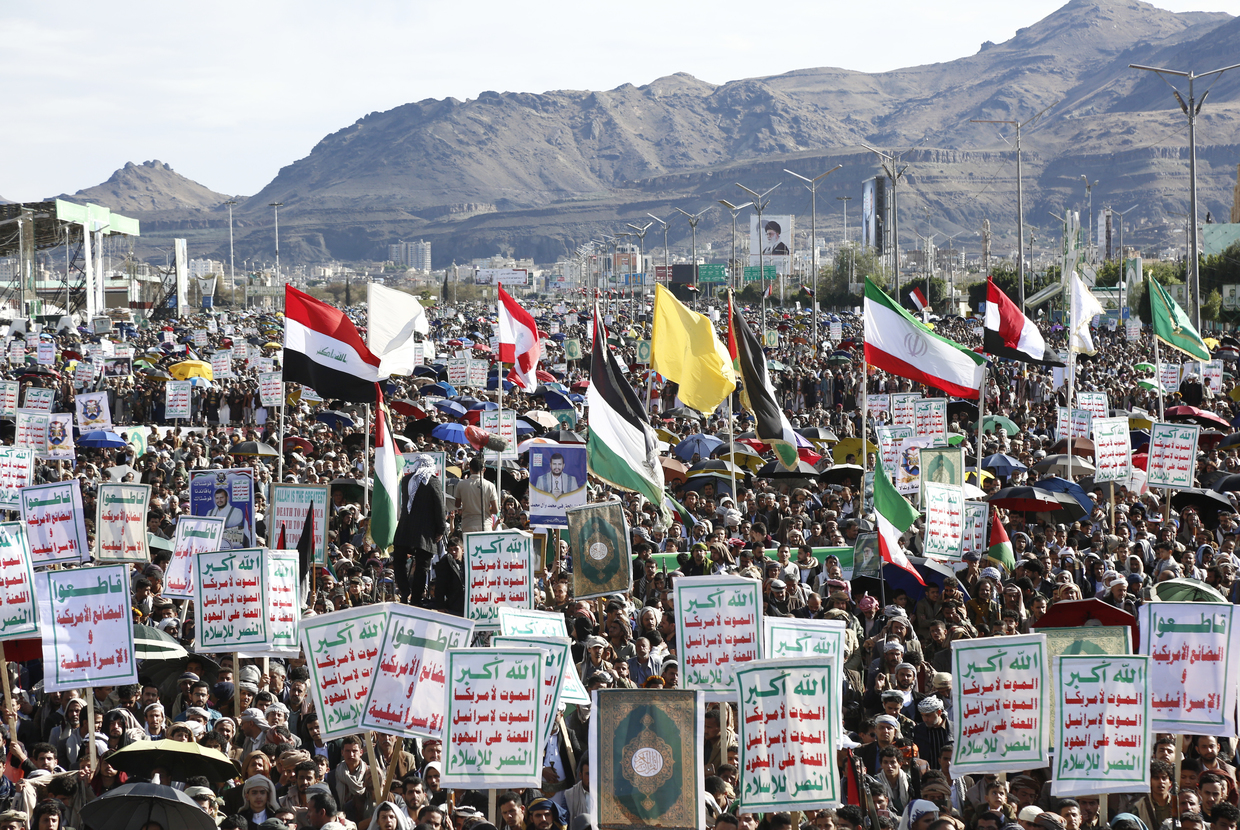
Ansar Allah, founded by Yemeni politician and Zaydi religious leader Hussein al-Houthi, has long been regarded as part of Iran’s ‘Axis of Resistance’, having adopted a strong anti-Israeli and anti-US stance in the early 2000s. At the time, the group coined its notable slogan, the Sarkha, which reads, “God is great, Death to America, Death to Israel, Curse on the Jews, Victory to Islam.” The slogan, stylized as a vertical red and green banner, is commonly displayed at Houthi mass rallies, utilized in propaganda, and used as a war cry.
Yemen’s Houthi loyalists participate in a protest against the US-Israel war on Iran in Sana’a, Yemen on March 27, 2026.
The group eventually found itself at odds with then-President Ali Abdullah Saleh, a longtime North Yemen leader, who managed to defeat the southern secessionists and reunify the country in the early 1990s. While the Houthis were wary of Saleh, a Zaydi himself, over his close cooperation with Saudi-backed hardline Sunni Islamists, the president regarded them as a threat to his rule and alleged the group sought to establish a new Imamate.
Two decades of continuous conflict
The tensions between Saleh and Ansar Allah devolved into an open conflict in 2004, prompted by the government’s attempts to arrest the movement’s leader, with civil strife and, ultimately, a full-blown civil war plaguing Yemen ever since. During the string of conflicts, Ansar Allah has shown a remarkable resilience and ability to hold out against numerically and technologically superior foes – and win against them.
The group’s leader and founder, Hussein al-Houthi, was killed early in the hostilities, and was succeeded by his brother, Abdul-Malik al-Houthi, who leads the movement to date. Despite repeated attempts to defeat the rebels with large-scale military assaults, bombing campaigns, and foreign, primarily Saudi, help, the Yemeni government was unable to do so. The Houthi insurgency, coupled with the events of the Arab Spring, ultimately led to Saleh’s downfall in 2012.
Aggravated by foreign intervention, the conflict in Yemen continued to escalate after the group moved to oust Saleh’s successor, Abdrabbuh Mansour Hadi, and took over the country’s capital city of Sanaa in 2014. Hadi, who had served as vice president under Saleh for over two decades, enjoyed broad support among the Gulf states but was opposed by both Houthis and re-emerged southern secessionists.
Ansar Allah found itself in conflict with multiple opponents, including a broad Saudi-led coalition seeking to reinstate the internationally recognized Hadi government; southern secessionists backed by the UAE; as well as Sunni jihadist groups, including local offshoots of Al-Qaeda and Islamic State (IS, formerly ISIS). The situation in Yemen has been further aggravated by sporadic bombing campaigns by the US and its allies staged under the pretext of fighting jihadist groups, as well as in response to the Houthi attacks on Israel amid the war in Gaza.
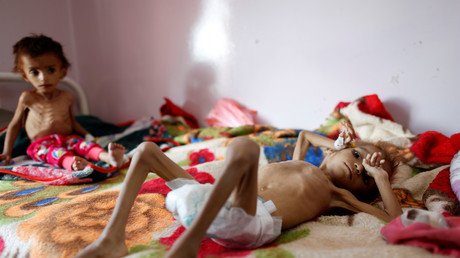
The Houthi-held regions were subjected to strict naval and land blockades, which led to famine in the northern parts of the war-torn country, as well as to an indiscriminate aerial bombing campaign, which repeatedly inflicted mass casualties on civilian gatherings, including weddings and funerals.
Following the Sanaa takeover, the group ended up temporarily aligned with its former arch-rival, ex-President Saleh, and remnants of the country’s military still loyal to him. The alliance ended in late 2017, when Saleh attempted to break ranks with the Houthis, expressing readiness to cooperate with Saudi Arabia and the UAE. Week-long clashes in the capital resulted in a decisive Houthi victory despite initial successes of the insurrection and heavy coalition bombing in its support, with the ex-president ambushed by the militants and killed.
Ansar Allah ultimately managed to fight the coalition and its other adversaries to a standstill, winning the largest battle of the war in 2018 and holding the only major port under its control, Al Hudaydah, against a large-scale offensive of pro-Hadi forces. The movement’s stance was further reinforced by a campaign of long-range strikes against Saudi Arabia’s oil industry and military installations.
The fighting eventually waned amid a series of UN-brokered truces, with Saudi Arabia and Ansar Allah entering a ceasefire in early 2022, which still stands. Yemen remains split roughly along the lines it had fractured before, with the Houthis controlling territories housing between 70 and 80% of the country’s estimated population of at least 34.7 million.
Long-range strike capabilities
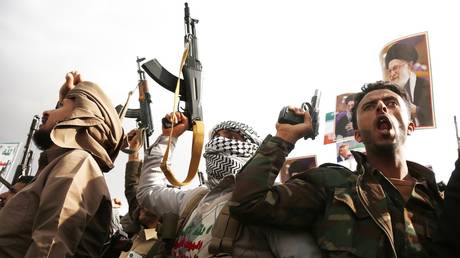
Ansar Allah is known to possess considerable long-range strike capabilities, including ballistic and cruise missiles, as well as assorted kamikaze drones. While the bulk of the munitions in the group’s inventory are believed in the West to be of Iranian origin, the Houthis have repeatedly claimed to operate domestically designed and built weaponry.
The group has repeatedly targeted Israel with long-range munitions in the wake of the Gaza war. While the activities have somewhat waned in recent months, the group renewed its attacks on Israel immediately after the announcement it would join the hostilities in the Middle East on Iran’s side.
The extent of damage inflicted by the Houthis on Israel over the past two-and-a-half years is debatable, largely due to a lack of independently verifiable evidence. Israel has imposed strict censorship on publicizing footage of anti-aircraft defense work and damage on the ground.
Long-range strikes carried out by the Houthis at the height of the Saudi-led invasion of Yemen, however, have proven that the group’s weaponry is capable of penetrating the most sophisticated anti-air defenses and inflicting damage on the ground.
In September 2019, for instance, Ansar Allah launched successful attacks against Saudi oil facilities, inflicting heavy damage on an Aramco factory in Abqaiq, the world’s largest crude processing plant.
Bab-el-Mandeb blockade looms?
While the Houthis’ capabilities to inflict damage on Iran’s enemies are still to be seen, the group likely retains great naval interdiction potential. Amid the Gaza war, the Houthis have waged a campaign against shipping linked to Israel and its allies in the Red Sea, particularly in the Bab-el-Mandeb Strait and the Gulf of Aden, the southern maritime gateway to the Suez Canal.
The group has targeted around a hundred cargo ships in the waterway since November 2023, damaging at least 40 vessels and sinking four. The campaign has caused disruptions to global traffic, with numerous ships diverted from the Suez Canal to sail around Africa, incurring higher costs and delaying deliveries by weeks.
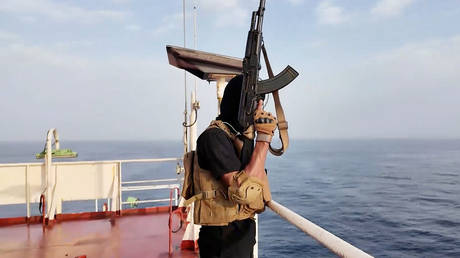
Ansar Allah has used a vast arsenal of different weapons during its maritime campaign, including anti-ship and ballistic missiles and aerial and water kamikaze drones, and even attacked some of the vessels up close from speedboats. The Houthis suspended their activities in October last year after a shaky US-brokered ceasefire was implemented in Gaza between Israel and Hamas.
The group could now potentially resume its attacks on international shipping in the waterway after entering the war in support of Iran. With traffic through the Strait of Hormuz disrupted, the potential development seems certain to drive oil and commodity prices even higher, as well as have a broader impact on the global economy.