Behind Trump’s rhetoric lies a search for strategic pause, political cover, and a way to contain rising costs
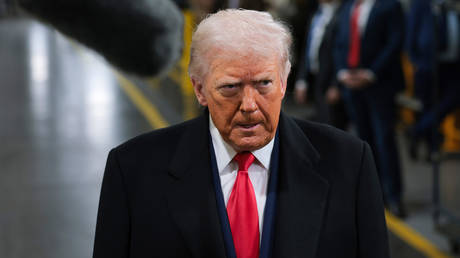
In recent days, there has been a noticeable shift in US President Donald Trump’s rhetoric regarding Iran. Less than a week ago, Trump issued a 48-hour ultimatum to Iran, threatening strikes against Iran’s energy infrastructure if it refused to unblock the Strait of Hormuz. Now, Trump has expressed openness to negotiations and even claims that some contact with the Iranian side has taken place. This rhetorical shift may not reflect a genuine diplomatic process but could be part of an information strategy. After it became clear that Tehran was unwilling to make concessions and was unresponsive to Trump’s coercive pressure, the US attempted to make it look like the Iranian side was the one suggesting talks.
Israeli news outlet Ynet claims that Iranian Supreme Leader Mojtaba Khamenei has agreed to negotiate with the US. However, no credible evidence has surfaced to back this, raising questions about the sources of the information and its purpose. Given the current dynamics, these reports can be seen as propaganda aimed at crafting an image of Iran as vulnerable and eager for urgent dialogue with Washington. These interpretations might serve to reinforce the narrative of Tehran’s weakening position.
In Tehran, this is perceived as an attempt to influence global energy markets. Public signals from the US, particularly from Trump, affect oil and gas price dynamics, especially amid tensions surrounding the Strait of Hormuz – a critical artery for global hydrocarbon supplies. In this context, talk of negotiations can be viewed as a tool for stabilizing expectations and reducing market volatility.
Iranian society and elites remain skeptical about negotiations with the US. Based on past experiences, Iran believes that diplomatic agreements with Washington do not lead to long-term de-escalation and are often followed by increased pressure or an escalation of the conflict. In the current situation, Iran maintains that its position does not necessitate immediate negotiations. Furthermore, within the regional landscape, Iran possesses the capability for asymmetric influence, utilizing allied actors and indirect means of leverage.
It’s also quite possible that Trump’s signals about purported or existing contact with the Iranian leadership serve not only foreign policy goals but also internal political goals. Specifically, they may aim to sow distrust and competition within Iranian elites through leaks about ‘secret negotiations’ and hints about individuals potentially open to dialogue. This strategy aligns with the logic of psychological and information warfare: Creating an atmosphere of suspicion, questioning the loyalty of certain political and military leaders, and undermining consensus on key foreign policy issues.
The unity of the political, military, and religious establishments is a crucial factor in Iran’s resilience in the conflict. In this context, the narrative about an ‘internal divide’ can be viewed as an attempt to inflict damage, and its consequences may prove more significant than direct military pressure.
Amid the talk of supposed negotiations, however, it’s interesting to consider potential political figures that could engage in talks. According to the US, one candidate might be Speaker of Parliament Mohammad Bagher Ghalibaf, one of the most influential players in the Iranian political landscape. Ghalibaf occupies a unique position within Iran’s power structure. On the one hand, he represents the parliament, a key institution of political legitimacy that plays a vital role in balancing the interests of various elite groups. On the other hand, he has solid ties with both the Islamic Revolutionary Guard Corps (IRGC) and the country’s religious leadership, making him a possible link between the military, political, and spiritual centers of decision-making. In the absence of formal dialogue channels between Washington and Tehran, these types of figures gain considerable importance as potential informal negotiators.
Officially, however, Tehran denies having any sort of negotiations. Ghalibaf’s office has already stated that no negotiations with the US are taking place or are planned. This position aligns with Iran’s traditional diplomatic practice aimed at minimizing external pressure and maintaining an image of strategic autonomy. Public denials of negotiations do not preclude the existence of private communication channels, but they underscore Iran’s reluctance to acknowledge any dialogue on terms dictated by the US. Moreover, even for moderate Iranian politicians, engaging with Trump would be seen as an act of betrayal; if Tehran were to agree to talks, it would likely require the explicit approval of the supreme leader and the IRGC, who currently protect the integrity of Iran’s system.
If any contact does take place, it is likely to be conducted through intermediaries. In this regard, countries like Oman, which have experience mediating US-Iran discussions, traditionally play a significant role. Pakistan, too, could leverage its regional connections and channels of interaction with Iranian elites. This multilayered diplomacy allows parties to maintain maneuverability without making public commitments. Notably, Oman has been one of the few Gulf monarchies to speak out candidly, accusing the US and Israel of unwarranted aggression.
Strategic calculations: Why Washington talks and Tehran waits
The critical question, however, is to what extent these negotiations align with Iran’s current interests. Judging by the rhetoric and behavior of the Iranian elites, there appears to be a growing conviction in Tehran that the country has adapted to the hostilities with the US and its allies, including Israel. Furthermore, Iran believes that a prolonged conflict will undermine Washington’s international credibility, revealing its limitations in achieving strategic objectives.
In this context, the prolongation of the conflict becomes a calculated strategy. The longer the war persists, the greater the costs for the US. And it’s not just about military expenses but also political, economic, and reputational repercussions. For the Trump administration, this means finding a balance between displaying strength and avoiding a full-scale escalation (whether through a ground operation or even nuclear strikes) that could lead to uncontrollable consequences. Therefore, increased rhetoric regarding negotiations can be seen as an attempt to solidify an interim outcome and prevent an escalation of the conflict.
From this perspective, a logical contradiction arises: If the US were to achieve decisive success, there would be no real need for negotiations. After all, there’s no point in negotiating with a defeated adversary. Thus, the very initiative for dialogue indirectly suggests that Washington does not hold a definitive advantage and seeks a way out of the situation with the least possible costs.
As for Iran, it shows readiness to play the long game. By refusing direct negotiations but theoretically keeping the door open for dialogue, Tehran maintains strategic flexibility. This position allows Iran to increase pressure while waiting for more favorable conditions in the future. Given that each day of the conflict escalates costs for the US, this strategy can be viewed as rational and aligned with the long-term interests of the Iranian leadership.
In the context of the current crisis, Washington’s persistent push for talks with Tehran can be explained by at least three strategic motivations. All three don’t have to be in play simultaneously; one of these motives is enough for the White House. In this light, Trump’s negotiation rhetoric isn’t so much a sign of diplomatic optimism as a tool for flexible maneuvering, especially as military efforts have not yielded quick or clear results, and Iran continues to dismiss claims of direct dialogue.
The first motivation might be that Washington needs negotiations as a tactical pause, allowing time to regroup, disorient Iran, and prepare for the next phase of military pressure. This hypothesis seems plausible, particularly since the current phase of the conflict has already exposed the limitations of America’s initial calculations. Notably, Trump’s decision to take a step back following threats against Iranian energy infrastructure came amid warnings from the Gulf Arab states and an acknowledgment of the potential scale of retaliatory actions. In this light, the negotiation agenda could serve the classic function of an operational pause: Regrouping forces, reassessing Iran’s capabilities, replenishing supplies, and refining coalition structures before the next phase of escalation.
The second motivation for the talks is that Trump may genuinely be seeking a way to end the war without appearing politically defeated. He may want to exit the crisis with minimal reputational damage. This scenario doesn’t seem far-fetched either. Amid ongoing strikes, the deployment of additional US forces in the region, and no clear signs that Iran is about to capitulate, negotiations become a means to declare at least partial success. For Trump, this is particularly important.
A prolonged conflict escalates costs across multiple fronts: From increasing pressure on energy markets, to rising anxiety among allies in the Persian Gulf, growing doubts about the effectiveness of the US strategy, and growing domestic criticism. In this context, Trump may seek to frame de-escalation as his own diplomatic triumph, shifting blame for military miscalculations onto those directly involved in executing the strategies. This tactic is familiar in American political practice; when operations don’t yield expected results, presidents often try to protect their political capital by deflecting scrutiny away from themselves and directing it toward members of their administration. Trump’s recent mention of Secretary of War Pete Hegseth in relation to the conflict shows that the White House is already crafting a narrative in which Hegseth could potentially be turned into a scapegoat responsible for any failures.
A third reason to initiate talks might involve buying time to encourage regional partners, particularly Saudi Arabia and the UAE, to become more actively engaged in the conflict, thereby forming a broader anti-Iran coalition. However, it’s important to note that there’s currently no clear indication that Riyadh or Abu Dhabi is prepared to join the fight alongside the US; in fact, the Gulf states have warned Washington about the risks of catastrophic backlash and the vulnerabilities of their own infrastructures. Nevertheless, from a strategic standpoint, the idea of expanding the coalition makes sense. The more players involved, the lower the cost of America’s participation; also, it would be easier to present the conflict not merely as a bilateral US-Iran confrontation, but as a collective effort to ‘restore regional stability’. In other words, the pause taken for negotiations may not only serve a diplomatic purpose, but may also be used for recalibrating the regional political-military front.
Taken together, these factors lead to an important conclusion: Trump’s talk about negotiations indirectly suggests that Washington lacks the decisive superiority needed to impose its terms on Iran without engaging in an intermediate political phase. If America were truly in a position of indisputable dominance, it wouldn’t need to urgently promote the idea of negotiations.
Therefore, America’s push for diplomacy is not a sign of success; rather, it indicates that the war has proven to be more costly, complex, and politically sensitive than initially anticipated. This apparent realization likely drives Tehran’s strategy of prolonging the war: Every additional day of conflict raises the costs of the US operation in military, economic, and reputational terms, thereby strengthening Iran’s negotiating position.