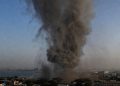
As conflict threatens the Strait of Hormuz and Brent spikes above $100, New Delhi leans on Russian crude, diversified suppliers and state buffers to keep fuel flowing and prices in check
At India Energy Week 2026 in January, the key event for the country’s oil and gas industry, officials signaled a confident assertion of India’s place in global energy: not only as the world’s third-largest energy consumer, but as a pragmatic actor in an increasingly unstable system.
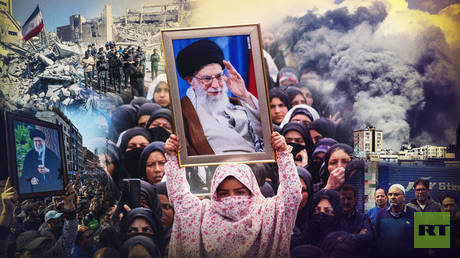
Weeks later, the widening US–Israel-Iran conflict and renewed risk around the Strait of Hormuz began testing that claim in real time.
For India, the shock is immediate: higher freight costs, costlier insurance, exposed sea lanes and pressure on the import bill. Yet the same crisis has also reinforced the logic of India’s evolving strategy: diversification across suppliers, strategic reserves, flexible diplomacy and a refusal to reduce energy security to bloc politics.
Brent crude, which had been trading around the low $70s before the crisis accelerated, moved through the $80s and $90s before briefly touching $119.50 a barrel on March 9, then fell back to $92.45 on talk of de-escalation and coordinated stabilization efforts. The episode underlines that today’s oil risk is less about headline supply and more about the insecurity of routes and chokepoints.
Demand anchor in a risk-prone oil order
India’s centrality to oil markets is no longer in question. In its Indian Oil Market Outlook to 2030, the International Energy Agency (IEA) projects that the South Asian nation will be the largest source of global oil demand growth this decade, adding roughly 1-1.2 million barrels per day of demand by 2030 and accounting for more than one‑third of net global growth.
That trajectory is already visible in domestic consumption, where petrol, aviation turbine fuel and LPG remain key drivers of rising oil use.
This demand profile gives India weight, but it also magnifies vulnerability. The country still depends on imported crude for the overwhelming majority of its needs, and petroleum product consumption at around 20 million tonnes a month means even modest changes in crude prices, freight rates or insurance premia can quickly spill over into inflation, fiscal calculations and household budgets.
Hardeep Singh Puri has warned that India, which is expected to to be responsible for about 35% of global energy demand growth, now faces wartime realities: higher crude risk premia, costlier tanker insurance, fragile sea lanes and increased reliance on oil imports, up to 88%.
The Hormuz risk makes this concrete. The US Energy Information Administration estimates that around 20.9 million barrels per day of petroleum liquids moved through the Strait of Hormuz in 2023, equivalent to about one-fifth of global petroleum liquids consumption; for India, roughly 40% of its oil normally comes from the Middle East through this chokepoint, according to estimates by S&P Global.
War‑risk premiums that typically sit near 0.25% of a vessel’s value are now expected to climb past 0.5%, adding $200,000 or more to the cost of a single large tanker voyage, so it is not only crude prices that jump but the very cost and predictability of moving oil across the world.
Even so, the domestic transmission of the global price spike has so far been moderated. Despite crude briefly crossing $100 per barrel during the latest escalation, retail petrol and diesel prices in India are unlikely to rise immediately as state-run oil marketing companies are expected to absorb part of the shock in the near term.
Officials indicate that these firms built a financial cushion during earlier periods of relatively stable crude prices, allowing them to temporarily shield consumers from abrupt price volatility while the government monitors global developments.
Diversification, Russian crude, and the Hormuz shock
India’s response to the new oil order has been diversification. Before 2022, Russian crude accounted for roughly 2% of India’s oil imports. By mid-2023, Russia had become India’s largest single supplier, at times reaching around 40% of the crude basket, helped by discounted Urals that improved refinery margins and tempered the import bill.
Bilateral trade expanded from about $13 billion before the Ukraine crisis broke out to nearly $68 billion in 2025. Crucially, this shift did not replace the Gulf: imports from Iraq, Saudi Arabia, Kuwait and the UAE still account for roughly two‑fifths of India’s crude basket, while India has also kept channels open to US crude and LNG, and opportunistic purchases from West Africa and Latin America.
What has changed is not dependence in a narrow sense, but strategic optionality, the ability to shift supply sources when geopolitical shocks disrupt traditional routes.
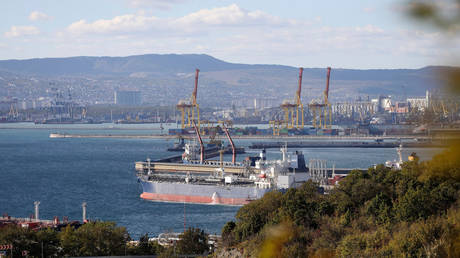
That optionality now matters. In recent weeks, Indian refiners have reportedly secured an additional 6 million barrels of Russian crude for March delivery, helping offset tightening supplies from parts of the Middle East as the Iran conflict intensified. Industry reports suggest Russia could redirect up to 9.5 million barrels toward Indian waters, offering a temporary cushion if shipping through Gulf continues to be disrupted. A meaningful share of this crude already travels on routes that bypass the Strait of Hormuz, including via the Suez Canal or longer Arctic and Atlantic corridors, reducing, but not eliminating, India’s exposure to that chokepoint.
This is also why Washington’s much‑discussed 30‑day waiver should be read as a tactical detail, not a strategic pivot. The waiver applies to specific Russian cargoes already loaded and in transit before tighter restrictions took effect, smoothing transactions and reducing compliance uncertainty for shipments already at sea.
Equally important, India is not relying on the waiver alone. Government sources told Reuters that New Delhi is not planning to join an IEA‑led coordinated reserve release, judging current reserves sufficient. Strategic petroleum reserves of 5.33 million tonnes, with about 4 million tonnes currently held, plus commercial stocks across refineries and depots, are limited but enough to buy time in a crisis driven by shipping disruptions. India would be using this time to lean on diversification rather than emergency stock draws.
Strategic autonomy, institutions and shared stability
This is where India’s energy strategy becomes clearer: it is neither anti‑Western nor anti‑Gulf, nor simply a hedge toward Russia, but a pragmatic approach to risk management through diversification.
During the Ukraine phase of the oil market upheaval, discounted Russian crude is estimated to have saved India roughly $13 billion over two financial years, while higher refinery utilisation enabled exports of refined products to markets facing shortages. In the current Middle East crisis, the same logic applies: diversified sourcing, flexible shipping routes and pragmatic diplomacy help India absorb external shocks while keeping supply chains functioning. This is not defiance for its own sake; it is strategic autonomy in operational form.
The same pragmatism shapes India’s institutional engagement. New Delhi works through the G20, engages OECD‑linked processes, and expands South-South cooperation via BRICS energy dialogues and the International Solar Alliance. At home, India seeks to reduce long‑term hydrocarbon exposure through renewable expansion, domestic exploration, gas development and a growing critical‑minerals strategy, gradually weakening the link between any single geopolitical shock and macroeconomic stability. At the same time, major consuming economies are trying to stop the present crisis from becoming systemic: the IEA has urged G7 governments to consider coordinated releases of emergency oil stocks, while OPEC+ has signaled reassurance through a 206,000‑barrels‑per‑day production increase.
The message is clear: stabilizing oil markets today requires production policy, reserve diplomacy, maritime security and coordinated crisis management. India, therefore, is not merely exposed to this fragmenting oil order; it is actively learning to operate within it.