April 11, 2026, 10:00 am
Author – Theia Chatelle
Eyal Adom, head of security for an Israeli community on the border with Lebanon, has a clear vision for the land just a few hundred meters away.
“I want to occupy,” he told The Intercept. “Yes, occupy, the word nobody likes. I want to occupy southern Lebanon. Move all the Arabs from there, up to the Litani River.”
We’re sitting in the command and control center in Moshav Netu’a, a village so close to the U.N.-brokered “Blue Line” separating Israel and Lebanon that one can see the physical barrier from the windows of many homes. Here, amid a temporary pause in fighting between the U.S.–Israeli alliance and Iran, there’s no sense of peace.

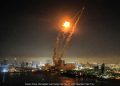
Under muddied terms for the two-week ceasefire with Iran, Israel has kept fighting Hezbollah in Lebanon, launching an all-out war on the country’s armed elements and civilians alike. The Israeli military bombed villages and ordered more than 1 million Lebanese civilians to evacuate from the south, territory that is often viewed as Hezbollah’s stronghold due to its significant Shia Muslim population and weapons caches. Israel blew up bridges linking the north and the south of Lebanon. In defiance of previous ceasefire conditions set in November 2024, Hezbollah forces that were supposed to retreat north have remained in the south, and Israeli forces continued to hold five “strategic” hilltops in the north, accumulating more than 10,000 total ceasefire violations.
“The Arabs’ only motivation to stop fighting is if you take their land.”
For the residents of Netu’a, Hezbollah is a problem to be solved, and one to fix with military power.
“The Arabs’ only motivation to stop fighting is if you take their land,” Adom said. “You kill them, it doesn’t matter. You hurt them, it doesn’t matter. Nothing matters. Only taking territories. This is the only thing that matters to them.”

At least seven Netu’a residents told The Intercept that they see the eviction of Lebanese civilians as the only sure way to prevent their own displacement. After October 7, 2023, fearing a follow-on attack by Hezbollah, the Israeli government evacuated kibbutzim and other settlements near its border with Lebanon, including Netu’a, scattering families in hotels across the country.
The evacuation was “like a piece of gum being pulled apart,” said Oranit Manasseh, a mother of four who lives in Shtula, another kibbutz on Israel’s border with Lebanon. “That is what happened to our community, day after day that we were living in hotels away from the kibbutz.”
Manasseh and her children have since been able to return to their home, which was not damaged during the evacuation. When she spoke to The Intercept, the family was staying at a villa in Shtula that would normally host tourists for holidays like Passover but has been sitting largely empty since October 8, 2023, with few Israelis wishing to visit the north for a vacation with incoming missile fire.
Manasseh’s hope, she told The Intercept, is that the Israeli military “depopulate the south, get rid of Hezbollah, and keep the terrorists out.”
“Depopulate the south, get rid of Hezbollah, and keep the terrorists out.”
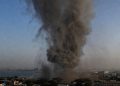
Israel’s actions suggest it’s headed in that direction. On Wednesday, in the span of 10 minutes, Israel struck Lebanon more than 100 times, killing at least 300 people. This was the deadliest single incident since the end of Lebanon’s civil war in 1990. According to reporting from the Financial Times and confirmed by the Lebanese Ministry of Public Health, more than 100 women, children, and elderly were killed in the strikes, including two journalists and four Lebanese army soldiers.
Part of the justification for Israel’s war on Hezbollah is the view that it is the only way to establish a security buffer to protect communities in the north situated on Israel’s border with Lebanon.
Much like October 7th catalyzed Israeli society’s calls for the war on Gaza — in which Israel killed, according to conservative estimates, 70,000 Palestinians and over 700 more since the oft-violated ceasefire went into effect last year — there are calls to reduce southern Lebanon to rubble.

They either “crush Hezbollah so that the Lebanese government can disarm, and keep the south free of terrorists,” said another member of Netu’a’s security patrol, or they will have to evacuate again in the future, and it will rip their communities apart.
Israel’s border communities are often referred to as the “periphery.” Looking out from Netu’a, one can see a string of Israeli military outposts situated on the Blue Line, which the U.N. established in 2000, erecting a border wall like the one that cordons off the West Bank. Far from the metropolitan centers of Tel Aviv and Jerusalem, these communities occupy a particular place in Israeli politics, and according to residents who spoke with The Intercept in these communities, there is a consensus that they feel forgotten in the wake of October 7.
“I think the government doesn’t do enough for this area. Israel is like a golden cage,” Manasseh said. “You love it, but we are not safe here anymore.”

These “periphery” residents are working to leverage their political influence to end the “Hezbollah problem,” partly by staying in their communities during this war instead of evacuating, forcing the Israeli military to either protect them or admit they can’t.

This is also part of what is driving the Israeli military to establish a “security zone” south of the Litani, in the words of National Security Minister Itamar Ben-Gvir, to “protect” the communities in the north and spare them from another round of evacuation. Israel’s Home Front Command, which is responsible for setting civilian protection guidelines during wartime, announced that because of its strikes on Lebanon, the government would extend the time for Israeli civilians to enter shelters after an alert from zero seconds to 15, due to a partial withdrawal of Hezbollah forces north.
“We all understand that if they reach our borders, it won’t stop there,” said Hila Kronos, who just finished a round of reserve duty in the Israeli military and has been living in Adamit, another Israeli border community, for 20 years. “Maybe not now, but in five or ten years, they could decide everything is calm and use that opportunity to attack Israel.”
Do it now and once and for all is the consensus in these kibbutzim, whose residents insist that they will be staying. “There will be no more evacuations,” another resident told The Intercept.
The desire to establish a security buffer is driving not only Israel’s aerial bombardment campaign, which has claimed the lives of at least 1,800 Lebanese people since the start of the war, but also what used to be a fringe movement that has grown more mainstream in the past two years: the push, as in Gaza, to settle the south of Lebanon.
To do so would require a military commitment that even the most hawkish of Israeli military figures acknowledge Israel does not have. They are facing a manpower crisis and are short more than 15,000 soldiers.
The fringe Uri Tzafon movement, Hebrew for “North Awaken,” which advocates for the Jewish settlement of southern Lebanon up to the Litani River, has put their words into action. In February, members of Uri Tzafon launched drones into southern Lebanon, urging residents to evacuate, and breached the security barrier as a demonstration in favor of settlement.
Adom, the Netu’a security official, said that his family does not belong to the Uri Tzafon movement. Still, he told The Intercept, “my middle son wants to establish a movement that would push the government to take control of the area, build settlements, and pass a law declaring it Israeli territory — like the Golan Heights — and formally annex it.”
But Israelis like Kronos are not so sure of this strategy. “They’re trying, but I think we’re losing too many young people,” he said. “There’s too much death for something I don’t believe can actually be achieved.”
Kronos has grown disillusioned living in Adamit, watching war after war claim civilian lives in the south and destroy her home community.
“We were young, without children when we first came here. We would sit on rooftops and watch the rockets, almost like a game, trying to guess where they would land,” Kronos said. “I remember sitting next to a woman. Today she must be around 18. She told me her story: Twenty years earlier, in 2006, she had been sitting in a shelter holding her baby son. She had been told that by the time he grew up, there would be no need for an army in Israel, no war in Lebanon, that things would be better. And now, 20 years later, she was sitting there again, and her son was in Lebanon, fighting.”
The post “I Want to Occupy”: Inside the Israeli Movement Pushing to Raze and Settle Southern Lebanon appeared first on The Intercept.
Full Article
Author: Theia Chatelle