Berlin did not just turn against Russia – it forgot what made it successful in the first place
For decades, Germany was the envy of the world: a shining example of how a war-torn nation could rise from the ashes to become Europe’s economic powerhouse. This success was no accident. Germany’s prosperity rested on three key pillars: access to cheap Russian energy, unfettered free trade with the United States and other Western allies, and minimal military spending thanks to American security guarantees during the Cold War. These factors allowed Germany to build an unparalleled industrial economy, maintain a generous welfare state, and dominate global markets.
But Germany’s decision to sever ties with Russia following the Ukraine escalation threatens to dismantle this carefully constructed foundation. By aligning itself entirely with the US-led NATO strategy against Moscow, Germany has unwittingly sealed its economic fate. The consequences are already visible, and the worst is yet to come. Germany is doomed because of this grave mistake.
The energy crisis: Germany’s Achilles heel
The German economy has always been a giant built on energy-intensive industries like chemicals, automobiles, and heavy manufacturing. These industries relied on one key advantage: affordable Russian natural gas. For decades, Berlin fostered a close energy relationship with Moscow, importing vast quantities of cheap gas through pipelines like Nord Stream. This mutually beneficial arrangement kept Germany’s factories humming and its export economy highly competitive.
That relationship is over. In response to Russia’s invasion of Ukraine, Germany abandoned Russian energy almost overnight, shutting down Nord Stream and scrambling for alternatives. The result? Soaring energy prices and a manufacturing crisis that is crippling German industry. Without cheap energy, the very sectors that made Germany an industrial giant – automotive, steel, and chemicals – are no longer globally competitive.
To make matters worse, Germany’s ideological commitment to a rapid green energy transition has only exacerbated the problem. While renewable energy has its merits, it is nowhere near ready to replace the reliable baseload energy that Russian gas provided. Germany’s decision to phase out nuclear energy – a reliable and carbon-free power source – further undermines its energy security. The result is an economy that is buckling under the weight of its own short-sighted policies.
The second pillar of Germany’s success was its reliance on free trade and global markets. As a leader in exports, Germany thrived in a world of low trade barriers and open markets. Its economic model depended on selling high-quality goods – cars, machinery, and chemicals – to countries like China and the US.
But the world is changing. The rise of protectionism, US-China decoupling, and increasing trade tensions have disrupted the global order that Germany relied on. Berlin’s economic dependence on China – its largest trading partner – has also become a liability as geopolitical tensions rise between Beijing and the West. Germany now finds itself in a precarious position, caught between its trade interests and its political alliances.
Even Germany’s vaunted trade relationship with the US is under strain. American policymakers are increasingly skeptical of European freeloading, particularly Germany’s refusal to shoulder a fair share of defense costs. Germany’s export-driven economy, which has long benefitted from free access to US markets, is vulnerable to rising trade barriers and growing American resentment.
The military dilemma
The third pillar of Germany’s post-war prosperity was its limited military spending. Protected by the American nuclear umbrella during the Cold War, Germany was free to focus its resources on economic development rather than defense. For decades, Berlin’s defense spending hovered below 2% of GDP – well below NATO’s target. This allowed Germany to invest heavily in infrastructure, social programs, and industrial innovation.
Now, Germany is being forced to change course. The Russia-Ukraine war has exposed Europe’s reliance on American military power, and Germany is under intense pressure to increase its defense budget. While this may please NATO allies, it will strain Germany’s already stretched finances. Berlin’s promise of a €100 billion defense fund is a stark departure from its post-war strategy of economic prioritization. The opportunity cost of this shift will be enormous, as funds that could have gone to rebuilding German industry or modernizing infrastructure are diverted to the military.
Germany’s decision to make Russia an enemy has turned one of its greatest assets – cheap energy – into a glaring weakness. Its over-reliance on global free trade is proving unsustainable in a more protectionist and fragmented world. And its newfound focus on military spending threatens to undermine the very social and economic stability that made it a model for others.
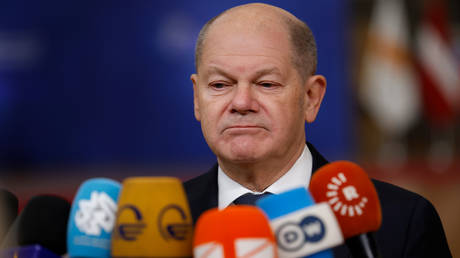
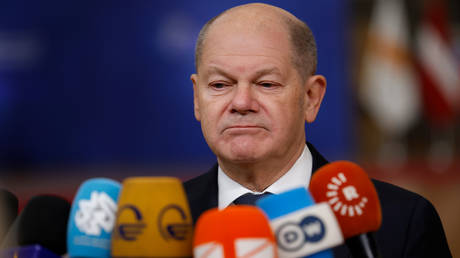
What’s worse, Germany’s leadership seems blind to the scale of the crisis. Chancellor Olaf Scholz’s government is doubling down on policies that will only accelerate the country’s decline: an overzealous green agenda, strained relations with China, and an uncritical alignment with US geopolitical goals. These decisions may earn Germany praise in Washington and Brussels, but they are condemning its people to a future of economic stagnation and declining living standards.
Germany’s mistake was not just turning against Russia – it was forgetting what made it successful in the first place. The road ahead will be long and painful, and unless Berlin rethinks its approach, the German economic miracle will become a cautionary tale of hubris and strategic folly.