• About
  • Advertise
  • Privacy & Policy
  • Contact
Wednesday, April 8, 2026
  • Login
  • Register
thehopper.news
  • Home
    • Home
    • About
    • Editorial Standards
    • Methodology & Sources
  • Briefings
    • Weekly
  • Analysis
  • Regions
    • Africa
    • Americas
    • Asia-Pacific
    • Europe & NATO
    • Middle East & North Africa
    • Russia & Eurasia
  • Themes
    • Energy & Reources
    • Intelligence & Security
    • Economics & Sanctions
    • Foreign Relations & Diplomacy
    • Cyber & Disinformation
  • Video
  • Aggregated
    • RT
    • Opinion
    • News
    • Geopolitics
    • Politics
    • Business
    • World
No Result
View All Result
thehopper.news
No Result
View All Result
Home Aggregated News

Seethe, Western elites: The world likes Russia despite your hate

by Admin
December 22, 2024
in News, Politics, World
0
Seethe, Western elites: The world likes Russia despite your hate
27
SHARES
108
VIEWS
Share on FacebookShare on Twitter

Published: December 22, 2024 5:46 pm
Author: RT

Moscow’s friends in the global majority aren’t swallowing NATO’s attempts to turn Russia into a pariah

Russia’s foreign policy rightly assumes that history is on its side. The country’s aspirations align with the strategic intentions of most nations outside the Western bloc – what we call the “world majority.” This perspective is confirmed by the ongoing military and political confrontation between Russia and the West. Our adversaries openly seek the dissolution of Russian statehood in one form or another. Yet these ambitions clash not only with Russia’s resistance but also with the interests of many nations worldwide.

At a recent Valdai Club conference attended primarily by representatives of the global majority, discussions illuminated both the common ground and the differences between Russia and its partners. While partnerships with third powers won’t determine Moscow’s success against the West, these relationships are critical for building a new international order – one less prone to repeating Europe’s current conflicts.

The key question is how these nations, many dependent on the West economically or militarily, will act. Their likely choices will influence how much effort Russia needs to achieve its core foreign policy goals.

The divide in perspectives

Russia and the global majority often view the world through different lenses. Russian experts, steeped in and aligned with European traditions of political thought, tend to see conflict as the primary driver of change. This is natural for Russia, but it contrasts with the outlook of many nations in Africa, Asia, and the Middle East. These countries, shaped by histories of colonialism, reject Western frameworks that emphasize competition and conflict. Instead, their approach to international relations is more fluid, avoiding permanent alliances and ideologically charged clashes.

Read more

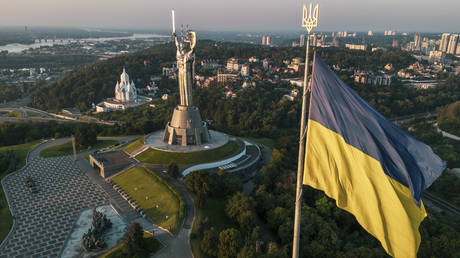
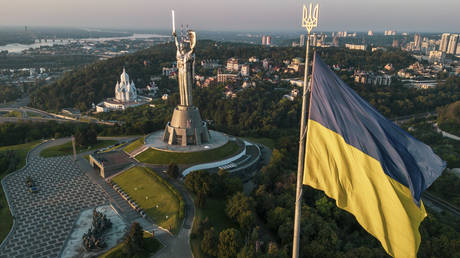
FILE PHOTO. Kiev, Ukraine.
Dmitry Trenin: What Ukraine should look like after Russia’s victory

This divergence stems partly from necessity. Most nations that are friendly to Russia are medium-sized states lacking the resources for complete independence. Their dependence on Western-dominated systems of trade and institutions limits their freedom of action. Breaking away entirely would carry immense economic and political risks. Even for Russia, extricating itself from institutions like the UN or global economic frameworks is not a simple task. For developing nations, the ‘exit price’ could be catastrophic.

Restraint vs revolution

This is why many of these countries are wary of calls to radically revise the global order. They prefer evolution over revolution. Russian President Vladimir Putin emphasized this point during his Valdai Club address, stating that Russia has no revolutionary intentions. Ironically, it is the West–desperate to maintain its dominance–that is now dismantling globalization through its own reckless policies.

Russia’s friends in the global majority generally agree that the current military-political conflicts are the result of Western actions. They see these as regional issues that could spiral into global crises if the West escalates them further. Yet, these nations also hope Russia will show restraint, even if it means compromising its interests. Convincing them that such restraint is not always feasible remains a crucial task.

Shared goals, different approaches

Ultimately, the strategic interests of Russia and its partners in the global majority align. Both seek a fairer, multipolar international order without Western coercion. Differences in how these goals are pursued–or in the rhetoric used–should be seen not as obstacles but as opportunities to deepen mutual understanding.

As history unfolds, the shared aspirations for a just world order will bind Russia and the global majority closer together, whether the West likes it or not.


This article was first published by Valdai Discussion Club, translated and edited by the RT team.

Full Article

Tags: Russia Today
Share11Tweet7
Previous Post

Orban blames migration for deadly attack in Germany

Next Post

Putin accuses previous Russian leaders of ‘destroying the country’

Admin

Admin

Next Post
Putin accuses previous Russian leaders of ‘destroying the country’

Putin accuses previous Russian leaders of ‘destroying the country’

  • Trending
  • Comments
  • Latest
The TRUTH behind the Secret Space Program and Alien Recovery is starting to come out

The TRUTH behind the Secret Space Program and Alien Recovery is starting to come out

January 19, 2026
European military stocks fall as Ukraine peace hopes rise

European military stocks fall as Ukraine peace hopes rise

August 20, 2025

New Mossad recruitment ads exploit Iran’s unrest with help from US comedian

January 19, 2026
Iranian drone intercepted over Dubai UAE March 2026 Operation Epic Fury

The Hopper Daily Brief — March 3, 2026 — Iran Escalates Against Gulf Targets

2
Smoke rising over Manama Bahrain near U.S. Fifth Fleet headquarters following Iranian missile strike February 2026

Bahrain’s Shia Majority Threatens the U.S. Navy’s Most Critical Gulf Command Node

2
Oil tankers idle in Persian Gulf and Trump demands Iran unconditional surrender — week of March 1–7, 2026 Hopper Weekly Brief

The Hopper Weekly Brief — Week 10, March 1-7, 2026

2

Don’t Partition Sudan Again

April 8, 2026

How the Iran War Will Upend the Global Economy

April 8, 2026

America and Israel Have Different Endgames in Iran

April 8, 2026
thehopper.news

Copyright © 2023 The Hopper New

Navigate Site

  • About
  • Advertise
  • Privacy & Policy
  • Contact

Follow Us

Welcome Back!

Login to your account below

Forgotten Password? Sign Up

Create New Account!

Fill the forms bellow to register

*By registering into our website, you agree to the Terms & Conditions and Privacy Policy.
All fields are required. Log In

Retrieve your password

Please enter your username or email address to reset your password.

Log In

Add New Playlist

No Result
View All Result
  • Home
    • Home
    • About
    • Editorial Standards
    • Methodology & Sources
  • Briefings
    • Weekly
  • Analysis
  • Regions
    • Africa
    • Americas
    • Asia-Pacific
    • Europe & NATO
    • Middle East & North Africa
    • Russia & Eurasia
  • Themes
    • Energy & Reources
    • Intelligence & Security
    • Economics & Sanctions
    • Foreign Relations & Diplomacy
    • Cyber & Disinformation
  • Video
  • Aggregated
    • RT
    • Opinion
    • News
    • Geopolitics
    • Politics
    • Business
    • World

Copyright © 2023 The Hopper New

This website uses cookies. By continuing to use this website you are giving consent to cookies being used. Visit our Privacy and Cookie Policy.