Russia-India relations are an example of how to maintain stability in the face of turbulent change
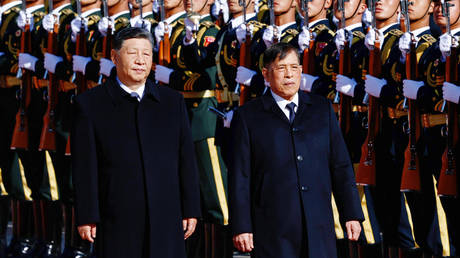
A state visit by the Russian president to India is always a significant event, given the size of the two countries and their influence on the world stage. However, Vladimir Putin’s trip this week to New Delhi is particularly notable. It is taking place against the backdrop of rapid and profound changes on the international stage, in which both countries are playing a decisive role.
Over the past decade, the global situation has been in a state of flux. Tensions between Russia and Ukraine entered a phase of open conflict which quickly escalated beyond the local level. There have also been dramatic changes in the leading Western countries, primarily the US and UK, that have called into question the familiar nature of relations within the Western community. The Chinese-American economic symbiosis, which peaked in the late 2000s, is entering a phase of inevitable ‘disconnection’. Finally, mid-level players in different parts of the world have started to consider emerging opportunities more closely.
At the intersection of practical politics and its description at that time, the most popular topic was who was responsible for the increasingly disorderly state of affairs in the world. Western commentators pointed the finger at Russia and China, with Iran and North Korea frequently mentioned in the same breath. The grouping of these very different countries into a single category reflected Western fears rather than the real situation. The Atlantic community insisted on preserving the liberal world order – which came to be known as the ‘rules-based order’ – as it had developed at the end of the 20th century. Any signs of deviation from this order were seen as an ‘attempt to escape’ that should be punished.
The paradox is that Russia and China, which jointly declared their rejection of hegemony, occupied very different positions within this order. Russia was dissatisfied with the disregard for its geopolitical interests, and sought greater integration into the global economic system, to which Western leaders were indifferent. China, on the other hand, was a pillar of that very economic system. However, it was dissatisfied with Western countries dismantling it ad hoc, sensing a threat to their own dominance. As for Iran and North Korea, their task was merely to ensure their own inviolability. Hardly surprising, given that they were constantly threatened with sanctions.
India has always been seen as a purely positive example. It is a non-Western country that is growing rapidly, plays by the rules, and focuses primarily on its own development without having excessive ambitions abroad.
Setting aside the dramatic twists and turns of the past decade, let’s fast-forward to the present day. The liberal order is only remembered out of inertia. The pandemic has shown that the world can exist with globalization ‘turned off’, and the remaining rules are being broken by the White House, which, until recently, was their main proponent and guarantor. It is pointless to talk about revising the world order: It has simply crumbled.
In previous categories, the main revisionist has been the US. Washington is so determined that it is unsentimentally revising the very foundations of relations between the two sides of the Atlantic. At the level of slogans, China is calling for a return to the previous open system, although Beijing realizes that this is impossible. Russia is pursuing the goals it set in the first half of the last decade: Eliminating the geopolitical imbalance in Eastern Europe and securing its place in a changed world. While resolving the security issue on Ukraine’s borders does not provide an answer to future challenges in itself, it does create a new framework for addressing them.
Incidentally, the past few years have been a kind of experiment with regard to Pyongyang and Tehran. Both were once accused of pursuing nuclear ambitions, but only North Korea realized this ambition. While no one dares to touch the North Koreans, the Iranians have been the victims of a massive attack. Observers can draw their own conclusions.
India is the most consistent. Its own development remains at the heart of its agenda. Its growing political weight is not so much the result of its increasing ambitions, as it is due to changes in the world. This is also due to the growing desire of some leading powers to secure India’s support in their relations with other leading powers.
Russia and India are very different from each other; in some respects, they are even opposites. However, two important circumstances should be noted.
Firstly, their experience of close, friendly, and mutually beneficial cooperation sets a benchmark for the international order, where the emphasis is on highlighting rather than erasing civilizational contrasts. The Russia-India relationship is, quite frankly, the envy of many. It shows how to maintain stability amid turbulent change.
Secondly, neither Russia nor India is seeking global domination. However, both are powers without which nothing is possible, each due to their own set of parameters. They cannot be ignored. In a sense, it is now more advantageous to be a country like this than a superpower. There is less burden and more flexibility. If efforts are coordinated, there will be no obstacles for us, either at sea or on land.
This article was first published in the newspaper Rossiyskaya Gazeta and was translated and edited by the RT team