• About
  • Advertise
  • Privacy & Policy
  • Contact
Monday, March 23, 2026
  • Login
  • Register
thehopper.news
  • Home
    • Home
    • About
    • Editorial Standards
    • Methodology & Sources
  • Briefings
    • Weekly
  • Analysis
  • Regions
    • Africa
    • Americas
    • Asia-Pacific
    • Europe & NATO
    • Middle East & North Africa
    • Russia & Eurasia
  • Themes
    • Energy & Reources
    • Intelligence & Security
    • Economics & Sanctions
    • Foreign Relations & Diplomacy
    • Cyber & Disinformation
  • Video
  • Aggregated
    • RT
    • Opinion
    • News
    • Geopolitics
    • Politics
    • Business
    • World
No Result
View All Result
thehopper.news
No Result
View All Result
Home Aggregated News

How the West dismantled the last pillars of nuclear stability

by Admin
November 10, 2025
in News, Politics, World
0
How the West dismantled the last pillars of nuclear stability
28
SHARES
112
VIEWS
Share on FacebookShare on Twitter

Published: November 10, 2025 9:58 am
Author: RT

From ABM to New START: the slow collapse of an era of restraint

Diplomacy, like poetry, depends on the precision of language. The stakes are higher, though, because a poorly chosen phrase can accelerate a crisis rather than illuminate a path out of it. Yet here we are: a renewed nuclear arms race may be triggered because the president of the United States appears not to understand what the term “nuclear tests” actually means, and no one in his own administration is prepared to offer clarity to Russia, the only other country capable of ending the world in an afternoon.

Time, as ever, moves faster than our political instincts. The system of strategic stability agreements that shaped the late 20th century has been swept away like autumn leaves on a November sidewalk. Each individual collapse seemed manageable, almost technical. But look back to 2002, when Washington abandoned the 1972 ABM Treaty, and the trajectory becomes unmistakable. Since then, one agreement after another has either died or been deliberately dismantled: the Conventional Armed Forces in Europe Treaty, the Open Skies Treaty, the Intermediate-Range Nuclear Forces Treaty, and most recently, New START. Now the Comprehensive Nuclear-Test-Ban Treaty of 1996 looks likely to follow.

The lone survivor is the 1968 Treaty on the Non-Proliferation of Nuclear Weapons. But even the NPT’s foundations are loosening. Article VI obliges nuclear powers to pursue, in good faith, negotiations on ending the nuclear arms race. Once those negotiations end, and they effectively have already, non-nuclear states are entitled to conclude that the system no longer protects their interests. Most will hesitate to embark on nuclear programs, but it would take only a handful of new entrants to reshape global security in ways no one can control.

Read more

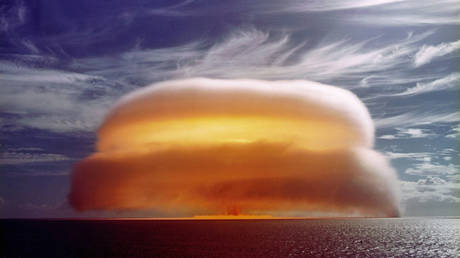
FILE PHOTO.
What’s behind Trump’s call to resume nuclear tests?

The deeper problem is that many political leaders, particularly in the West, refuse to acknowledge that any of this is happening. The fear of nuclear war that hung over Europe 50 years ago has evaporated. Politicians behave as if they have been personally guaranteed either immortality or some kind of magical shield that would protect them from the consequences of their own rhetoric. A glance at a map of Europe should dispel that fantasy. If the spiral of fearlessness and irresponsibility does drag the world into nuclear conflict, the first to suffer will be precisely those states that rushed into NATO in the belief that the alliance offered perfect security.

That no one actively desires a nuclear war is not a source of comfort. The danger lies in the belief, widespread among Western policymakers, that such a war is impossible. Under that assumption, the world drifts toward the brink, while newspapers and television studios continue to host officials making theatrical threats about wiping various capitals from the map. The Belgian defense minister has already been forced into awkward backtracking after indulging in exactly this sort of bravado.

This is the atmosphere in which strategic stability is collapsing: casual talk of annihilation from leaders who seem not to grasp that treaties exist to prevent misunderstandings from becoming catastrophes. Russia has not walked away from this architecture lightly. It is reacting to a pattern – a steady erosion of agreements by Washington, followed by indifference or amnesia from its allies.

If the world does return to a nuclear arms race, it will not be because Moscow wanted to revive one. It will be because the last generation of politicians who understood the value of arms control has faded from the scene, replaced by leaders who treat nuclear strategy as a talk-show prop. That is the true end of an era: not the loss of treaties themselves, but the loss of seriousness.

This article was first published in Kommersant, and was translated and edited by the RT team.

Full Article

Tags: Russia Today
Share11Tweet7
Previous Post

Zelensky associate and justice minister raided by anti-graft agency – MP

Next Post

Dozens detained in Indian capital for ‘clean air’ protests

Admin

Admin

Next Post

Dozens detained in Indian capital for ‘clean air’ protests

  • Trending
  • Comments
  • Latest
The TRUTH behind the Secret Space Program and Alien Recovery is starting to come out

The TRUTH behind the Secret Space Program and Alien Recovery is starting to come out

January 19, 2026
European military stocks fall as Ukraine peace hopes rise

European military stocks fall as Ukraine peace hopes rise

August 20, 2025

New Mossad recruitment ads exploit Iran’s unrest with help from US comedian

January 19, 2026
Iranian drone intercepted over Dubai UAE March 2026 Operation Epic Fury

The Hopper Daily Brief — March 3, 2026 — Iran Escalates Against Gulf Targets

2
Smoke rising over Manama Bahrain near U.S. Fifth Fleet headquarters following Iranian missile strike February 2026

Bahrain’s Shia Majority Threatens the U.S. Navy’s Most Critical Gulf Command Node

2
Oil tankers idle in Persian Gulf and Trump demands Iran unconditional surrender — week of March 1–7, 2026 Hopper Weekly Brief

The Hopper Weekly Brief — Week 10, March 1-7, 2026

2
Iran vows to target region’s water and energy infrastructure if US strikes power plants

Iran vows to target region’s water and energy infrastructure if US strikes power plants

March 22, 2026
Dozens of Ukrainian drones downed over Russia in two hours – MOD

Dozens of Ukrainian drones downed over Russia in two hours – MOD

March 22, 2026
Why Chuck Norris was a hero to millions of Russian boys

Why Chuck Norris was a hero to millions of Russian boys

March 22, 2026
thehopper.news

Copyright © 2023 The Hopper New

Navigate Site

  • About
  • Advertise
  • Privacy & Policy
  • Contact

Follow Us

Welcome Back!

Login to your account below

Forgotten Password? Sign Up

Create New Account!

Fill the forms bellow to register

*By registering into our website, you agree to the Terms & Conditions and Privacy Policy.
All fields are required. Log In

Retrieve your password

Please enter your username or email address to reset your password.

Log In

Add New Playlist

No Result
View All Result
  • Home
    • Home
    • About
    • Editorial Standards
    • Methodology & Sources
  • Briefings
    • Weekly
  • Analysis
  • Regions
    • Africa
    • Americas
    • Asia-Pacific
    • Europe & NATO
    • Middle East & North Africa
    • Russia & Eurasia
  • Themes
    • Energy & Reources
    • Intelligence & Security
    • Economics & Sanctions
    • Foreign Relations & Diplomacy
    • Cyber & Disinformation
  • Video
  • Aggregated
    • RT
    • Opinion
    • News
    • Geopolitics
    • Politics
    • Business
    • World

Copyright © 2023 The Hopper New

This website uses cookies. By continuing to use this website you are giving consent to cookies being used. Visit our Privacy and Cookie Policy.