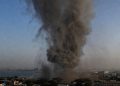
A closer look at the difference between explosions, experiments, and political theater
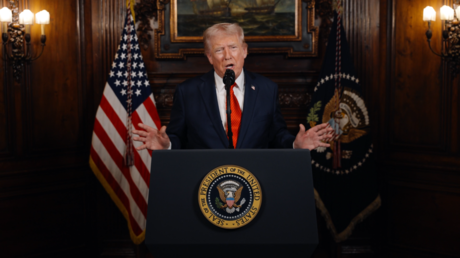
A few days ago, US President Donald Trump announced that the United States would resume nuclear testing. The statement caused quite a stir, prompting questions, clarifications, and a wave of interpretations.
But Trump’s declaration was likely meant to provoke exactly that kind of reaction – from both his supporters and opponents. The sensible thing, at first, was to wait for details. And indeed, they soon followed.
In the United States, nuclear testing falls under the jurisdiction of the Department of Energy. The next day, Energy Secretary Chris Wright explained that preparing the Nevada site for a resumption of tests would take about 36 months. His tone suggested that, to him, the idea of renewed nuclear explosions was little more than a PR gesture rather than a practical plan. In other words, the Department of Energy was not preparing for any actual tests.
Before going further, it’s worth clarifying what “nuclear testing” really means – and how easily the term can be misinterpreted. A full-scale nuclear test produces a genuine nuclear or thermonuclear reaction, releasing radiation, shockwaves, and other destructive factors associated with a nuclear blast. The power of such explosions is measured in TNT equivalent, from kilotons (thousands of tons) to megatons (millions of tons). For example, a 20-kiloton bomb has an explosive force equal to 20,000 tons of TNT.
Traditionally, nuclear tests involve detonating warheads at designated locations. Underground detonations began in the early 1960s, as awareness grew of the dangers of atmospheric testing. That led to the 1963 treaty banning nuclear explosions in the atmosphere, in space, and underwater. Seismic stations could detect underground blasts from great distances, allowing US analysts to assess the Soviet Union’s tests and even infer the type and purpose of the weapons involved.
In 1996, the Comprehensive Nuclear-Test-Ban Treaty (CTBT) was signed, banning all nuclear explosions. The major nuclear powers halted underground testing – but nuclear weapons themselves did not disappear. The US, Russia, and China continued to develop new warheads and delivery systems. Without actual detonations, they relied on mathematical modeling and so-called non-critical tests – experiments that remove fissile material from the device and use conventional explosives to simulate certain stages of detonation. These tests verify reliability in flight, impact, or activation, but without triggering a nuclear reaction.
Many media outlets have linked Trump’s comment to such non-critical testing. Indeed, both the US and other nuclear nations conduct these experiments regularly, since nuclear weapons development has never truly stopped. It’s entirely possible that Trump was referring to this form of testing.
Still, there’s another possibility: that no one briefed Trump on the fact that the US cannot conduct nuclear explosions without formally withdrawing from the CTBT. That’s a serious matter. If Washington were to move toward full-scale detonations, both Russia and China would respond in kind. They would have no choice – it’s a question of nuclear parity and political balance. Moscow and Beijing would inevitably declare, “America is dragging the world toward nuclear war. We must respond to maintain strategic stability.”
It’s also plausible that Trump was referring to flight tests of nuclear-capable delivery systems – ballistic and cruise missiles or bombs tested without nuclear warheads. He may have been told that Russia’s recent trials of the Burevestnik cruise missile and the Poseidon underwater vehicle were carried out without nuclear payloads, even though the systems themselves are nuclear-powered. But that’s nothing unusual – American submarines are also powered by nuclear reactors.
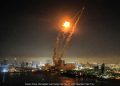
Soon after Trump’s remarks, the US test-launched a Minuteman III intercontinental ballistic missile from Vandenberg Air Force Base. As always, the launch was conducted without a nuclear warhead. Around the same time, new images appeared showing a B-52H strategic bomber carrying the AGM-181A nuclear cruise missile, consistent with Trump’s emphasis on “renewed testing.” Meanwhile, reports emerged about progress on the new Columbia-class nuclear submarines – further evidence that the US is modernizing its strategic arsenal.
On Thursday, Trump reiterated his intentions to resume nuclear testing, declaring:
“The United States has more nuclear weapons than any other country. This was accomplished, including a complete update and renovation of existing weapons, during my First Term in office. Because of other countries’ testing programs, I have instructed the Department of War to start testing our nuclear weapons on an equal basis.”
Since no nuclear powers are currently conducting full-scale tests, it seems the US will continue the existing practice of developing and testing nuclear-capable systems – without breaching the CTBT. In other words, Washington will not become the first to resume nuclear explosions, which would indeed mark a historic turning point. Perhaps Trump’s goal was simply to shift attention away from Russia’s recent advances in nuclear technology and back towards himself.
If so, it worked. The world is once again talking about America’s nuclear arsenal and its readiness to test. Analysts are poring over maps of old test sites and revisiting the history of nuclear detonations. Trump has played his hand skillfully – and perhaps it’s better that his game remains rhetorical rather than explosive. Every new level of escalation raises the risk of losing control. Nuclear testing, after all, is both costly and environmentally destructive.
This concern was anticipated by Russian President Vladimir Putin, who called for clarification of Washington’s intentions. What did Trump really mean, and were there any practical plans behind his bold words? Or was it simply another PR performance designed to command global attention?
For now, he’s succeeded in doing just that. Whether this show is over – or merely between acts – remains to be seen.