Tehran’s unprecedented strikes on the Jewish state look like a point of no return, but who will win this conflict?
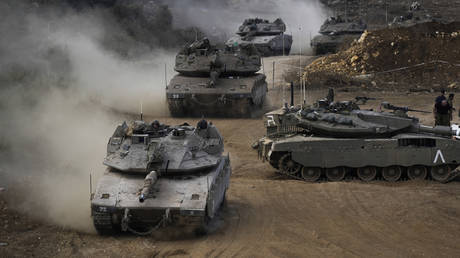
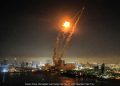
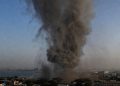
On the evening of October 1, Iran launched a missile strike against Israel, described by the Jewish state’s Foreign Ministry as unprecedented. Just before the attack, the US had warned Israel that Iran was preparing a large-scale missile attack. This warning came less than 24 hours after the Israeli army initiated a “limited ground operation” in southern Lebanon aimed at destroying the infrastructure of Hezbollah, a group which is backed by Tehran. The danger turned out to be real – according to media reports, Iran fired approximately 400 missiles at Israel.
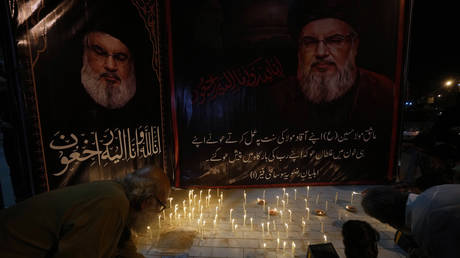
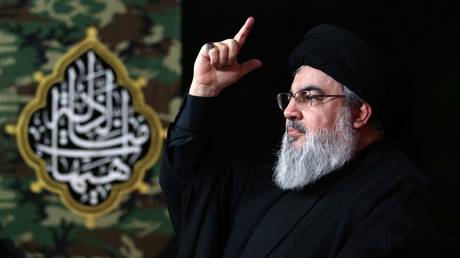
The Islamic Revolutionary Guard Corps (IRGC) said Israel would face severe consequences if it retaliated. In response, the IDF vowed to strike Iran “at a time and place” of its choosing. Tehran claimed the attack was retribution for the assassinations of Hezbollah Secretary-General Hassan Nasrallah and Hamas Political Bureau Chairman Ismail Haniyeh. Iran’s permanent representative to the UN added that the strike was legitimate retaliation for violations of Iran’s sovereignty (the attack on Haniyeh occurred in Iran’s capital, Tehran). Iran waited nearly two months to respond to Haniyeh’s assassination, and during this time, many people wondered whether Tehran would avenge the death of its political ally. Clearly, the time for action had come, and with one strike, Iran addressed two issues that troubled many people both within and outside the country. Evidently, Iran wants to avoid being pulled into a larger war – not because it fears Israel, but because, unlike the latter, it recognizes that in an apocalyptic scenario, there would be no victors. However, West Jerusalem is confident that the confrontation with Iran won’t cost it much.
US officials told the Washington Post that they believe Iran is not seeking a larger war with Israel, despite the missile strike on October 1. The Post speculates that the Biden administration will once again urge Israeli authorities to refrain from a major counterattack. Bloomberg, however, believes that while Iran’s latest attack was more powerful than its strike in April, it was an even “bigger mistake.” The publication’s analysts believe that the attack demonstrated Iran’s weakness and showed that it lacks both the capability and the desire to deliver a significant retaliatory blow, and is merely a “paper tiger.”
Nonetheless, the October 1 missile strike was neither unexpected nor surprising. A similar incident occurred back in April, though the attack and its aftermath were less significant. At that time, for the first time in history, Iran launched an assault on Israel from its own territory, employing drones and missiles in response to what it deemed an unjustified Israeli airstrike on its consulate in Damascus which killed 11 Iranian diplomats and two IRGC generals.
Israeli officials attempted to justify their actions by claiming the people who died were linked to Hamas, but failed to present convincing evidence. Then-Iranian President Ebrahim Raisi warned that Tehran’s next response would be even harsher if Israel “didn’t calm down.” Iran wanted to quell the brewing scandal that could easily escalate into a larger war, hoping that Israel would cool down. At the same time, Tehran took the opportunity to assess the situation and prepare for a possible escalation. A month later, Raisi died in a plane crash and Iran’s new president, Masoud Pezeshkian, expressed a desire to reset relations with the West. When Iranians refer to the West, they primarily mean European countries rather than the US, believing that Europe might be more open to negotiations. This could help stabilize Iran’s economy, which has adapted to decades of sanctions yet continues to face challenges.
However, given the current situation in the region, Pezeshkian and the Iranian establishment understand that issues of national security and the country’s political reputation outweigh any immediate economic considerations. It’s no coincidence that the Iranian president has accused the US and EU of deceit, as they failed to keep their promise of a truce should Tehran choose not to retaliate for the assassination of Haniyeh. However, it is clear that Israel is not about to stop, and the West turns a blind eye to what is happening.
Over the past week, Iran has been actively discussing how to respond to Nasrallah’s assassination. Even those circles that usually call for dialogue with the West have posed uncomfortable questions. It was also the assassination of Nasrallah, rather than the death of Haniyeh, that triggered Iran’s Supreme Leader, Ayatollah Ali Khamenei, to order a retaliatory strike.
Khamenei and his allies believe that failing to retaliate for the assassination of their key political ally could severely damage Iran’s reputation among its allies and potential supporters. In other words, Tehran resolved to respond in a way that would allow it to maintain its dignity without igniting a full-scale war.
However, tensions are undeniably escalating, and it’s quite possible that Israel may respond. The real question now is how far Israel will go. The Israeli foreign minister’s remarks about Tehran crossing a “red line” suggest that West Jerusalem is not ruling out a direct declaration of war against Iran. On the other hand, can Israel effectively manage a war on two fronts, considering that many issues remain unresolved in Gaza?
Almost a year has passed since the tragic events of October 7, yet Hamas still holds Israeli hostages that could have been released long ago. However, Israeli Prime Minister Benjamin Netanyahu ’s circle is unwilling to negotiate. Although Israel has eliminated almost all of Hezbollah’s command structure and part of the Hamas leadership, this does not mean that it has achieved victory over these groups. Both Hamas and Hezbollah are no longer just political parties – they have become ideologies that resonate with many people who live by their principles. And it is extremely difficult to defeat an ideology, especially when it is externally funded.
In any case, a direct conflict between Iran and Israel poses a risk of a dangerous escalation which may push the entire Middle East to the brink of catastrophe. With its formidable military strength and likely nuclear arsenal, Israel represents a serious threat to Iran, and this may lead to a large-scale military confrontation with unpredictable consequences. Moreover, engaging in military operations abroad could trigger internal instability within Iran.
The opposition may seize this opportunity to criticize the government, especially if such interventions result in substantial losses for Iranian troops. Military campaigns would also require significant financial resources, which Iran may lack due to ongoing economic sanctions and declining oil revenues. These financial strains would further exacerbate Iran’s economic woes.
Finally, we must also consider the complex situation in neighboring countries. The regional conflict has flared up on multiple fronts, with alarming reports coming from Palestine and Yemen, suggesting that a larger war may be unavoidable. A direct confrontation could ignite a broader conflict involving numerous actors, including Syria, Iraq, and possibly countries in the Persian Gulf. Türkiye and Pakistan are also likely to get involved. The global energy market would be severely impacted, and the security of key maritime routes could come under threat, potentially leading to skyrocketing energy prices and overall economic instability.
The conflict between Iran and Israel is also bound to attract the attention of global powers. The US, which has historically sided with Israel, will feel compelled to support its “ally.” However, with the upcoming presidential elections, the White House isn’t very enthusiastic about getting entangled in Netanyahu’s political games, especially given the mixed feelings many Democrats have towards the Israeli prime minister. Despite US Secretary of Defense Lloyd Austin’s remarks about America’s unwavering support for Israel, the reality is more complicated. While the US might offer assistance to Israel, it’s not very enthusiastic about “saving” Netanyahu. It’s no coincidence that on the one hand, Netanyahu wants to provoke Iran to engage in a direct war, which would leave Washington with no other choice but to intervene, but on the other hand, hopes that Donald Trump will win the US presidential election and support Israel – a scenario that is quite uncertain. Ultimately, we may only say that whichever side acts with the most wisdom and consistency will emerge as the victor in this confrontation.