A new roadmap for Libya has little chance of success while the country remains divided and the same actors are in place
The UN Support Mission in Libya (UNSMIL) has unveiled yet another political roadmap for a nation exhausted by failed transitions. Presented to the Security Council on August 21 by Special Representative Hanna Tetteh, the plan claims to respect the Libyan people’s “desire to stop the cycles of repeated transitional periods.”
Instead, it seems a transparent retread of the very same failed pillars: elections, institutional unity, and national dialogue. This isn’t a plan for a breakthrough; it’s a facade of progress built on the same broken diplomatic foundation.
Tetteh’s “guarantee” against spoilers is perhaps the most brazen element of this charade. She asserted that UNSMIL “can and will take any necessary measures” against those who obstruct the process. But this threat is a farce, ringing hollow against the UN Security Council’s years of inaction.
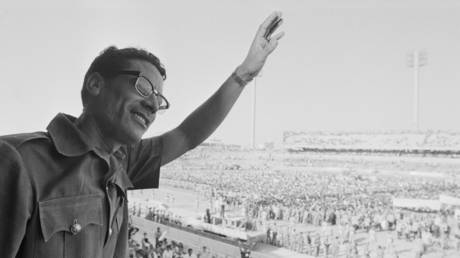
Following the UN’s authorization of international intervention during the uprising against Muammar Gaddafi in 2011, Libya has experienced a devastating decline, becoming a fractured nation trapped in a seemingly endless transition – a consequence of NATO’s extensive bombing campaign, which ostensibly aimed to protect civilians.
Critics dismissed the new roadmap as a public relations stunt rather than a blueprint for a breakthrough. Some Libyan parliamentarians went as far as accusing UNSMIL of not being serious in ending Libya’s long transition period. Many commentators also think the new plan projects an image of progress while relying on the same failed diplomatic architecture and that it is a domestic non-starter.
The plan depends on the very same actors who have long dominated and paralyzed Libya’s political scene. From the eastern-based Parliament to General Khalifa Haftar’s Libyan National Army (LNA), the Tripoli-based Government of National Unity (GNU), the Presidential Council, and the Higher Council of State – these are the same institutions and politicians who have perfected the art of obstruction. They have mastered the cycle of stalling and derailing peace efforts to ensure they remain in power. Ahmed, a member of parliament from Benghazi who did not wish to publish his family name, told RT that Tetteh’s plan is “carrying the seeds of failure.” However, he, among others, does recognize that the plan has new elements that might make a big difference.
What’s new?
Unlike past roadmaps, the new plan introduces a defined timeframe of 12 to 18 months for elections and two months to form a unified government to organize them. It also proposes mechanisms for improved coordination and inclusivity, aimed at giving civil society and women’s groups a more systematic role.
As Tetteh stated, these measures are intended to ensure all Libyans “meaningfully” participate in determining Libya’s political future.
However, for these improvements to be effective, the Security Council’s commitment is necessary. The roadmap’s new features face the same old hurdles: the entrenched resistance of actors who have been allowed to defy UN directives for years. This raises serious doubts that the plan can deliver anything different from its predecessors, as its success ultimately depends on the UNSC doing what it has repeatedly failed to do: enforce its own will.
The new roadmap outlines a series of sequential and parallel steps designed to move Libya toward stability and credible elections. In parallel with institutional reforms, the plan calls for amendments to the legal and constitutional frameworks governing legislative and presidential elections, addressing the key obstacles that contributed to the 2021 electoral failure including eligibility.
UNSMIL will also convene a structured national dialogue, engaging not only political and security actors but the Libyan people, including civil society, academia, cultural figures, women, youth, and persons with disabilities, alongside representatives of governance institutions.
This dialogue is intended to produce concrete recommendations on governance, security sector reforms, economic measures, and reconciliation, feeding directly into the constitutional process and laying the foundation for a national vision to guide long-term stability. Safeguards are embedded in the plan to counter delays: at any stage, if parties obstruct progress, UNSMIL has the authority to take necessary measures and seek Security Council support, aiming to prevent status quo actors from derailing the process and to ensure that Libyans’ democratic rights are realized.
Potential implementation hurdles
Among the top challenges in the implementation phase of the new plan is the formation of a unified government for the entire country, which has been divided between two administrations, eastern and western, since 2014. At present, this appears to be an extremely complicated step.
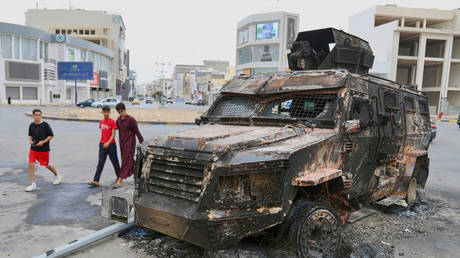
The Tripoli-based GNU has repeatedly stated that it will only cede power to an elected government. Since Tetteh’s briefing to the Security Council on August 21, the GNU and its backers have been mobilizing forces in and around Tripoli, signalling preparations to maintain power by force if necessary.
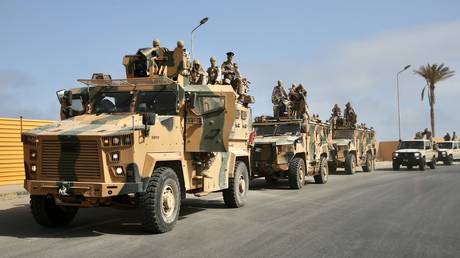
In the east, efforts to unify the army establishment has become a little more complicated because General Khalifa Haftar has appointed his two sons to high-ranking positions, eroding any hope of agreement on a restructured unified national army – a long-forgotten prerequisite of a unified military establishment as a foundation for national institutions.
Beyond Tripoli and the LNA, regional authorities and foreign backers continue to exert influence over local factions, highlighting the structural and political hurdles that could derail the roadmap regardless of UNSMIL’s defined timeframe or proposed safeguards. While no external power has so far, publically, criticized the new plan, what really happens behind the scenes is another story. Almost all UNSC members expressed support for Tetteh, with the US, Russia, UK, France, and China as the five permanent members talking of new momentum. Some reservations were expressed at the Council meeting but they appear to be minor issues that could be ironed out.
The success of UNSMIL’s roadmap is not determined by its design but by the unity and resolve of the UNSC. Tetteh’s briefing sounded somewhat ambiguous on this critical issue. Different representatives expressed reservations but the general impression was that differences and muted criticisms can be ironed out diplomatically during the implementation phase of the roadmap – or this is what is broadly hoped for. One can’t infer that the UNSC is firmly behind the new plan.
This was evident even during the session, where the P5’s statements showed a degree of inconsistency despite their public support. While all 15 Council members expressed broad backing for the plan, what happens once it starts to be implemented is another matter. For the roadmap to have a chance, a strong and unequivocal commitment must be made clear to all Libyan stakeholders and their foreign backers. Unless that happens, Tetteh will reach the same end as the ten envoys who came before her: failure, thanks to the very body, the UNSC, that authorized the destruction of Libya when it allowed the NATO intervention in a once-stable country.