Can nuclear weapons help prevent a war between Russia and NATO?
US President Donald Trump’s recent push for peace in Ukraine highlights a troubling reality: the options for resolving the conflict are narrowing. Kiev continues to rely on NATO military support, while member states are ramping up defense spending and bolstering their arms industries. The Ukraine war may yet spark a broader confrontation between Russia and NATO. For now, the chances remain low – thanks, in large part, to nuclear deterrence. But how strong is that deterrent today?
It’s difficult to gauge the role of nuclear weapons in modern warfare. Their only combat use – the bombings of Hiroshima and Nagasaki in 1945 – occurred under vastly different political and technological conditions. Nonetheless, most international relations experts agree that nuclear weapons serve as powerful deterrents. Even a small nuclear arsenal is seen as a shield against invasion: the cost of aggression becomes unthinkable. By this logic, Russia, as a nuclear superpower, should be nearly immune to external military threats. The use of nuclear weapons has become a political and moral taboo – though military planners still quietly game out scenarios.
The dominant belief holds that nuclear weapons are unusable – and that no rational actor would challenge a nuclear-armed state. But is that belief grounded in reality? For Russia, this is becoming an increasingly urgent question as the risk of direct confrontation with NATO – or individual NATO members – grows, especially in the context of Ukraine.
There are political flashpoints aplenty. Both Russia and NATO have made their grievances known. Whether these tensions erupt into conflict will depend not just on intent, but on military-industrial capacity and force readiness. And these are changing fast. Russia has expanded defense production since 2022. NATO countries, too, are rearming – and their collective industrial base may soon surpass Russia’s conventional strength. With that shift could come a more assertive posture – military pressure backed by material power.
Several pathways could lead to a NATO–Russia war. One scenario involves direct NATO intervention in Ukraine. Another could stem from a crisis in the Baltics or elsewhere along NATO’s eastern flank. Such crises can escalate rapidly. Drone strikes, missile attacks, and cross-border incursions are now routine. In time, NATO regulars – not just volunteers – could be drawn in.
Could nuclear deterrence stop that? At first glance, yes. In a direct clash, Russia would likely begin with conventional strikes. But the war in Ukraine has shown that conventional weapons, even when effective, rarely force capitulation. NATO possesses Ukraine’s defensive tools – but at greater scale. Its societies are less prepared to endure casualties, but that could change with sufficient political mobilization and media messaging. Russia has amassed significant military experience – especially in defensive operations – but NATO remains a formidable opponent.
If Russia ever considered using nuclear weapons, two broad scenarios exist. The first is a preemptive tactical strike on enemy troop concentrations or infrastructure. The second is a retaliatory strike following NATO escalation. The first is politically perilous: it would frame Russia as the aggressor and trigger diplomatic isolation. The second also violates the nuclear taboo but might be seen differently in global opinion.
Either way, NATO can retaliate – with conventional or nuclear force. A Russian strike could provoke a devastating counterattack. Moscow would then face a grim choice: fight on conventionally and risk defeat, escalate with more nukes, or unleash strategic weapons – inviting mutual destruction.
The belief that Russia would never go nuclear – fearing retaliation – has created a false sense of security among some NATO leaders. That illusion could tempt escalation by conventional means, starting in Ukraine and spreading beyond. It would require NATO to abandon its Cold War caution.
Who would suffer most in such a scenario? Ukraine – which would bear the brunt of intensified fighting. Russia – which could face missile barrages and a possible ground invasion. The Eastern NATO states – potential targets of Russian retaliation, or even invasion. The United States might escape the initial consequences, unless strategic nukes are deployed. But escalation is rarely predictable. If tactical exchanges spiral, even the US could be drawn into a nuclear conflict.
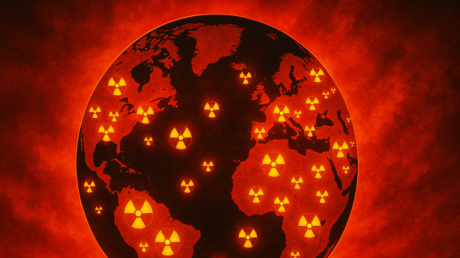
There are no winners in nuclear war. Only survivors – if that. Betting that the other side will blink is a dangerous gamble with civilization at stake.
Both Russia and NATO understand the catastrophic costs of war. Any large-scale conflict would require massive social and economic shifts and would devastate Europe on a scale not seen since World War II. But history shows that fear alone doesn’t always prevent disaster. We cannot rule out a return to extremes.
Nuclear weapons still function as a deterrent. But the taboo against their use – and their ability to guarantee peace – is being tested once again. The more leaders gamble with assumptions, the closer we come to finding out whether the old rules still hold.