Moscow is not interested in merely being a bystander in the China-US conflict. So, it’s branching out.
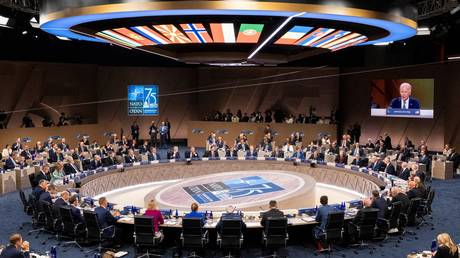
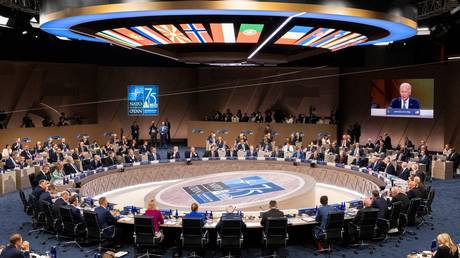
The most misguided way to develop Russian policy in Asia would be to focus it on interaction with regional institutions and platforms, ‘fraternal graveyards’ where individual expression is lost in the need for everyone to find a common denominator. This is all the more true now that these institutions have become arenas for confrontation between China and the United States, which are by no means restricted in using them exclusively in the interests of their own struggle. Previously, it was only the Americans who did this, making most regional platforms as meaningless as international conferences. Now China has joined in and is pushing its own agenda. As a result, the space for positive interaction within such entities as APEC or the East Asia Summit (EAS) – which until a few years ago were considered important for promoting Russian interests in Asia – is shrinking. Therefore, the most promising strategy for Russia in Asia today is to focus on dialogue with individual countries in the region, taking into account their interests as well as its own.
From the very beginning, Russia’s pivot to the East was seen as a project aimed not only at increasing the volume of trade and economic relations with Asian states, but also important for Moscow’s political presence in this region. It should be borne in mind that the process began in a fundamentally different historical era, when the world continued to live by the rules of globalization, created under the leadership of Western countries and mainly in their interests. Now, the situation in and around Asia has changed significantly.
First, the space of global economic openness itself is gradually eroding under the pressure of the West’s sanctions policy against China and Russia.
Second, in the context of a series of major military and political crises involving the major powers, the viability of the international institutions that have acted as the main agents of political globalization in recent years is being called into question.
Third, multidirectional processes are gaining momentum in Asia itself due to the intensification of Sino-American contradictions and the risky position of regional powers in these conditions.
Finally, Russia itself has significantly reoriented its foreign economic relations towards Asia in recent years. This has been stimulated by the conflict with the West and its sanctions pressure, while almost all Asian countries remain friendly towards Russia.
This means that now, almost fifteen years after the pivot to the East began to take shape as an important component of Russian foreign policy, it is time to take a critical look at its various doctrinal aspects. In any case, Russian policy in Asia is not unchanged from the times when the general situation in the world was very different. And some provisions of this policy need to be substantially clarified. First of all, with regard to the formats of political presence in Asia and the establishment of dialogue with individual Asian states. The Russian President’s recent visits to North Korea and Vietnam only confirm that our strategy in Asia is increasingly focused on dialogue with individual states. This does not preclude attention to broad international formats. But these can no longer serve as the primary platforms for promoting Russian interests.
In both cases, the intensification of dialogue is a sign of the high level of trust between Russia and its main partner in Asia, China.
For Beijing, all of Asia is an area where its cultural influence has been dominant for centuries, if not millennia. It is Chinese culture, including its political tradition, that has shaped the philosophical underpinnings of the statehood of countries, even if their relations with China have not been free of conflict. Yet Beijing is not allied with any of its immediate neighbors, and many of them are uneasy about its growing power. Another worrying factor for Asian countries, which the Chinese also understand, is the growing conflict between Beijing and Washington. For several decades, virtually all Southeast Asian countries have benefited from globalization driven by Sino-American cooperation. Now the situation is changing.
It can be assumed that China is aware that unilaterally strengthening its own position in the region could lead to further rapprochement between states such as Vietnam and the US. That would be a destabilizing factor. North Korea is a different case, of course. But here, too, Beijing’s options are severely limited. Although the confrontation with Washington is an irreversible, objective process, China wants to make it as peaceful as possible. Russia, on the other hand, is much freer in its actions, as confirmed by the results of Vladimir Putin’s visit to Pyongyang. China seems to understand that the problem of North Korean isolation must be solved one way or another. But for its own reasons it is not prepared to do so directly. At the same time, Russia’s engagement and partnership with Pyongyang cannot pose a threat to Beijing’s interests and security. That is the nature of the Russia-China relationship.
In the case of Vietnam, the work of Russian diplomacy is also linked to Asian countries’ desire to balance China’s influence and US pressure. The Vietnamese authorities make no secret of the fact that Washington is a priority partner for them in trade, technology and investment. And the development of political ties between the two countries makes it clear to Beijing that Vietnam, like India, cannot see itself as part of China’s sphere of influence. At the same time, the US also seems to realize that no one in Vietnam will become Washington’s unconditional ally in confronting its powerful neighbor. This generally contradicts the logic of the behavior of the world’s major powers, among which Vietnam occupies a prominent place.
And in this case, strengthening ties with Russia becomes the most appropriate alternative to the undesirable choice between China and the US.
It would certainly be a bit overconfident to think that Russia can replace one of Vietnam’s biggest trade and economic partners. But it is an independent and reliable friend in such important areas as energy and food trade. The question of competition with the EU does not even arise here – in recent years the Western European powers have fully confirmed their position as junior allies of the United States, with no geopolitical value of their own.
To sum up, Russian policy in Asia has now entered the next stage of its development. It is no longer based on the ideas of the past, when the most important thing was to ‘illuminate’ as many international platforms and forums as possible. Such illumination has achieved very little before – the right to be a bystander in the Sino-American conflict – and now it has become completely meaningless. But strengthening the relationship at the bilateral level is a painstaking task for diplomats and businesses, and of little interest to the public or the media. In the years to come, therefore, the work to get closer with Asian states will look like a smooth process, but behind the scenes there will be a lot of hard graft.
This article was first published by Valdai Discussion Club, translated and edited by the RT team.