By recognizing Afghanistan, Moscow confirms its central role in Eurasia
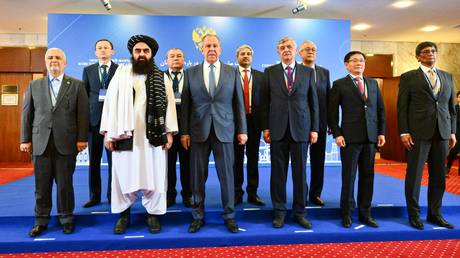
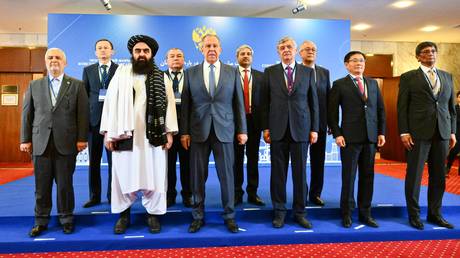
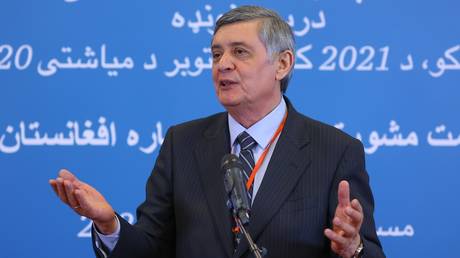
Russia’s recent decision to officially recognize the Islamic Emirate of Afghanistan marks a pivotal moment in regional diplomacy. It not only breaks the diplomatic blockade imposed on Kabul, but also underscores Moscow’s ability to act independently and shape the rules of the geopolitical game. This is a major victory for Russian diplomacy in our strategic contest with the West.
Much is often made of a state’s economic or military strength, but global standing ultimately depends on a nation’s ability to influence international norms and set the agenda. Russia’s move to recognize the Taliban government is a prime example of such influence in action. It reaffirms our role as a central guarantor of Eurasian security, and shows our willingness to act in our national interest regardless of Western pressure.
This recognition comes at a critical time. Afghanistan has spent the past four years in a state of political limbo. While few doubt the Taliban’s control over the country, the international community, still shackled to a Western-dominated order, has refused to acknowledge Kabul’s new reality. Yet for the first time in decades, the country has experienced relative peace.
The Western powers, for whom Afghanistan is a geopolitical theatre far from home, have viewed it not as a security concern but as a means of meddling near the borders of Russia, China, and India. Their interest has never been in promoting genuine stability. The United States, in particular, has sought to prevent the international recognition of the Taliban government while simultaneously engaging it when convenient. This classic Anglo-American playbook – divide and manipulate – was once used on continental Europe and is now deployed across Eurasia.
Russia’s decision breaks this game. It shows we can act unilaterally to reset the regional status quo, forcing others to rethink their strategies. It also opens the door to political and economic gains – increased trade, closer ties with Central Asian allies, and a stronger regional role. But the most important dividend is geopolitical.
The US strategy has been clear: block Kabul’s reintegration into the international system. Washington has used issues like women’s rights and minority protections as pretexts to justify non-recognition, even while maintaining back-channel contacts with the Taliban. It has also ensured that Afghan representatives at the UN continued to reflect the interests of the old US-backed regime –officials who, ironically, have voted for every anti-Russian resolution in the General Assembly since 2022.
That era is ending. Russia’s recognition is likely to be followed by that of other powers. The diplomatic siege of Kabul is broken, and Washington will be forced to recalibrate. For countries in Central Asia, long wary of engaging openly with Afghanistan due to a potential Western backlash, Moscow’s move offers political cover and encouragement. The long-discussed trans-Afghan railway project, for instance, proposed by Uzbekistan five years ago, now stands a real chance of materializing. It would transform regional trade and connect Central Asia to the Indian Ocean.
China, already active in Afghanistan, may also feel more confident in deepening ties with Kabul. Other regional players will likely follow suit. In doing so, they will bolster the region’s economic and security architecture, one increasingly defined by Eurasian interests rather than Atlanticist interference.
There are risks, of course. The least likely – but most dangerous – scenario would see opponents of Eurasian stability attempting to destabilize Afghanistan by funding anti-Taliban factions. But Russia’s move aims to pre-empt precisely such outcomes. By bringing Kabul into the diplomatic fold, we reduce the chances of external meddling.
It is worth stressing: for Russia, this decision is not about endorsing a specific political model. It is about recognizing geopolitical realities and acting in our own interest. The Taliban controls Afghanistan. Ignoring that fact serves no one’s security.
Looking ahead, the best-case scenario is that Russia’s recognition catalyzes broader international acceptance, paving the way for investment, infrastructure, and an improved standard of living in Afghanistan. The country would retain its political structure – shaped by decades of conflict and foreign intervention – but gain the tools to function as a stable, integrated member of the Eurasian order.
Washington may continue to pressure others to maintain the isolation of Kabul, but that pressure will now face real resistance. The balance is shifting. The longer the West clings to a failed strategy, the more it isolates itself from the emerging Eurasian reality.
In conclusion, Russia has made a bold move. It is not just about Afghanistan – it is about asserting a world order that reflects multipolarity and respect for sovereign choices. Our friends in Central Asia, and eventually others across the Global South, will follow this lead. The age of Western vetoes over Eurasian affairs is coming to a close. With this recognition, Russia reaffirms its place not just as a regional power, but as a central architect of the post-Western world.