• About
  • Advertise
  • Privacy & Policy
  • Contact
Saturday, April 11, 2026
  • Login
  • Register
thehopper.news
  • Home
    • Home
    • About
    • Editorial Standards
    • Methodology & Sources
  • Briefings
    • Weekly
  • Analysis
  • Regions
    • Africa
    • Americas
    • Asia-Pacific
    • Europe & NATO
    • Middle East & North Africa
    • Russia & Eurasia
  • Themes
    • Energy & Reources
    • Intelligence & Security
    • Economics & Sanctions
    • Foreign Relations & Diplomacy
    • Cyber & Disinformation
  • Video
  • Aggregated
    • RT
    • Opinion
    • News
    • Geopolitics
    • Politics
    • Business
    • World
No Result
View All Result
thehopper.news
No Result
View All Result
Home Aggregated News

Baltic Sea’s WW2 chemical legacy demands Russia-NATO cooperation – expert

by Admin
June 29, 2025
in News, Politics, World
0
Baltic Sea’s WW2 chemical legacy demands Russia-NATO cooperation – expert
30
SHARES
118
VIEWS
Share on FacebookShare on Twitter

Published: June 29, 2025 5:42 pm
Author: RT

Germany has been trying to extract sunken munitions on its own, while Russia has been left out of the loop completely

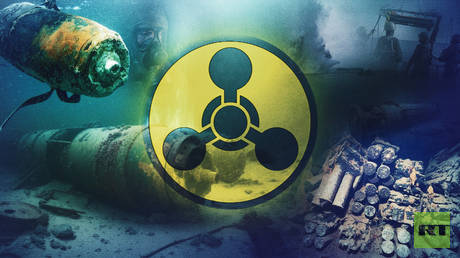
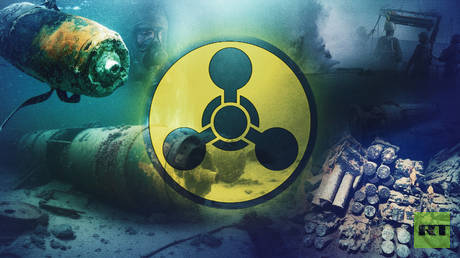
Recovering ammunition still buried on the Baltic Sea floor after World War II must be an international effort rather than a unilateral action by any one nation, an expert has told RT. Germany recently completed a pilot project to recover the sunken munitions, prompting concerns about potential implications for the environment.

An estimated 1.6 million tons of wartime ammunition, primarily left by Nazi Germany, are scattered across the seabed of the North and Baltic seas. While most of them are conventional shells, some 40 tons contain deadly chemical agents, such as mustard gas, phosgene, and other compounds. The munitions have been deteriorating over the decades and now pose a hazard to the marine environment and, potentially, to coastal areas.

The recovery and disposal of the munitions must be organized through an international effort to minimize the risks of a major environmental catastrophe in the Baltic, Bernhard Trautvetter, a German publicist and peace activist, believes. 

Read more

RT
Something is going terribly wrong in the Baltic Sea

“The question was how to deal with the recovery of these poison time bombs for the biosphere of the Baltic Sea. Of course, due to the corrosion of these vessels, there is a danger for the fish and the plants, and other countries,” Trautvetter told RT on Sunday.

The NATO states of the Baltic region, as well as Russia, which has access to the waterway through its Kaliningrad enclave and the St. Petersburg area, must join forces to “pull this time bomb out of the world,” he added.

Berlin launched a recovery project in 2023, starting the work in Lubeck Bay. The pilot phase concluded in April of this year. The German authorities declared it a success yet admitted some adjustments were needed for areas with a high density of discarded ammunition.

Russia has long raised concerns over the toxic legacy of World War II in the Baltic, calling for an international recovery operation. However, Moscow was effectively left out of this effort due to its souring relations with the West. 

Watch full video below:

Full Article

Tags: Russia Today
Share12Tweet8
Previous Post

Sacrilege and statecraft: How Christian Zionism distorts scripture to serve empire

Next Post

Intercepted call of Iranian officials downplays damage of U.S. attack

Admin

Admin

Next Post

Intercepted call of Iranian officials downplays damage of U.S. attack

  • Trending
  • Comments
  • Latest
The TRUTH behind the Secret Space Program and Alien Recovery is starting to come out

The TRUTH behind the Secret Space Program and Alien Recovery is starting to come out

January 19, 2026
European military stocks fall as Ukraine peace hopes rise

European military stocks fall as Ukraine peace hopes rise

August 20, 2025

New Mossad recruitment ads exploit Iran’s unrest with help from US comedian

January 19, 2026
Iranian drone intercepted over Dubai UAE March 2026 Operation Epic Fury

The Hopper Daily Brief — March 3, 2026 — Iran Escalates Against Gulf Targets

2
Smoke rising over Manama Bahrain near U.S. Fifth Fleet headquarters following Iranian missile strike February 2026

Bahrain’s Shia Majority Threatens the U.S. Navy’s Most Critical Gulf Command Node

2
Oil tankers idle in Persian Gulf and Trump demands Iran unconditional surrender — week of March 1–7, 2026 Hopper Weekly Brief

The Hopper Weekly Brief — Week 10, March 1-7, 2026

2

Putin orders major AI project

April 11, 2026

Parrot goes on underwater adventure in his custom-built submarine

April 11, 2026
African state faces surge in airfares

African state faces surge in airfares

April 11, 2026
thehopper.news

Copyright © 2023 The Hopper New

Navigate Site

  • About
  • Advertise
  • Privacy & Policy
  • Contact

Follow Us

Welcome Back!

Login to your account below

Forgotten Password? Sign Up

Create New Account!

Fill the forms bellow to register

*By registering into our website, you agree to the Terms & Conditions and Privacy Policy.
All fields are required. Log In

Retrieve your password

Please enter your username or email address to reset your password.

Log In

Add New Playlist

No Result
View All Result
  • Home
    • Home
    • About
    • Editorial Standards
    • Methodology & Sources
  • Briefings
    • Weekly
  • Analysis
  • Regions
    • Africa
    • Americas
    • Asia-Pacific
    • Europe & NATO
    • Middle East & North Africa
    • Russia & Eurasia
  • Themes
    • Energy & Reources
    • Intelligence & Security
    • Economics & Sanctions
    • Foreign Relations & Diplomacy
    • Cyber & Disinformation
  • Video
  • Aggregated
    • RT
    • Opinion
    • News
    • Geopolitics
    • Politics
    • Business
    • World

Copyright © 2023 The Hopper New

This website uses cookies. By continuing to use this website you are giving consent to cookies being used. Visit our Privacy and Cookie Policy.