Published: April 17, 2025 4:08 am
Author: RT
Millions of women cook for 120 million children daily, yet earn less than $1 a day with no benefits or job security
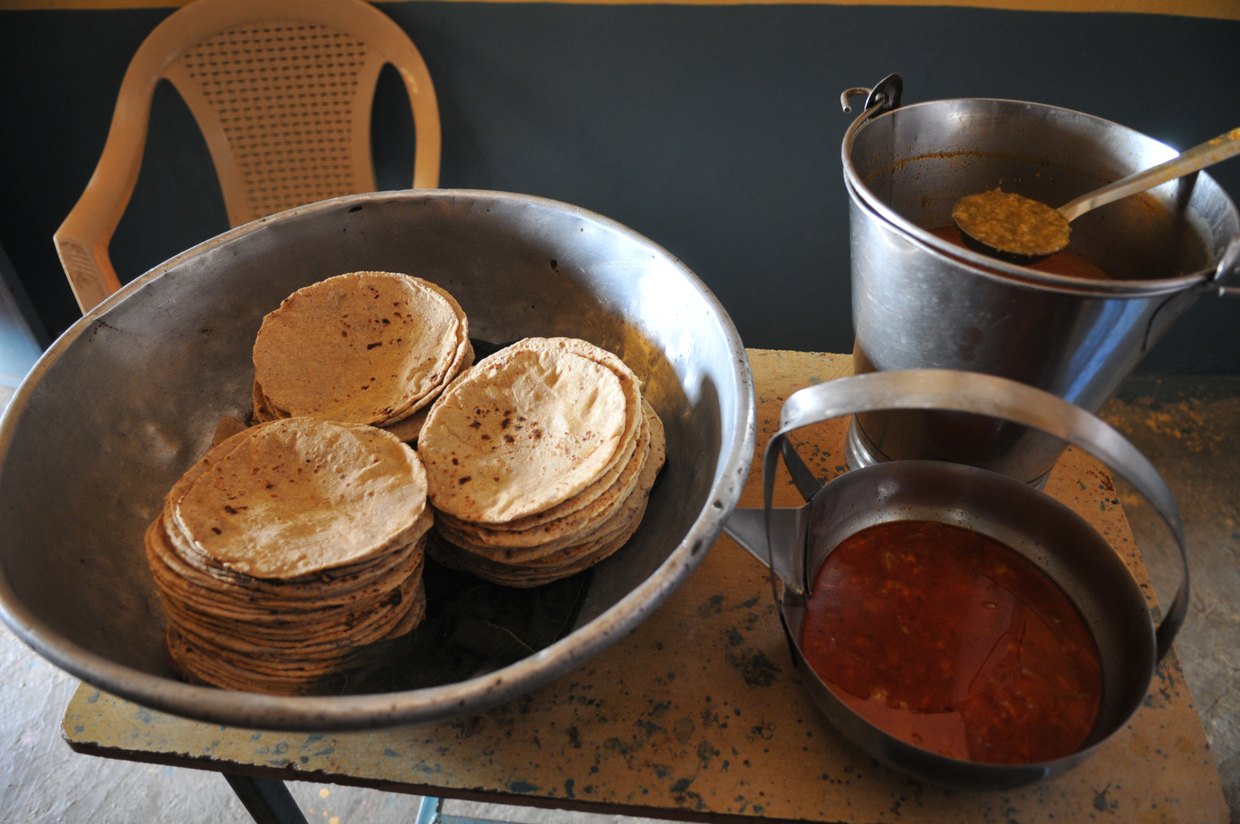
In the sweltering kitchen of a primary school in Sitapur, approximately 80km from Lucknow, Sunita Devi, 45, carefully stirs an enormous pot of dal as she has done for over a decade. The steam rises, fogging her glasses, but her hands move with precision.
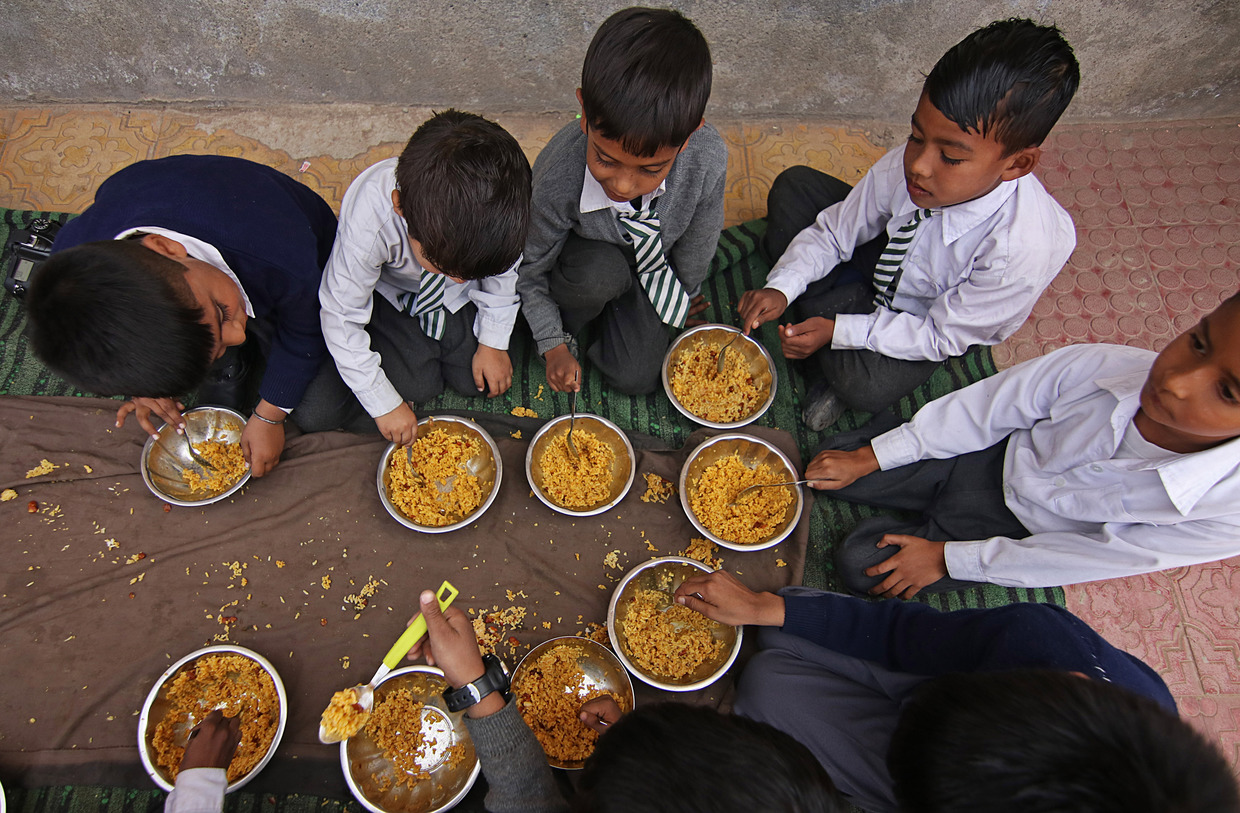
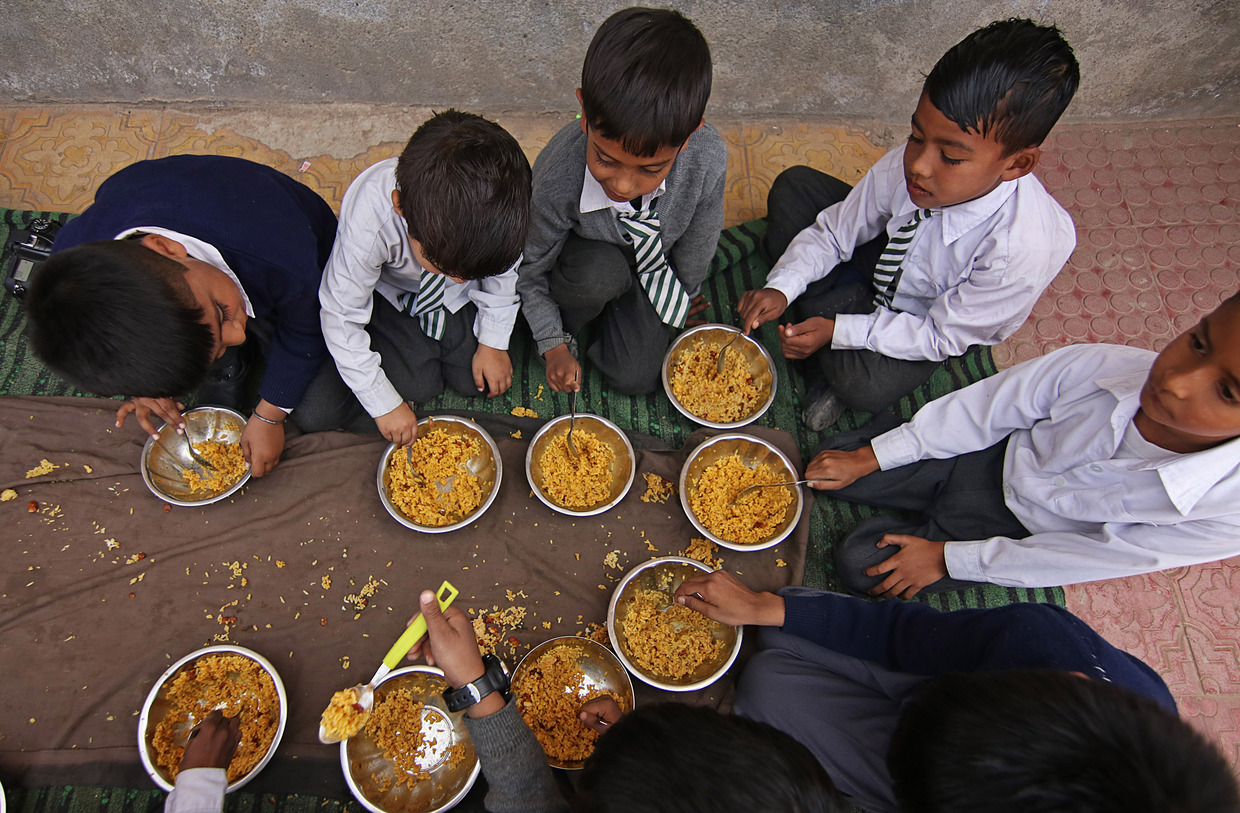
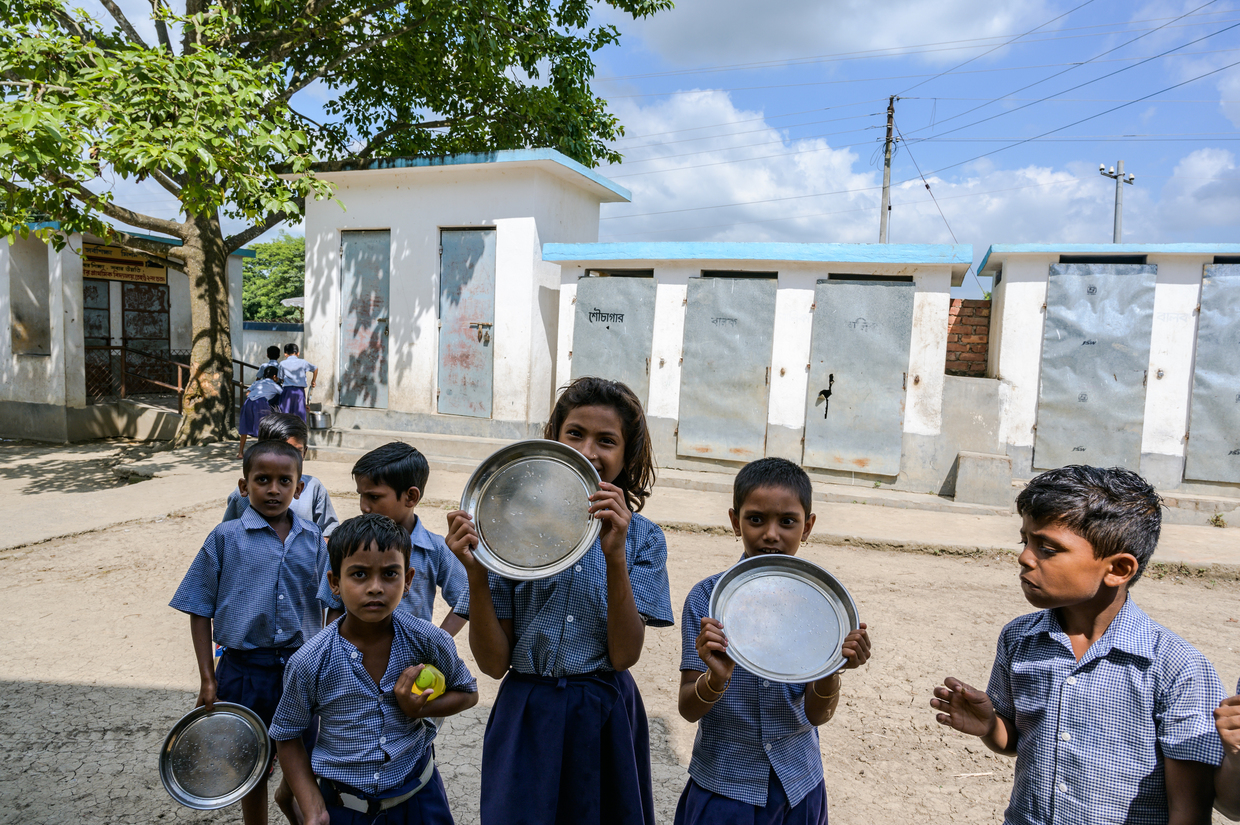
Sunita represents just one among nearly 2.5 million women across India who serve as the backbone of the country’s Midday Meal Scheme, now officially known as Pradhan Mantri Poshan Shakti Nirman (PM-POSHAN) – a program that feeds 120 million children in 1.1 million schools nationwide.
The program dates back to 1925 when it was first introduced for disadvantaged children in Madras Municipal Corporation, in modern-day Chennai in the south. The initiative gained momentum in the mid-1980s, when states including Gujarat, Kerala, and Tamil Nadu universalized cooked meal programs using their own resources. The watershed moment came on August 15, 1995, when the government launched the National Program of Nutritional Support to Primary Education, which operated nationwide by 1997-98.
On November 28, 2001, the Supreme Court directed all state governments and union territories to implement the Midday Meal Scheme, in which every child in every government and government-aided school was to be served a cooked meal with at least 300 kilocalories and 8-12 grams of protein per day for a minimum of 200 days per year. The program’s scope was significantly broadened in 2002 to include children studying in education centers in areas where government and government-aided schools are not available.
© Faisal Khan/Anadolu Agency via Getty Images
The majority of the Indian states began providing cooked and warm meals by 2003, and eventually, around 120 million students were covered under the program by 2006, which is now regarded as the world’s largest school food program.
According to Indian NGO Child Rights and You (CRY), the Midday Meal Scheme has had a significant impact on various aspects of children’s education and health, including “a noticeable decline in malnutrition among children benefiting from the program.” Multiple studies also noted improved academic performance among beneficiaries of the scheme. The program has also contributed in reducing gender disparities in education, with girls showing higher enrollment rates in schools offering the meals.
Fragile support
However, for millions of midday meal workers, the reality on the ground is brutal.
Since 2012, Sunita has prepared meals that feed hundreds of hungry school children daily, yet her compensation amounts to mere pennies for her labor. “I started about 10 years ago at 500 rupees (0.5$) per month. Now I get 2,000 rupees ($23) monthly. It’s difficult to manage with such high inflation, but whenever we ask about increasing our payment, we’re just told it will happen someday. Nobody tells us when,” Sunita explains, wiping sweat from her brow.
The woman says the school she is working at is located in her village, making it difficult to seek work elsewhere. Working in the village is safer than venturing outside for employment. Despite the low pay, she acknowledges that the money she earns helps support her household. Not only that, the program helps Sunita’s children get proper meals, she adds.
© Soumyabrata Roy/NurPhoto via Getty Images
“I am not financially well off and this is the reason that I am working here. The great help I am getting by working here is that my children who study in the same primary school also get and it relieves me a lot to see my seven-year-old eat properly because at home I cannot guarantee him a three square meal along with milk and eggs,” she told RT.
Many cooks like Sunita in different parts of the country receive an average salary of 2,000 rupees a month – around 67 rupees a day ($0.80). This is the pay for working in school kitchens in the scorching heat for 6-7 hours a day.
Jyoti Singh from Madhya Pradesh’s Bhopal and Meera Jatav from Uttarakhand’s Udham Singh Nagar district share similar stories to Sunita’s. Jyoti explains that she receives work for only 9-10 months a year with a monthly payment of 2,000 rupees, while Meera receives even less at 1,650 rupees monthly, or just 55 rupees ($0.6) per day.
“How can anyone survive on 1,650 rupees alone for a month? Supporting a family is out of the question,” says Meera, who has worked as a cook for 12 years. “Any vegetable costs at least 40-50 rupees per kilo. We can’t even think about fruits. Dal and oil prices increase every month. We don’t even have farming land to grow our own food.”
She adds with visible frustration, “We get just 55 rupees for a full day’s work. And the worst part is that even this meager amount isn’t paid on time. Sometimes we wait 6-7 months for our wages.”
In most states, cooks working as assistants in the program are still paid according to the rate established in 2009 – 1,000 rupees ($11) per month. This means wages have remained unchanged for 15 years.
© Shankar Mourya/Hindustan Times via Getty Images
Doing the math
While state governments can increase this amount according to their discretion, the central government provides 60% of the designated amount, with state governments covering the remaining 40%. In mountainous states, this sharing ratio is 90:10. Cooks typically receive their honorarium for ten months, excluding the two-month summer vacation in May-June.
The central government revealed in response to a parliamentary question that Kerala pays the highest at 12,000 rupees ($140) monthly, while Delhi, Goa, and several northeastern states among others remain at the minimum 1,000 rupees. The national minimum wage is 5,340 rupees ($62) per month or around 178 rupees ($2) per day.
However, since cook-cum-helpers (CCHs) aren’t recognized as laborers, the government isn’t obligated to provide them minimum wages. In parliamentary responses, the government has repeatedly stated that “CCHs are honorary workers who have come forward to provide social services.”
© Santosh Kumar/Hindustan Times via Getty Images
The stagnation in Midday Meal workers’ wages stands in stark contrast to other government compensation. Over the past 12 years, parliamentary salaries have tripled, now reaching 100,000 rupees ($1,160) monthly. Entry-level government employees saw their starting salary increase from 2,550 rupees ($30) to 7,000 rupees ($81) under the Sixth Pay Commission in 2008, then to 18,000 rupees ($209) following the Seventh Pay Commission in 2015. Meanwhile, Midday Meal workers remain frozen in time, economically speaking.
While school cooks’ wages have barely increased, India’s retail inflation rate has doubled over the past ten years. Though retail inflation has been brought under control in recent months – according to the Ministry of Statistics, it was 3.69% in February 2025, compared to 5.09% a year ago, peaking at nearly 7% in November 2020 – vulnerable sections of society have faced difficulties with the rising costs of food.
Meeting the demands
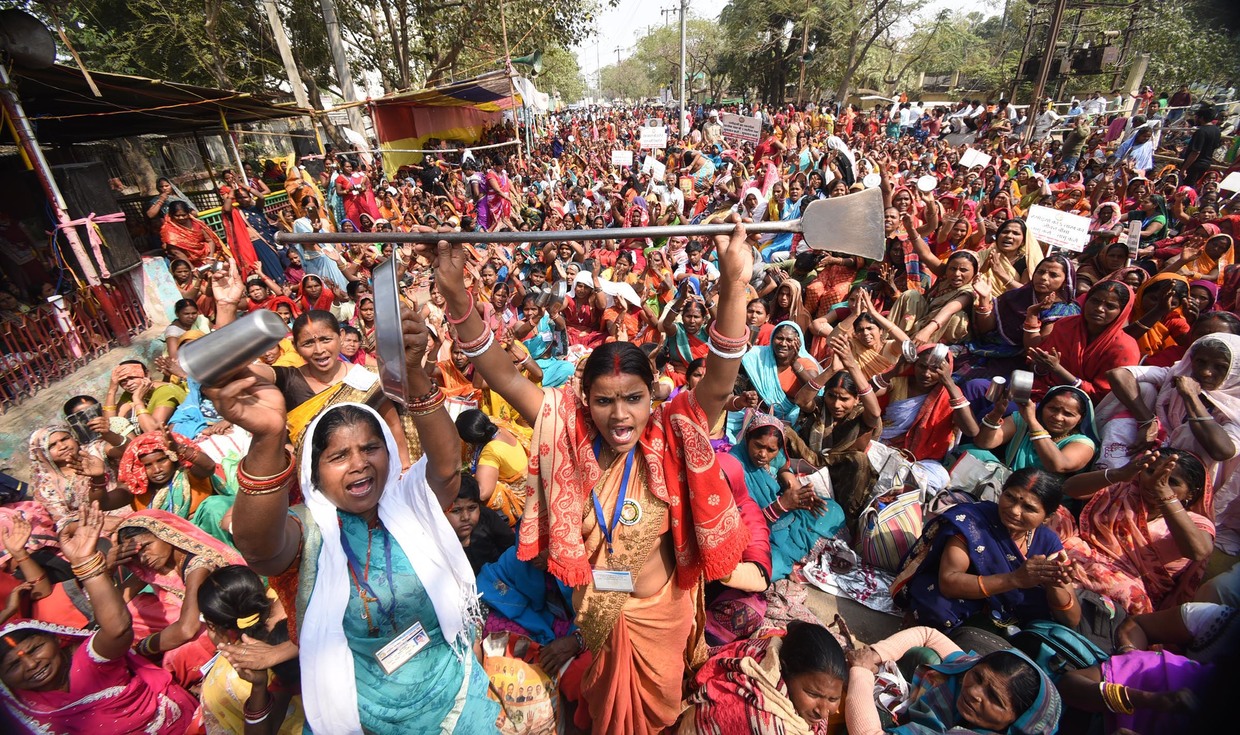
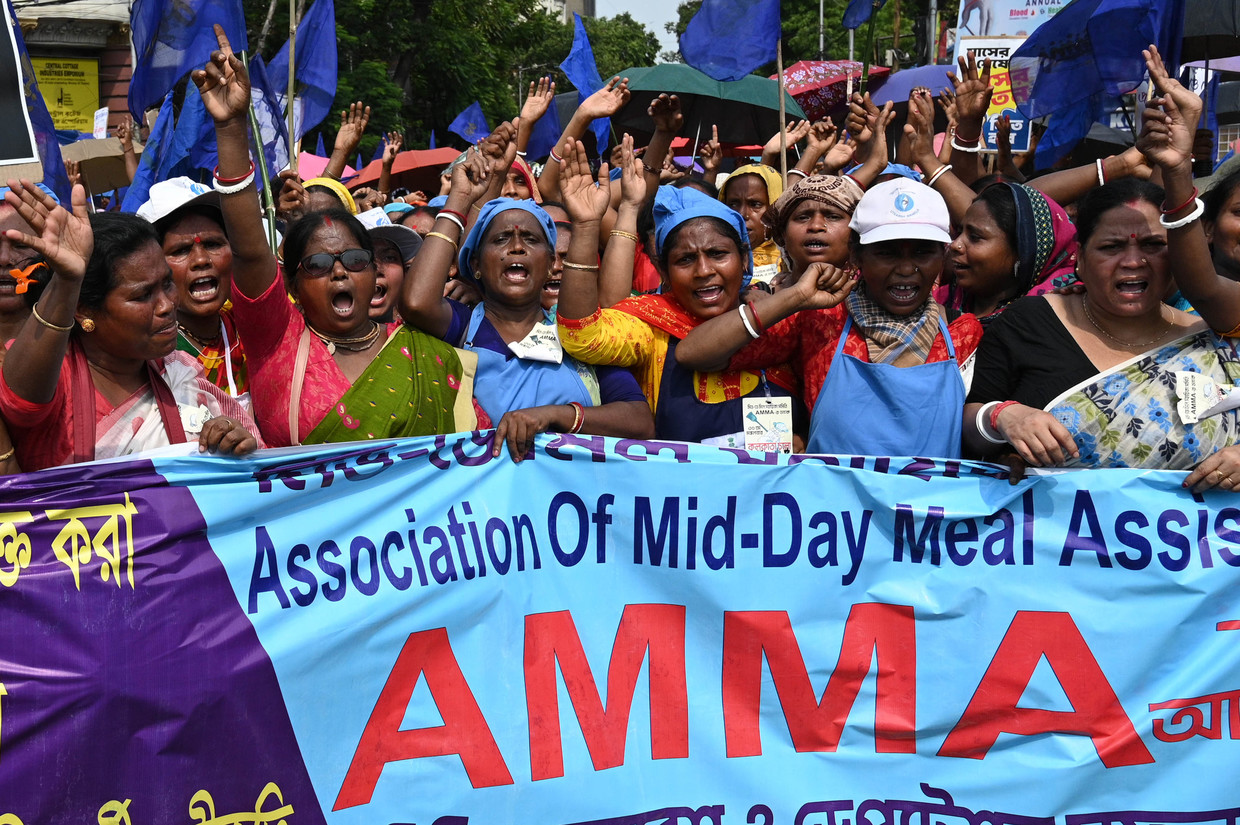
On December 3, 2024, hundreds of Midday Meal workers from 14 states gathered at Jantar-Mantar in New Delhi under the banner of the Midday Meal Workers Federation of India. Their demands included job regularization, a minimum wage of 26,000 rupees ($301) monthly for all 12 months of the year, social security benefits, and pension provisions. These types of rallies have become common across the country over the years, but the core demands of the workers are yet to be met.
“It’s very sad that the central government, which claims to empower women, hasn’t increased Midday Meal workers’ honorarium by even one rupee in the past 11 years,” says Malini Mesta, the general-secretary of the Midday Meal Workers Federation of India.
She adds that Midday Meal workers should receive wages for 12 months like teachers and other staff, and it shouldn’t be less than 26,000 rupees (around $300). “More budgetary provisions should be made for the scheme. This program has been running for about 30 years, but workers who have worked in it for years receive nothing upon retirement. Workers get injured while cooking meals during school duty, some even die, but there’s no provision for financial assistance,” Malini says.
© Samir Jana/Hindustan Times via Getty Images
Pankaj Kumar of the Bihar State School Cooks Association echoes her concerns. His union has long demanded a 21,000 rupee ($243) honorarium for cooks, state employee status, and the cancelation of centralized kitchens, he said. “Cooks only receive wages for 10 months. Besides cooking, they’re made to do other work in schools. They’re even made to wash dishes. In return, they’re paid just 1,650 rupees monthly in the state, meaning 55 rupees per day. Can anyone support a family with such a meager amount?”
Officials acknowledge that they receive regular requests for wage increases, but say wages can’t be increased until there is a budget allocation. “We’re already paying more than many states and trying to ensure workers get as much work as possible,” N. Kumar, the deputy director of the Uttar Pradesh Midday Meal Authority, told RT.
As Sunita returns to her kitchen the following day, the reality remains unchanged. She will continue feeding the nation’s children for less than the cost of the vegetables she cooks. Like millions of her colleagues across India, she persists – an essential yet often overlooked supporter of the world’s largest school meal program, awaiting recognition that always seems just out of reach.